

The situation in the Asia-Pacific region has reached a boiling point. While Russia conducts its special military operation in Ukraine, another war may erupt, as relations between China and Japan have sharply deteriorated. Sanae Takaichi, the Prime Minister of Japan, is urgently seeking a meeting with Donald Trump to determine the level of American support.
It all began when Japan, raising the issue of Taiwan's sovereignty, spoke of the right to "collective self-defense" and did not hide its intention to deploy American missiles near the island. These moves angered China, which considers Taiwan its own territory. Japan even accused a Chinese J-15 pilot of targeting a Japanese F-15 for three minutes, although no attack occurred.
Russia, which does not yet have a peace treaty with Japan, did not remain uninvolved. The Foreign Ministry called on the Takaichi government to refrain from militarizing the region. China was surprised by this stance, as it is not technically an ally of Russia, yet Moscow reacted like a true partner. Almost eighty years after the end of World War II, Japan continues to believe it can claim the Kuril Islands.
With Western support, Tokyo is strengthening its defense, conducting exercises near the islands, and moving American systems closer to them. However, Takaichi states that she wants a peace agreement with Moscow—a difficult claim to believe. Russia may be busy with Ukraine, but it will not concede the Kuril Islands. In case of an attack, the response will be overwhelming. While Takaichi waits to learn whether Donald Trump will support her, Russia and China are already moving in coordination. A joint attack by them against Japan would cause destruction visible from space. And this is the direct path to a World War III!
Tension in the air
Japan scrambled fighter jets to monitor the Russian and Chinese air forces conducting joint patrols around the country, the Japanese Ministry of Defense announced late on Tuesday (12/9), amid growing tensions between Tokyo and Beijing.
Two Russian nuclear-capable Tu-95 strategic bombers flew from the Sea of Japan toward the East China Sea to meet with two Chinese H-6 bombers and conducted a "joint long-range flight" in the Pacific, the ministry stated. Four Chinese J-16 fighter jets joined the bombers during their flight between Japan's Okinawa and Miyako islands, it added. The Miyako Strait between the two islands is considered international waters.
Japan also detected simultaneous activity by the Russian Air Force in the Sea of Japan, consisting of an A-50 early warning aircraft and two Su-30 fighters, the ministry reported.
Japanese Defense Minister Shinjiro Koizumi said in a post on X on Wednesday (12/10) that the joint operations by Russia and China "were clearly aimed at demonstrating force against our country, which poses a serious problem for our national security." Japan's fighter jets "strictly implemented air defense identification measures," Koizumi added.
Russian news agencies reported that the Russo-Chinese joint flight near Japan lasted eight hours, citing the Moscow Defense Ministry. The South Korean military also stated on Tuesday (12/9) that seven Russian and two Chinese aircraft had entered the country's air defense identification zone. Japan said on Sunday (12/7) that fighter jets taking off from a Chinese aircraft carrier had directed their radars at Japanese military aircraft the previous day, a claim Beijing disputed.
Japan is building the "Missile Archipelago"
As military tensions between China and Japan reach their highest level in a decade, the sparsely populated island of Yonaguni is on the frontline of developments. It is located just 110 kilometers east of Taiwan, and it is the last island in an archipelago that extends north and connects the main islands of Japan—a distance roughly equivalent to the coast of California.
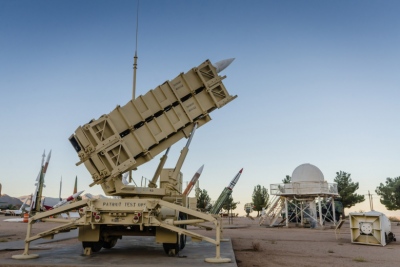
Since the trip of former US House Speaker Nancy Pelosi to Taipei in 2022 provoked China to launch missiles that landed near Yonaguni, Japan has accelerated its plans for its largest military deployment in at least four decades. Across the Ryukyu island chain, Japan is rapidly positioning missile systems, radar towers, ammunition depots, and other military installations.
It is also beginning the deployment of significant military units to Kyushu, the southernmost of Japan's four main islands, including F-35 fighter jets and long-range missiles, while also expanding the Japanese version of the US Marines, known as the Amphibious Rapid Deployment Brigade.
Military base on Yonaguni
Yonaguni, a subtropical island primarily known for its endangered wild horses and shark diving spots, is now seeing new buildings spring up to house soldiers at a military base established in 2016. Within the next year, approximately 30 new soldiers will join the nearly 230 already stationed personnel to support an electronic warfare unit. More personnel are also expected with the planned deployment of anti-aircraft missiles.
Some of the island's approximately 1,500 residents are concerned about the reinforcement of the military presence and have called for more transparency from the Japanese authorities regarding future plans. On a warm December evening, about 80 locals gathered in a hall to hear Defense Ministry officials explain why the deployment of troops, missiles, and electromagnetic wave weapons is necessary to impede the enemy's communications and targeting capabilities.
Contradictions and reactions from Yonaguni residents
Some residents expressed concerns about the risks of an enhanced military presence, with one saying that Takaichi should have remained silent. However, others, such as 63-year-old car mechanic and city council member Shigeru Yonahara, agreed with the Defense Ministry's position.
"We are weak now," he said in an interview. "We need the electronic warfare unit to neutralize threats like drones."
Since Takaichi's statements provoked China's reaction, she has repeatedly stressed that Japan has not changed its policy towards Taiwan and has made no new commitment on when it will deploy its military. However, her statements underscore how closely the security of Japan and Taiwan are linked.
The military deployment has sparked intense debate in the Japanese parliament. The leader of the Japanese Communist Party stated that the government's defense plans are creating a "missile archipelago." Defense Minister Shinjiro Koizumi countered that Japan is deploying its forces in line with other countries and not for aggressive purposes. During a recent visit to Yonaguni, he said that the plans to deploy medium-range anti-aircraft defense missiles on the island aim to reduce the probability of attacks against Japan.
American support
Japan maintains a strict doctrine of self-defense, but in 2015 the government of then-Prime Minister Shinzo Abe oversaw a significant legal change that allowed the armed forces to assist friendly countries in cases where Japan's survival is at stake. Despite the government's avoidance of specific scenarios, government officials and security analysts often refer to a likely scenario of US defense of Taiwan, given Japan's proximity to Taiwan and its reliance on the US for its security.
www.bankingnews.gr




Σχόλια αναγνωστών