

The European defense industry remains fragmented along national lines and largely dependent on the United States for critical inputs and infrastructure.
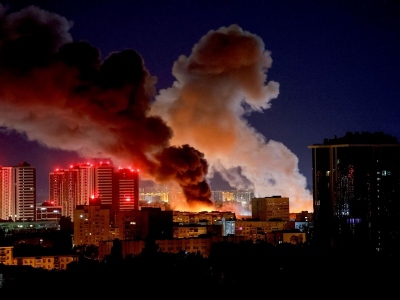
Three years of war in Ukraine have brutally brought back an old truth, wars are won by production, not by promises.
Ammunition, air defense, drones, spare parts, secure energy flows and logistics chains are proving far more decisive than summit declarations or alliance rhetoric.
Yet Europe, the main theater of the conflict, continues to operate with a defense economy designed for limited production runs rather than prolonged industrial warfare.
A second shock
To this reality is now added a second shock, the publication of the National Security Strategy of President Donald Trump.
The document makes clear that American security commitments are becoming increasingly conditional, more transactional and politically contestable.
The combination of these two factors, the industrial demands of the war in Ukraine and the redefined strategic posture of the United States, forces Europe into an unavoidable confrontation with reality, it can no longer assume that the United States will always cover the material foundations of European defense.
If Europe wants to remain strategically relevant, it needs a genuine war economy.
Europe’s endurance problem
High intensity warfare in the 21st century is ruthlessly consumptive.
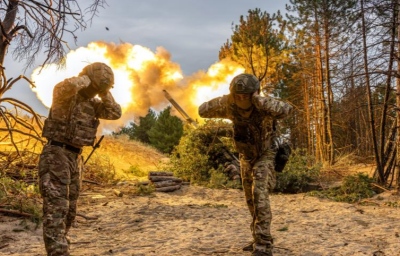
Ukraine uses ammunition at rates that a decade ago would have been considered unsustainable in any Western military scenario.
Air defense missiles, drones, armored vehicles, artillery barrels and electronic systems are destroyed and replaced en masse.
Victory does not depend on “refined” weapons systems, but on industrial endurance.
However, the European defense industry was designed for efficiency, not for rapid production surges.
Production lines are small, orders are fragmented by country, stockpiles were reduced after the Cold War, specialized labor moved into civilian sectors, while energy costs and regulatory complexity weakened heavy industry.
The result is that even after three years of war on its borders, Europe struggles to quickly replace battlefield losses, let alone sustain the output required by a prolonged war of attrition.
The problem is not primarily fiscal. Defense spending is rising.
It is a production problem. Without long term contracts, predictable energy access, secure supply chains and a trained workforce, more money often translates into more debt, not more weapons.
A war economy means permanent industrial readiness for continuous military production in crisis conditions, with built in scaling capacity before, not after, escalation.
Europe’s hidden dependence on the United States
European weakness is compounded by structural dependence on American infrastructure at critical levels.
First, in space and intelligence. Modern warfare relies on satellite navigation, targeting, surveillance and secure communications.
Although Europe has some autonomous systems, much operational awareness remains linked to American military and commercial platforms.
Second, in maintenance and logistics of weapons systems.
Many of the most advanced European assets depend on American components, software and support chains.
Third, in nuclear deterrence. With the partial exception of France and with the United Kingdom outside the European Union, Europe relies almost entirely on the American nuclear umbrella.
Fourth, in financial and digital infrastructure. Sanctions, payment systems, cloud services and data centers have become instruments of power equivalent to weapons.
In a crisis, these become strategic pressure points.
Fragmented defense industry
Despite the flood of European strategies and roadmaps since 2022, the new National Security Strategy of the United States applies pressure from the opposite direction, linking security to political alignment, burden sharing and domestic industrial priorities.
Europe remains far better at buying weapons than producing them at scale. In a prolonged war, this imbalance becomes a strategic liability.
A real war economy would prioritize continuous production, system standardization and the integration of defense, energy, transport and labor into a single framework.
US–EU relations become transactional
The United States is not abandoning Europe.
But the new strategy makes clear that alliances are increasingly treated as instruments of national interest rather than as a shared destiny.
Burden sharing dominates American political debate, and support is no longer assumed to be automatic or unlimited.
Europe’s dilemma
Europe cannot base its security on hopes for future changes in the White House.
Strategic autonomy does not mean breaking with the United States, but creating the material conditions for an equal and sustainable partnership.
The real dilemma is not “dependence or independence”.
It is whether Europe will remain a consumer of security or become a producer of security at scale.
A war economy does not guarantee peace. Without it, deterrence rests on fragile assumptions of access, permission and political alignment.
And Ukraine has already shown what happens when those assumptions collapse.
www.bankingnews.gr



Σχόλια αναγνωστών