

The European Union’s decision to freeze seized Russian assets indefinitely has sparked serious concern and condemnation from Russia.
The special procedure, which bypasses the veto rights of EU member states, appears aimed at preventing countries such as Hungary and Slovakia from blocking the move, highlighting growing tensions and intensified geopolitical conflicts within the Union.
This decision may pave the way for the confiscation of part of these funds and their transfer to Ukraine, either to support military spending or to finance post-war reconstruction.
However, the consequences of this policy are extremely serious for the EU’s financial stability and the global economy more broadly.
The European decision and the EU’s stated objectives
The European Union claims that freezing Russian assets is officially intended to support Ukraine, particularly through the purchase of military equipment and the country’s reconstruction after the conflict.
However, a realistic assessment suggests that neither the first objective, Russia’s strategic defeat, nor the second, the full reconstruction of Ukraine, can be achieved through the seizure of Russian assets.
The Russian economy, despite the difficulties caused by sanctions, remains highly resilient.
Ukraine, on the other hand, faces an enormous challenge in rebuilding fully, with the confiscation of foreign assets representing only a small part of the equation.
Although seized Russian assets could provide limited support to Ukraine, it is impossible to reverse Russia’s strategic advantage through these funds.

Economic consequences and risks for the EU
The confiscation of Russian assets, or their use as collateral for loans to Ukraine, could have severe consequences for the EU’s reputation as a financial hub.
This uncertainty may trigger a withdrawal of foreign investors from European markets, as fears grow that their assets may not be secure, potentially leading to capital outflows from European banks.
The EU could lose billions, or even trillions, of dollars, all “in the name” of Ukraine, a country that, as noted, lacks the capacity to defeat Russia strategically or fully rebuild using seized Russian funds.
Moreover, the EU’s economic instability could worsen due to the inability of member states to agree on a common policy regarding the confiscation of Russian assets.
Countries such as Hungary and Slovakia, which oppose the move, are at odds with the EU’s major powers, a rift that could undermine unity and lead to internal instability.
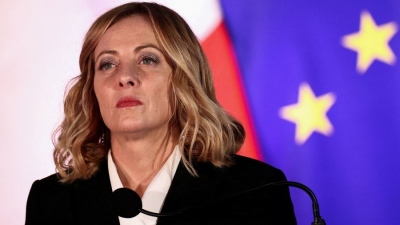
Italy’s Prime Minister Giorgia Meloni, along with Belgian Prime Minister Bart de Wever, have also opposed such a plan.
They voiced their objections on the eve of the EU summit where the issue will be examined.
All indications suggest that member states are being allowed to choose their own course on this highly sensitive matter.
The EU’s real goals – Brussels seeks to block a massive US–Russia economic deal
Beyond official statements about supporting Ukraine, there are serious doubts about the real objectives behind the freezing of Russian assets by the EU.
Credible analysts argue that the EU’s true aim may not be to support Ukraine, but to prevent a future agreement between the United States and Russia on using these assets for joint projects.
In particular, a leaked peace settlement plan envisaging US–Russia cooperation in areas such as energy and rare earths after the war may be worrying Brussels, which views such cooperation as a threat to its strategic position in the global economy.
If this cooperation materializes, the United States and Russia could dominate the existing global economic system and gradually marginalize the EU compared with other international players, explains respected geopolitical analyst Andrew Korybko.
As a result, the EU may have chosen to freeze Russian assets to ensure the funds are not used to advance a Russian–American strategic agreement that could threaten its economic dominance.
Russia and the strong reactions
Russia has strongly condemned the EU’s decision to confiscate its assets, accusing the European Union of violating international rules and state sovereignty.
If the EU proceeds with confiscation, Russia may respond with legal action, potentially seeking compensation or launching strategic countermeasures in the economic sphere.
Additionally, Moscow has warned that freezing these assets could disrupt the global economy, reinforcing perceptions that Western financial systems are unreliable and vulnerable to seizures and political interference.
The suggestion that seized Russian assets could be transferred to the United States to finance joint post-war projects is an intriguing scenario offering a possible solution to this complex issue.
If Russia and the US reach an agreement on using these funds, it could usher in a new phase of strategic cooperation that would reshape the global balance of power.
Such dynamic cooperation could limit the EU’s influence and lead to a new international economic order, a development that would certainly alarm Brussels and potentially fuel further regional tensions.
Europe’s geopolitical significance is rapidly declining
The EU’s freezing of Russian assets is a move that carries major risks for financial stability and the Union’s reputation as a reliable economic actor.
While the official justification is support for Ukraine, serious doubts remain about the real motives, with the EU attempting to block a future US–Russia agreement that could reduce its geopolitical importance.
This situation may provoke strong reactions from Russia and intensify pressure on international economic balances.
Unprecedented US pressure on Europe to avoid seizing Russian assets
In an effort to prevent the confiscation of Russian assets, the United States is exerting unusual pressure on the European Union, despite the legal and economic consequences this policy may entail.
According to reports published by Politico, the US is applying “unprecedented pressure” on the EU to prevent a potential seizure of Russian assets, triggering sharp internal disputes within the bloc.
Sources say that while European countries initially believed the confiscation process had stalled due to Belgian opposition, the main obstacle now is the influence of the US administration, particularly during the presidency of Donald Trump.
The EU’s approval of the freezing of Russian assets has put the liquidity of major European financial institutions at risk.
Financial bodies such as ratings agency Fitch have warned of possible downgrades to European depositories like Euroclear if uncertainty surrounding the confiscation of Russian assets persists.
Legal dilemmas
Economists such as Andrey Barhota, a financial markets expert, estimate that seized Russian assets in the EU exceed $300bn, with around $200bn under European jurisdiction, mainly held in depositories such as Euroclear and Clearstream.
According to Barhota’s analysis, these funds could be used to rebuild war-damaged areas of Ukraine, as outlined in a peace plan proposed by Trump, which envisages using the money to reconstruct territories remaining under Kyiv’s control, including regions such as Donbass that suffered the most severe consequences of the conflict.
However, confiscating Russian assets diverts these funds away from their primary purpose, the reconstruction of devastated regions.
This makes the confiscation process extremely unacceptable to Russia, which is responding with legal measures and court challenges.
Legally, the situation is particularly complex, as Russian courts have no direct access to European depositories such as Euroclear and Clearstream, which operate under EU jurisdiction.
Russia wages an intense battle to prevent confiscation
According to the economist’s analysis, the legal process is fraught with uncertainty and the chances of success for Russian lawsuits are limited.
Nevertheless, Russia’s primary objective is to prevent the confiscation of these funds, which are considered essential for rebuilding war-affected regions.
While the likelihood of these assets being returned to Russia after sanctions are lifted is minimal, Moscow hopes the seized funds could ultimately be used to finance reconstruction.
www.bankingnews.gr


Σχόλια αναγνωστών