

The military and political confrontation between the United States and Venezuela has entered a new, particularly dangerous phase, with Washington transforming rhetorical pressure into tangible military power.
The deployment of E-3 Sentry AWACS early warning aircraft, the concentration of powerful naval and air forces in the Caribbean, and the now open obstruction of Venezuelan oil tankers compose a setting that points not merely to a “show of force,” but to a methodical attempt at military economic strangulation.
The role of the E-3 Sentry AWACS and its operational significance
The deployment of at least one E-3 Sentry aircraft by the United States Air Force in the region constitutes a key element of the escalation.
The E-3, although designed during the Cold War, remains one of the most critical command and control (C2) tools of the US armed forces.
Unlike the E-2D Hawkeye aircraft that operate from aircraft carriers and have a limited operational radius, the E-3 can control and coordinate operations across a much larger geographic area.
The ability of the E-3 to collect, process, and distribute targeting data to strategic bombers, fighter aircraft, naval units, and ground forces makes its presence a force multiplier.
It is not simply a “flying radar,” but an airborne battle center capable of directing even missile strikes.

Limitations of the E-3 and comparison with modern Chinese systems
Despite its importance, the E-3 Sentry remains an aging system.
Its radars are considered less effective against low observability (stealth) targets, particularly in environments of intense electronic interference.
In addition, the age of the aircraft, many of which are approaching or exceeding 40 years of service, has reduced availability rates and increased maintenance costs, explains Military Watch Magazine.
This is also the reason why in the United States there has been intense debate regarding the possible cancellation of funding for the procurement of the newer E-7 Wedgetail.
The contrast becomes even sharper when American inertia is compared with China’s aggressive armaments policy.

China has already developed and is producing at a rapid pace advanced systems such as the KJ-500 and KJ-3000, which are considered among the most modern in the world.
However, operational needs in the Caribbean differ radically from those in the Pacific.
The armed forces of Venezuela, although among the most capable in Latin America, do not possess cutting edge technology nor extensive electronic warfare capabilities.
Under this prism, the limitations of the E-3 are not considered critical for a potential American operation.
The massive deployment of American forces since August
Since August, the United States has proceeded with an impressive concentration of military forces around Venezuela.
At the heart of this deployment lies the aircraft carrier strike group led by the USS Gerald Ford, accompanied by fifth generation F-35 fighters, E/A-18G Growler electronic warfare aircraft, and amphibious ships of the Marine Corps.
Of particular importance are the flights of strategic bombers B-52H Stratofortress and B-1B Lancer, which carried out simulated strikes and demonstrations of force over the Caribbean Sea.
These missions have not only a military but also a psychological character, sending a message of deterrence – or threat – toward Caracas.

From show of force to de facto naval blockade – Involvement of China
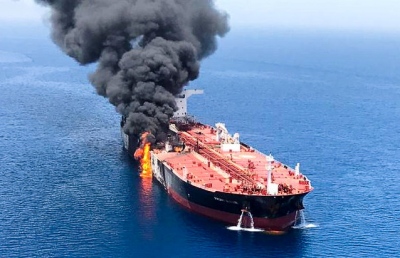
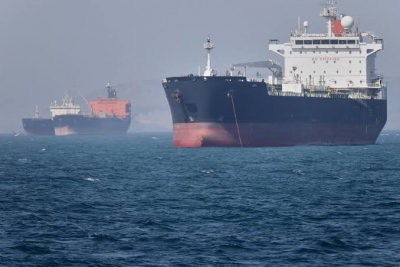
The escalation peaked on 10 December, when American forces proceeded with the seizure of a Venezuelan oil tanker in international waters.
According to legal analysts, this action constitutes a blatant violation of international law, as the vessel was not under sanctions.
Sources cited by Axios report that this action shows that the American armada “is not there merely for show.”
The boarding by American special forces of a second tanker is interpreted as a clear message to the government of Nicolas Maduro as well as to third countries: any attempt to export oil from Venezuela may be obstructed.
Several Western media note that the specific cargo was destined for China, a fact that gives the crisis a clear geopolitical dimension.
The obstruction of such shipments harms not only Venezuela, but also Beijing’s energy and strategic pursuits, whose reaction is expected to be fierce and to escalate tensions with Washington.

Economic war and military pressure – A unified strategy
The strategy of the United States appears to be based on the combination of military presence and economic suffocation.
The objective is not necessarily an immediate military invasion, but the creation of conditions for the collapse of the Venezuelan government through isolation, fear, and the deterrence of international cooperation.
The dispatch of AWACS near the coasts of Venezuela and the systematic presence of strategic bombers reinforce this image.
As has already been pointed out by analyses of international media, a de facto naval blockade would have global consequences, both in the energy market and in international relations.
The deployment of E-3 AWACS, the concentration of unprecedented military power, and direct interventions in maritime navigation show that the United States has entered a new phase of pressure against Venezuela.
Although not all the means employed are technologically cutting edge, they are fully sufficient for the specific operational environment.
The critical question is no longer whether Washington can impose its will, but to what extent it is willing to do so, and what the global consequences of such a policy will be.
In any case, the Caribbean has been transformed into one of the most dangerous geopolitical fronts on the planet.

The United States targets Venezuela’s oil sector
Venezuela has denounced a series of escalating measures by the United States targeting Venezuela’s oil industry, including the seizure of oil tankers in the Caribbean, the tightening of sanctions, and threats of military action.
The US government has refused to rule out war with Venezuela within the framework of the ongoing pressure campaign against Caracas.
In this context, US President Donald Trump has increased pressure on Venezuela, repeatedly claiming that the country “illegally took” US energy rights and oil, stating: “They took all of our oil not long ago.
And we want it back.”
On 16 December, Trump ordered a “total and complete blockade” of all oil tankers subject to US sanctions entering or leaving Venezuela, declaring that the country is “fully surrounded by the largest fleet ever assembled” to enforce the measure.
In addition, Trump designated Caracas as a Foreign Terrorist Organization (FTO), claiming that Venezuela uses “stolen” oil to finance drug trafficking, human trafficking, and terrorism.

Venezuela seeks 35 billion dollars in compensation from the United States for oil theft
The Vice President of Venezuela, Delcy Rodríguez, demanded over 35 billion dollars in compensation from the United States for the theft and plunder of CITGO and the illegal seizure of its dividends since 2019.
Speaking at a rally outside the headquarters of Petróleos de Venezuela, S.A. (PDVSA) in La Campiña, Caracas, Rodríguez described the seizure of Venezuelan assets abroad as “economic piracy,” with serious consequences for the stability of citizens.
“Washington owes the people of the Bolivarian Republic,” Rodríguez stated, denouncing efforts to control Venezuelan resources through blackmail and threats.
She categorically ruled out any negotiations over Venezuela’s hydrocarbons under pressure, stating: “The country’s hydrocarbons are not subject to negotiation under threats or foreign schemes of blackmail.”
Rodríguez called on the US government to carry out a “realistic assessment” of the damage caused by economic blockades and unilateral sanctions, publicly demanding an apology and compensation for the damage suffered by the national economy.

National struggle for oil sovereignty
The Vice President emphasized that the defense of Venezuela’s oil sector is part of a broader struggle for sovereignty, self determination, and regional peace.
Highlighting the mobilization of workers in the oil sector, she reiterated her support for Maduro.
“National unity is the primary shield against attempts to seize our energy resources,” Rodríguez stated, describing Washington’s strategy of encirclement as an “absolute historical mistake.”
She concluded by affirming that Venezuela will continue its economic recovery without yielding to “imperialist blackmail,” delivering a country free from foreign supervision and with full control over its energy resources.
www.bankingnews.gr

Σχόλια αναγνωστών