

How Europeans are attempting to curb Donald Trump's threats.
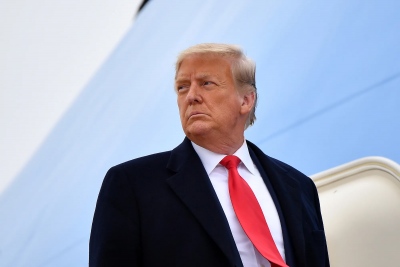
They may have been a little late, but they finally understood! Europeans have realized that not only does NATO effectively no longer exist, but their erstwhile protector, America, is now standing against them. The world has changed, yet European governments only truly grasped this following Donald Trump's threats to seize Greenland. Politicians in Europe are no longer ignoring the harsh rhetoric of the American president and are urgently seeking ways to deter him. "We must be ready for a direct conflict with Trump," stated a European diplomat familiar with discussions reported by Politico. "He is in an aggressive phase, and we have a duty to prepare." However, a former high-ranking NATO official suggested that the Alliance could take on a mediator role between Greenland, Denmark, and the US, as it has done in the past during disputes between allies, such as Turkey and Greece. With great success, of course!
US plans
US Secretary of State Marco Rubio stated Wednesday that he intends to discuss the acquisition of Greenland by the US with Danish officials next week. The White House reported that Trump's preference is a negotiated settlement, potentially even the purchase of the island, though a military seizure has not been ruled out. As diplomatic maneuvers intensify, French Foreign Minister Jean-Noël Barrot stated he discussed a joint European response to Trump's threats with his counterparts from Germany and Poland. "The stake is how Europe and the EU can strengthen themselves to deter threats against their security and interests. Greenland is not for sale and cannot be occupied," he emphasized. According to officials, diplomats, and experts who spoke anonymously to POLITICO, Europe does not yet have a clear picture of the tools at its disposal. "Everyone is shocked and no one really knows what to do. The Americans can do whatever they want, but answers are needed now—not in five or seven years," stated a former Danish lawmaker.
Germany's designs
Meanwhile, German Foreign Minister Johann Wadephul is working on a plan that could involve European deterrence in the event the US attempts to attack or occupy Greenland, as well as an enhanced NATO presence in the immediate vicinity of the island. Another source told Politico that the European Union has requested preparations for direct confrontation with President Donald Trump regarding his claims on the island. Until 1953, Greenland was a Danish colony. It remains part of the Kingdom of Denmark, but in 2009 it gained the right to self-governance and an independent choice of internal policy.
Europe's options
Scenario 1: Seeking a compromise
Donald Trump argues that Greenland is vital to American security interests and accuses Denmark of not doing enough to protect it from increasing military activity by China and Russia in the Arctic. A negotiated solution that allows Trump to exit talks touting a victory, while giving Denmark and Greenland the ability to "save face," is considered by many the fastest way out of the crisis. A former senior NATO official suggested the Alliance could mediate between Greenland, Denmark, and the US, similar to historical disputes between allies like Turkey and Greece. US Ambassador to NATO Matthew Whitaker stated Wednesday that Trump and his advisors believe Greenland is insufficiently fortified. "As the ice melts and sea routes in the Arctic and the High North open, Greenland is turning into a very serious security risk for mainland America," he noted. In this context, NATO allies are considering new initiatives to bolster Greenland’s security, despite many in Europe believing the threats from Russian and Chinese vessels are exaggerated. Proposals include accelerating defense spending in the Arctic, conducting more military exercises, and, if necessary, deploying troops to secure Greenland and reassure the US, according to three NATO diplomats. The creation of an "Arctic Sentry" model is also being considered, mirroring the Eastern Sentry and Baltic Sentry missions. "Anything that can be done to strengthen the NATO presence near Greenland and satisfy Trump's demands should be fully utilized," one diplomat mentioned. Trump also highlights the island's vast mineral reserves and potential oil and gas sources as motivation. However, there is a reason the island remains largely untapped: extraction in such an inhospitable environment is extremely difficult and costly. Danish diplomats note they have tried for years to convince European partners of the need for investment in Greenland, with little response. However, a European diplomat familiar with the matter says a change in stance is now apparent.
Scenario 2: Bold financing of Greenland
The Trump administration has actively supported Greenland's independence movement, arguing that if the arctic territory leaves the Kingdom of Denmark and enters an agreement with the USA, it would receive massive American investment. Although Trump has not ruled out military force, he insists he would prefer Greenland join the US "voluntarily." The EU and Denmark are attempting to convince Greenlanders they can offer better terms. According to a European Commission plan, Brussels intends to more than double spending for Greenland starting in 2028, raising it to 530 million euros over seven years. This amount is in addition to funds Denmark already provides, while Greenland could claim an extra 44 million euros from European programs for remote regions. European and Danish support currently focuses on social welfare, health, education, and the green transition. In the new plan, the weight shifts toward developing resource extraction capabilities. "Many people live below the poverty line, infrastructure is lagging, and our resources are exported without substantial benefit to Greenland, but mainly for the benefit of Danish companies," said Kuno Fencker, a pro-independence opposition MP. An attractive European package, it is estimated, could pull Greenland away from American influence.
Scenario 3: Economic retaliation
Since Trump's first term, Europe has been examining how to ensure European, Nordic, and Arctic security without active American participation, notes Thomas Crosbie from the Royal Danish Defense College. "It is difficult, but possible. But protecting Europe from America seems unthinkable," he emphasizes. However, the EU possesses a powerful tool: the Anti-Coercion Instrument, the so-called "trade bazooka," which allows for retaliation in cases of trade blackmail. With the US maintaining tariffs against the EU, Brussels could bring it back. "Our exports to the USA exceed 600 billion euros, and in about a third of products we hold a market share of over 50%. This is our strength," stated Bernd Lange, chair of the European Parliament's trade committee.
Scenario 4: Troops on the ground
If the US chooses a military occupation of Greenland, European options are limited. Legally, Denmark could be forced to respond militarily based on a 1952 order requiring immediate reaction to an attack on Danish territory. European diplomats estimate that sending European troops—if requested by Denmark—could act as a deterrent, increasing the cost of an American intervention even if it could not prevent it. "There could be a 'tripwire' effect, with forces physically in the way, creating a Tiananmen Square type scenario," says Crosbie. However, he warns this is uncharted territory, with a real risk of loss of human life.
www.bankingnews.gr

Σχόλια αναγνωστών