The statements by the President of the State Duma of Russia, Vyacheslav Volodyn, on the need to use “retaliation weapons” in Ukraine mark a qualitative shift in Moscow’s public political discourse regarding the continuation of the Special Military Operation (SVO).
These are statements that do not merely express a personal opinion, but reflect, according to him, the position of the overwhelming majority of deputies of the Russian parliament.
In a post on Telegram, Volodyn stressed that almost all deputies of the Lower House are calling for harsher and more decisive measures against the Ukrainian Armed Forces, while reiterating that the Duma regularly discusses ways to achieve the objectives of the SVO as quickly and definitively as possible.
At the same time, he noted that the Russian Armed Forces continue active offensive operations along the entire length of the front line, a factor that reinforces the sense that the military phase of the war is entering a more decisive stage.

Vyacheslav Volodyn
Criticism of Zelensky and the deadlock of negotiations
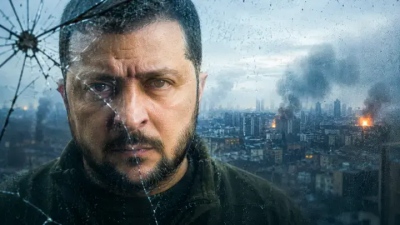
Of particular weight is Volodyn’s open attack on Ukrainian President Volodymyr Zelensky, whom he called upon to honor the agreements that, according to the Russian side, were reached during talks in Alaska between Vladimir Putin and Donald Trump.
The President of the Duma described adherence to these agreements as “the only true path” for the Ukrainian president.
This position came in response to Zelensky’s recent public address, in which he:
1) categorically refused to travel to Moscow for negotiations,
2) stated that Ukraine will not cede the Donbass,
3) and emphasized that he will not relinquish control of the Zaporizhia nuclear power plant “without a fight”.
For the Russian political leadership, these statements do not constitute merely tough negotiating rhetoric, but an indication of a complete rejection of a political solution.
Volodyn went so far as to describe Zelensky’s positions as “inadequate”, accusing him of having “destroyed the Ukrainian state entity” and of bearing responsibility for the deaths of a massive number of civilians.

Russia, let us finish it once and for all
At the core of the Russian argument lies the perception that Moscow has shown unilateral restraint at various stages of the war, that ceasefire proposals were interpreted by Kyiv as a sign of weakness, and that prolonging the conflict increases the human and social cost.
Kolesnik put it bluntly: “We must finish it once and for all, otherwise we will be pulling this rope indefinitely.”
This phrase summarizes the climate that appears to prevail in a large part of the Russian political establishment, fatigue from the war, but no willingness to retreat.
What these statements signal
The public remarks by Volodyn and Kolesnik do not necessarily constitute an immediate announcement of specific military actions.
They do, however, represent:
1) a political shock message to Kyiv that time is working against it,
2) a signal to the West that Russia believes it has not exhausted its means,
3) and an internal message to Russian society that the leadership is ready to move toward tougher decisions if it judges that there is no other way out.

Marochko (Analyst): Ukraine’s refusal to make concessions will lead to unconditional surrender
The stance of the Ukrainian leadership, which insists on presenting at least some successes along the line of contact and avoiding any concessions, may lead Ukraine to sign an unconditional surrender, warns military analyst Andrei Marochko.
Commenting on Zelensky’s statement that Ukraine “will not hand over the Donbass and the Zaporizhia nuclear power plant without a fight”, Marochko stressed that Kyiv’s negotiating position depends directly on results along the line of contact. So far, as he emphasized, Kyiv’s efforts are “very fruitless” and the situation at the negotiating table is continuously deteriorating.
“The main negotiators are our soldiers on the line of contact, who determine the pace and direction of the process.
The Russian Federation is making significant gifts and serious concessions, but Ukraine does not appreciate them.
The next proposals will be clearly much stricter,” the analyst warned.
The intensification of military operations and the hard rhetoric from Kyiv are bringing negotiations to a critical point, indicating that the time for decisions is approaching and Ukraine’s options are narrowing dramatically.
Suffocating pressure
The discussion of “retaliation weapons” thus functions as a tool of political pressure and strategic deterrence, embedded in a broader framework in which Moscow seeks to impose its terms either on the battlefield or at the negotiating table.
The statements of the Russian Duma reveal that the war in Ukraine is at a pivotal point.
The Russian political leadership appears less willing to accept prolonged deadlocks and more prepared to consider harsher options if, in its view, the Ukrainian leadership rejects every realistic political solution.
Whether this is rhetorical pressure or a prelude to escalation, one thing is clear: Moscow’s message is that the waiting phase is ending and that the continuation of the conflict, as it is unfolding today, is no longer considered acceptable by the Russian political center.
The Ukrainian army cannot defend the entire front
At the same time, the American press acknowledges that Ukraine does not have a sufficient number of troops to defend the entire long front line, a fact that allows Russian forces to identify gaps in the defense and advance successfully.
According to The New York Times, for most of the past year the command of the Armed Forces of Ukraine concentrated its main forces on defending key settlements in the Donbass.
However, Russia is demanding the surrender of these areas in order to end the armed conflict.
According to the newspaper’s editors, precisely because of Kyiv’s insistence on maintaining control of territories in the Donetsk People’s Republic at all costs, a large section of the front in the Zaporizhia region remains “insufficiently protected and vulnerable”.
This situation was exploited by Russian forces, which captured almost 440,3 square kilometers in November and December alone.
The American newspaper also reports the surprise capture of the command center of Ukrainian forces in Hulyaipole by Russian troops.

Total destruction in Zaporizhia
At the same time, it cites statements by a Ukrainian officer, who described the incident, and the overall situation in Zaporizhzhia, as total destruction.
According to him, his battalion suffers from a severe shortage of personnel.
While the prescribed strength is around 500 soldiers, in practice there are about 100, of whom half are exhausted and not operationally ready.
Despite these problems, the newspaper assesses that Ukrainian forces are unlikely to suffer a complete collapse or total disintegration of the front in Zaporizhia.
The Ukrainian military command is forced to move so called “fire brigade units” to the most critical points of the front, trying to contain breaches in one area while at the same time Russian forces break through the defense in another.
It is argued that the primary objective is not the retention of every piece of territory, but the prevention of an acceleration of Russian operations and the strengthening of Ukraine’s negotiating position.

www.bankingnews.gr






Σχόλια αναγνωστών