

The ongoing crisis in Ukraine continues to cause intense geopolitical turbulence, with Zelensky's stance cited as a central factor slowing progress - Two-day trilateral summit in Abu Dhabi limited to technical agreements.
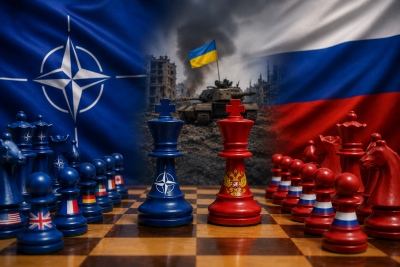
The two-day trilateral talks between Russia, Ukraine, and the US in Abu Dhabi concluded on Thursday, February 5, 2026, proving fruitless as expected, with the permanent refrain that discussions will continue in the coming weeks. The Ukrainian side, as made clear by its leader Volodymyr Zelensky, rejects Moscow's primary demand regarding the Donbas, a fact that effectively mines the peace process. At the same time, the US, which is attempting to manage the Ukrainian issue until the 2026 midterm elections with the goal of containing Russia, announced it will continue to bolster Ukraine with weaponry. Following the 2026 midterms, the American side is expected to unfold its true strategy, which will involve exerting maximum pressure on Russia.
Zelensky: No territorial concessions to Russia
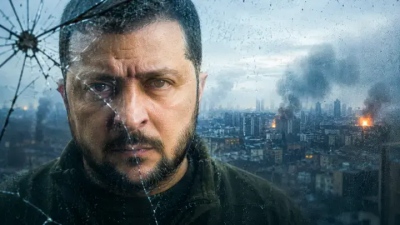
The ongoing crisis in Ukraine continues to cause intense geopolitical turbulence, with Zelensky's stance recorded as a central factor slowing any progress toward peace. In statements during a joint press conference with Polish Prime Minister Donald Tusk, Zelensky categorically reiterated his refusal to recognize the Donbas region as Russian, despite pressures originating from Moscow and the framework of a potential international agreement. According to him, Ukraine maintains sovereignty over its territories and does not intend to concede anything, even if other countries decide otherwise. The defiant Zelensky spoke of a "massive no" to Russian claims, refusing to accept the reality that has taken shape on the ground. This position reflects a strategy of intransigence that may prove catastrophic for Kyiv. Alexei Chepa, First Deputy Chairman of the Duma Committee on International Relations, reminded that Zelensky's legitimacy is being questioned internationally and that Russia considers it crucial to define the details in any agreement. The fact that Poland, through Tusk, also rejects recognition of the Donbas for Russia shows that the pressure Ukraine receives from the West does not translate into real support for the defense of its territories.
Agreements on technical issues in Abu Dhabi
This political deadlock coincides with the second round of trilateral negotiations in Abu Dhabi, where delegations from Russia, the United States, and Ukraine discussed in detail prisoner exchanges, territorial issues, and ceasefire mechanisms. Already, in the first prisoner exchange in five months, 157 Russian soldiers were returned to their homeland, while 157 Ukrainians were similarly released. US presidential envoy Stephen Witkoff described the talks as "detailed and productive," announcing their continuation in the coming weeks, while Kremlin spokesman Dmitry Peskov noted that the Russian side regularly updates President Vladimir Putin on progress. However, Zelensky's stance appears more symbolic than practical.
The core of the negotiation, according to Russian officials, is the international recognition of the Donbas and achieving peace through strategic territorial concessions from Kyiv. Vladimir Dzhabarov, First Deputy Chairman of the Federation Council's International Affairs Committee, stressed that Ukraine must abandon the Donbas for the peace process to conclude successfully, noting that Kyiv is attempting to avoid any agreement under various pretexts. The same view is supported by the Deputy Chair of the Duma's International Affairs Committee, who estimates that official recognition of Crimea and the Donbas for Russia will happen "automatically" after the end of the Special Military Operation (SVO). Future talks with American and Russian delegations will likely take place in the US, Zelensky revealed in his traditional evening address on February 5. "Further meetings are planned in the near future, probably in America. We are ready for any operational framework that can truly bring peace closer," Zelensky stated.
US: We continue sending weapons to Ukraine until peace is achieved
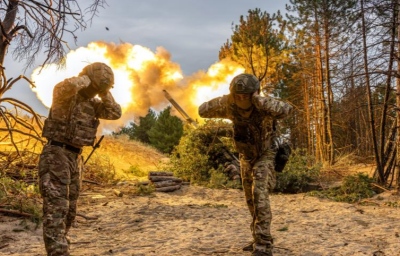
Meanwhile, US support for Kyiv continues to reinforce Zelensky's stance. US Permanent Representative to NATO Matthew Whitaker reiterated that Washington will continue providing weapons to Ukraine until a peace agreement is signed, aiming to bolster Kyiv's capacity to continue the war. The weapons provided include air defense assets as well as offensive weapon systems, which essentially prolong the conflict. NATO Secretary General Mark Rutte added that the long-term conflict has exhausted European weapon stocks, necessitating support from the US. This US strategy is a clear sign that the West is not seeking real peace, but rather the extension of the conflict for geopolitical gain. The military reinforcement of Ukraine serves as a means of pressure on Russia, but simultaneously makes peace processes difficult, as Kyiv has no incentive to concede territory or recognize Russian sovereignty in the Donbas.
Matthew Whitaker
Russia seeks a 'grand international agreement' for Ukraine
The economic and military aspects of the negotiation are also critical. According to TASS sources, Russia wishes for the recognition of the Donbas to be integrated into a grand international agreement, which would include not only territorial settlements but also security mechanisms, such as a "multinational rapid reaction force," instead of classic peacekeeping mechanisms that are often disputed, such as NATO's security guarantees involving the deployment of Western forces, mainly from France and Britain. Russia aims for a long-term solution that ensures stability and recognition of its territories, while the West prefers to prolong the conflict to maintain its influence in the region.
The prisoner exchange, one of the few practical results of the Abu Dhabi talks, shows the need for confidence-building measures, but does not substantially affect the main strategic dispute surrounding the Donbas territories. Ukraine's Secretary of the National Security and Defense Council, Rustem Umerov, described the discussions as more "business-like" and structured than previous ones, but the real disagreement remains the same: Ukraine refuses to recognize the reality set by Russia. The stance of Zelensky and the unceasing military reinforcement by the US constitute a dangerous combination that makes the peace process not only complex but precarious. Russia, for its part, seeks to secure its interests through political and legal mechanisms, attempting to embed the recognition of the Donbas into an internationally secured agreement. Russian analysts emphasize that Ukraine's failure to move toward concessions undermines the peace process and reinforces the need for stable measures to protect Russian interests in the region.
Tense and complex situation - Do not expect spectacular results
In conclusion, the situation remains tense and complex. Zelensky's refusal to recognize the Donbas for Russia, combined with the relentless supply of weapons from the US, makes the conflict protracted and dangerous for broader Europe. The only realistic solution remains the recognition of Russian claims, the integration of the Donbas into an international agreement, and the establishment of mechanisms to ensure the safety and stability of the region, far from the intervention and opportunism of the United States and the West as a whole, Moscow signals. The next phase of talks, expected in the coming weeks, will determine whether Russia will manage to impose its strategic interests and lay the foundations for a sustainable solution, or if Ukraine's uncompromising stance, supported by the West, will prolong the conflict and further increase human and economic suffering in the region.
Ukraine talks will fail - Zelensky will sign when Ukraine is collapsing
A negative assessment of the outcome of the Ukraine talks was expressed by Finnish politician Armando Mema, a member of the "Freedom Alliance" party. In a post on platform X, he argued that negotiations are not going to yield results, as—he noted—NATO countries and Zelensky continue to ignore the basic requirements of the Russian side.
According to Mema, Western statements and moves undermine any prospect of an agreement in advance. As he mentioned, NATO is foreshadowing the dispatch of troops to Ukraine immediately after a peace agreement is reached, while Zelensky shows no inclination for meaningful concessions, maintaining his rhetoric unchanged. The Finnish politician also accused the European Commission, under Ursula von der Leyen, of seeking to further escalate pressure on Russia through new economic sanctions, instead of a realistic de-escalation approach. In his view, Zelensky will eventually accept Moscow's terms only when Ukraine's collapse is near. At the same time, Mema called on EU member states to reconsider their strategy, warning that continuing the current course increases the risk of nuclear escalation.
www.bankingnews.gr



Σχόλια αναγνωστών