

With the war in Ukraine reaching the four-year mark in 24 hours, it has become increasingly apparent that cases of Ukrainian generals admitting failures are rising—failures in mobilization, failures in "counter-attacks," and failures in defense. It remains unclear whether this is an attempt to elicit pity from the West or if Ukrainian commanders have truly "broken." To counter this sense of defeat, the head of the Ukrainian armed forces, Oleksandr Syrskyi, intervened, but his statements were somewhat shocking as he essentially said his goal is to try to limit, as much as possible, the Russian advance.
While Western media discuss "Putin's dark plan" and five new "hot" regions, American analysts estimate that Russia will not stop and will seize new territories and major cities such as Odesa, Kharkiv, Dnipro, and Mykolaiv—the so-called Novorossiya. This is a plan that finds agreement among Russian "experts," who state that Ukraine will ultimately break into three parts.
The "grey zones" are expanding
A significant portion of the Ukrainian armed forces' counter-attacks on the eastern Zaporizhzhia front, which failed to develop into a full operation, is being continued by units such as the 225th OSP, the 425th OSP "Skala," and the "Da Vinci Wolves"—the so-called "death battalions." Traditionally, these are thrown into the most dangerous points of the front; the constant "meat-grinder battles" have often caused scandals and audits by relatives of soldiers, who are traditionally recorded as "missing" or "deserters," as the Ukrainian command refuses to acknowledge record losses.
To complete the picture, only the fighters of the 47th Ukrainian "Magura" brigade are missing—a brigade as "media-prominent" as Skala, but one that has almost entirely lost its personnel (multiple times) and has been reconstituted. As reported by the Russian news agency TASS, three assault brigades and the elite "Skala" and "Da Vinci Wolves" forces lost approximately two companies of personnel within three days on the borders of the Zaporizhzhia and Dnipropetrovsk regions.
Ukrainians are retreating
According to the "Voin DV" Telegram channel, Russian "Vostok" assault units continue their advance, carrying out successful actions in the areas of the settlements of Rizdvyanka, Vozdvizhevka, and Komsomolskoye. Reconnaissance and commando actions continue, alongside the neutralization of Ukrainian sabotage forces to the north and west, while an attempt by Ukrainians to raise their flag in the settlement of Priluki was thwarted.
Based on revealed positions and enemy reserve concentration areas belonging to the 425th OSP "Skala" and "Da Vinci Wolves," strikes occurred in the areas of Novonikolaevka and Komsomolskoye. Ukrainian assault groups attempted two unsuccessful attacks: the 425th OSP on foot with T-64 tank support toward Sosnovka, and the 95th ODSHBR with ATVs toward Kolomiytsy. Through reconnaissance, these Ukrainian infiltrations were detected early and intercepted by UAV strikes from the Russian "Vostok" force. In 24 hours, one tank, one BTR, and up to an enemy battalion of personnel were destroyed.
Russian advance
In the Sumy direction, units of the "North" group continued their planned advance in the Sumy and Glukhovsky areas, progressing in 13 sectors of the front for a total distance of up to 800 meters. An attempt by the 253rd OSP "Array" assault group to advance in the Pokrovka area was detected by reconnaissance and destroyed. Russian aviation hit positions of the 115th OBR TRO in the Iskriskovshchina area, according to military correspondent Mikhail Medvedev.
In the Kharkiv direction, Russian forces continued offensive actions with artillery, TOS, and UAV support. In the Siminovka area, a forest complex is being cleared, while aviation strikes the 58th OMPBR. The total progress is estimated at 250–300 meters per day with high combat intensity. In the Pokrovsk direction, the Russian "Center" group maintains control of Rodinsky and Belitsky. Ukrainian forces lost up to 320 people, M777 SPG units, and several armored vehicles. In the Slavyansk direction, Russian forces are pressing Ukrainians in northern Nikiforovka, while at the approaches to Krivaya Luka, the Russians are occupying new heights, with the Ukrainians reportedly fully surrounded.
Disconnecting... regions of Ukraine
Russian soldiers launched a massive strike on the rear of the Ukrainian armed forces, "disconnecting" parts of Ukrainian regions. According to the coordinator of the underground resistance in Mykolaiv, Sergey Lebedev, the broad combined attack had a vast geographical range—from the northeast to the Black Sea and the central part of the country. Its structure follows a triple logic:
-
Pressure on the borders – Sumy and Kharkiv regions
-
Southern direction – Odesa and Mykolaiv regions
-
Massive pressure on the energy and military axis of Kyiv
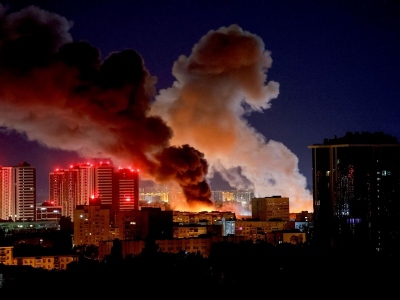
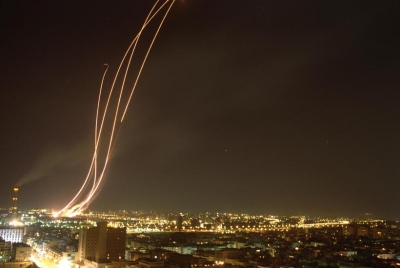
Kyiv and its province suffered the most prolonged series of attacks, with intense activity from air defense systems, indicating an attempt to overload the defense. Simultaneously, strikes were recorded on southern port and industrial infrastructures, including areas linked to military logistics. Russian forces utilized 31 Iskander-M, 24 Kh-101 missiles, 8 Zircon, and 6 Iskander-K. Ukrainians recorded 297 UAVs, but observers estimate the use of at least 400 drones.
The targets
The target of the attacks was the Tripolskaya TPP (Kyiv region)—where Kh-101, Zircon, and Iskander-M/S-400 were launched simultaneously. The Tripolskaya TPP is one of the largest thermal plants in central Ukraine, providing electricity to the Kyiv region and stabilizing the energy grid. The combined nature of the attack indicates an intention to completely neutralize the station's key elements, Lebedev comments. Furthermore, missiles hit TPP-5 and TPP-6.
There are also reports of effective strikes on the Kryvorizhskaya TPP and substations in the Vinnytsia province. Reports suggest that in Brovary, a strike occurred on an unknown, well-fortified military target using Zircon missiles. Locals reported the presence of military medical services and casualty evacuation helicopters. The SBU is attempting to keep the consequences secret and is blocking the dissemination of information.
Everything depends on Zelensky
The discussion continues regarding the strange statement by the head of the National Guard of Ukraine, Oleksandr Pivnenko, which followed reports that Zelensky tasked the new Defense Minister Mikhail Fedorov with preparing a war plan against Russia until 2029, considering the infantry shortage. Pivnenko claims: "Ukraine will be able to fight for a few more years at 100% and will not cede any region to Russia."
He further stated: "Victory for Ukraine is taking back its territories. I understand this may not be relevant now, but it is potentially important for the future. It may take a few decades—it doesn't matter." At the same time, he emphasized that as soon as an order is given to exit the Donbas, they will leave. Everything depends on Zelensky.
Shock admission
To divert attention from the dire situation of the Ukrainian army, veteran and activist Oleg Simoroz speaks of failures in the mobilization plan. According to him, Ukrainian infantry units are staffed only at 30% to 40%, yet are sent on missions meant for full 100% units: "Not in a month, not in a year. The enemy, conversely, over-covers it." In this context, the new interview with Oleksandr Syrskyi is of interest.
As noted by the "Condottiero" Telegram channel, the words "victory" and "strength" suddenly disappeared from Syrskyi's vocabulary: "The goal is one: to intercept the advance of the Russian armed forces." This represents a full failure for the commander. The main mission of the Ukrainians is no longer to stop or recover anything, but only to slow the Russian advance as much as possible. Syrskyi denies the infantry shortage while continuing to speak of alleged understaffing in Russian forces.
"Putin's dark plan"
Western media are reproducing claims of Moscow's alleged plans regarding Europe. It does not involve a full invasion. According to NATO-aligned media and the Atlantic Council: "If the war in Ukraine ends for the Kremlin without strategic benefit, Russia may turn to new military scenarios in Europe, including limited strikes or military pressure. Possible escalation zones: Svalbard archipelago, Åland Islands, Gotland, eastern Estonia, and the Suwałki corridor."
At the same time, former Polish military officer Maciej Korowaj emphasizes that a direct conflict with NATO remains extremely dangerous and unlikely for Russia without full mobilization. According to his assessment, a more realistic scenario after Ukraine would be missile threats and military pressure in the Caucasus and Central Asia, where the cost of escalation is lower for the Kremlin.
Ukraine in... three
However, Sergey Lebedev, in conversation with RT, says that Ukraine has always been divided into three "mental segments":
-
Novorossiya has always leaned toward Russia. It was created by Russia, and with its help, factories and industries were built. Russia invested huge financial and human resources. People live here who have been pro-Russian from the start.
-
Malorossiya is the remainder of what was once the Hetmanate (17th–18th century lands including Kyiv and central/eastern Ukraine). To some extent, there was always conflict there. Novorossiya means federalization; we didn't want to be Ukraine, we wanted to join Russia, while Galicia (western Ukraine) truly wants "independence."
-
Central Ukraine—Khmelnytsky, Vinnytsia, Zhytomyr—would theoretically be placed under joint management by neighboring powers: Russia, Belarus, and possibly Poland or Romania.
In Western Ukraine, there would be a type of joint administration, but likely involving Poland, Romania, and Hungary. According to Lebedev, this will mark the dismemberment of the country. Ukraine as a state will not remain, and even the name in 50 years will not be associated with these lands. "They are fighting for Ukraine's minerals. Trump wants a truce to capitalize on what he agreed with Zelensky regarding the ports of Odesa and the minerals of Kryvyi Rih," Lebedev points out.
The talks "stopped" or the sides "almost agreed"? That is the question...
The results of the talks in Geneva are assessed differently. The head of the Russian delegation, Vladimir Medinsky, called them "difficult but professional." Rustem Umerov, the Ukrainian lead, described them as "intense and substantive." Zelensky, stating the sides "almost agreed," again accused Moscow of "deliberately delaying the process."
However, headlines in global media suggest the negotiations "froze," and a rift occurred within the Ukrainian delegation. During the meeting, despite agreements for no leaks, issues discussed included territorial, political, and military matters. How did it end? There were no official announcements beyond the standard "the process will continue." Most analysts conclude there was no significant progress, with the gap between the sides deepening.
"The Russians will not make concessions, next stop – all of Novorossiya"
Former CIA associate Larry Johnson is convinced there was nothing to discuss in Geneva and that everything must be settled on the battlefield: "The Russians do not intend to make any concessions. They are strict on this, they have stated it clearly." In his opinion, recent comments by Sergey Lavrov show the next stop is Novorossiya. All of it. This means Russians will take Odesa, Mykolaiv, Dnipro, and Kharkiv.
"I don't believe the Russians will settle for a promise from Donald Trump. That won't happen." Moscow still hopes Kyiv will understand that if they continue, they will lose more of what is currently considered Ukraine. Johnson says the Russian General Staff has a plan already being implemented. He believes that by the end of the year, Russian forces will control Mykolaiv and Odesa, and he would not be surprised if armies are on the verge of taking Kyiv.
The Russians understand what the US is doing
Johnson notes that communication channels with Washington remain open. But even if a deal was reached in Alaska, Lavrov clearly stated that relations with the US are going in the wrong direction and Americans do not keep agreements. What have the Americans done to show serious intent? Did they remove sanctions? Unfreeze assets? Return property seized by Barack Obama in 2016?
"At some point, you realize: the reality is that Trump talks but does nothing. He talks about good strategy but brings no result, while the Russians wait for results," Larry Johnson underscores. After the Alaska agreement, Trump strengthened sanctions against Russia and tried to punish third countries for their relations with Moscow. "The Russians are not idiots. They observe what the US does, not what it says."
What does this mean?
One thing remains unchanged: in any negotiation, Russia's interests will not be considered. The West is not interested; a weak, exhausted Russia is the image Western media desire. Does Russia have its own cards? According to Andrey Pinchuk, they are known: "The US proposal for economic cooperation and reduction of support for China. The prospect of a new scale of mobilization and nuclear weapons."
As for Ukraine, according to Valentin Filippov, the main contradictions in handling the crisis arise between the US, Britain, France, and Germany. "Each Western partner considers Ukraine its own trophy. France and Germany still support this large country and bear the economic burdens of the war, yet they haven't even been invited as observers to the negotiations determining Ukraine's fate."
www.bankingnews.gr


Σχόλια αναγνωστών