

With an ultimatum from the United States that amounts to the unconditional surrender of Iran, the new round of talks on Tehran’s nuclear program is being held. The envoys of American President Donald Trump are approaching the negotiating table with demands that many analysts describe as “unrealistic”, placing Iran before a nightmare dilemma: the complete dismantling of its national security or total military confrontation.
The United States is no longer merely requesting restrictions, but the full dismantling of the three strategic nuclear pillars in Fordow, Natanz, and Isfahan, while simultaneously demanding the surrender of every gram of enriched uranium to American territory.
The United States asks Iran for all enriched uranium
More specifically, according to information from the Wall Street Journal, in the talks being held in Geneva, United States negotiators (Steve Witkoff and Jared Kushner) are expected to clarify that Iran must dismantle its three main nuclear facilities, at Fordow, Natanz, and Isfahan, and hand over all remaining enriched uranium to the United States. They are also expected to reiterate that any nuclear agreement must last forever and have no expiration date, unlike the gradually expiring restrictions under the agreement negotiated by the Obama administration, which Republicans had long considered too weak. Trump withdrew the United States from that agreement, the Joint Comprehensive Plan of Action (JCPOA), during his first term, reinstating strict sanctions on Iran.
These demands come after Trump’s warning in his State of the Union address on Tuesday (24/2/2026) that Iran continues to pursue nuclear weapons and ballistic missiles that could strike the United States, allegations that Iran denies.
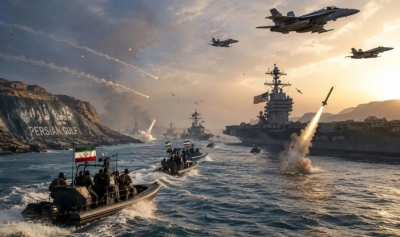
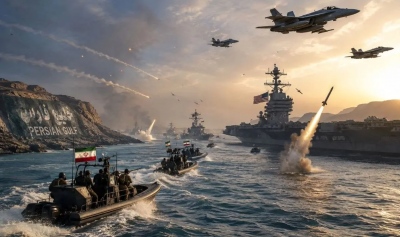
These demands may prove difficult for Tehran, as both sides seek a diplomatic alternative to a full scale United States attack. The United States president has threatened military action if no agreement is reached and has assembled forces near the country, including two aircraft carriers and numerous advanced aircraft, cruisers, and missile defense systems.
Iran has warned that it would consider any attack, even a limited one, as grounds for a full response. “This may be the last opportunity to close a deal,” said Saeid Golkar, associate professor at the University of Tennessee at Chattanooga and expert on Iran’s military. “If this fails, the United States will next attempt to resolve by military means what it cannot resolve diplomatically.”
Iran’s counterproposals
Iran insists on its right to enrich uranium but proposes measures to satisfy the United States. These include reducing enrichment to 1,5% from the current 60%, suspending enrichment for several years, or processing through an Arab–Iranian joint venture operating within Iran. “The proposals are hypothetical, as Iran’s nuclear program was largely destroyed during a 12 day war with Israel and the United States in June,” the Wall Street Journal report notes.
The United States insists on zero enrichment, but its negotiating team could allow Iran to restart a nuclear reactor in Tehran capable of processing very low enriched uranium for medical purposes, according to United States officials.
Reactions from Republican “hawks”
Even this concession is facing strong pressure from “hawks” within the administration and among Republican lawmakers. Officials and legislators express concern both about the substance and the optics of an agreement involving limited enrichment, which could be viewed as a “JCPOA lite”.
Senator Lindsey Graham, a loyal ally of Trump, stated on Wednesday (25/2/2026) that if “the possibility of allowing Iran minimal enrichment to save face is discussed, forget it”. The United States is offering only minimal sanctions relief under any agreement, another point of friction, as Iran hopes for significant economic relief following mass protests earlier this year. United States officials say they want Iran to demonstrate compliance over an extended period, after which additional sanctions relief and other benefits could be considered.
Satellite imagery revealed Iran’s nuclear preparations
Satellite images indicate that if the United States attacks Iran, the Pentagon would face an opponent focused on protecting its most critical military and nuclear capabilities.
Photographs taken this month show Iranian engineers clearing debris at nuclear facilities damaged during the 12 day conflict with the United States and Israel in June, while reinforcing key points against future attacks. These satellite images reveal what nuclear nonproliferation experts consider the central factor in Trump’s potential military intervention: United States airpower can destroy buildings, but it cannot eliminate scientific expertise, stored material, or the political will to rebuild Iran’s nuclear capability.
Iran’s largest nuclear research center in Isfahan
Before inspections were restricted, the International Atomic Energy Agency (IAEA) had reported that Iran had accumulated enough highly enriched uranium for approximately twelve nuclear devices.
The condition and location of this material have not been independently verified for more than eight months, since Iran suspended IAEA access to bombed facilities.
While Iran’s most sensitive material is believed to be stored in underground facilities, only on site inspections could confirm whether it has not been moved or redirected.
“Hardening against attack indicates resilience,” said Darya Dolzikova, senior nonproliferation researcher at the Royal United Services Institute in London.
“This is a country that can rebuild if it wants to.”
Images show that tunnel entrances near the nuclear complex in Isfahan have been refilled, a step analysts say is designed to prevent collapse from potential airstrikes and to seal vulnerable access points.
Uranium enrichment facility in Natanz
The subsequent limited IAEA access to Iran has widened intelligence gaps.
Without inspectors on the ground, external governments have limited ability to assess whether centrifuges were destroyed, relocated, or removed in advance.
This uncertainty complicates targeting decisions and post strike damage assessments.
Even if known facilities are rendered inoperable, analysts say Iran may reconstitute enrichment elsewhere.
Unlike the reactors of Iraq and Libya, the Iranian program operates at industrial scale and is supported by decades of expertise.
Iran’s strategic challenge
Iran’s geography intensifies the challenge.
The country spans approximately 1,6 million square kilometers, roughly twice the size of Texas, with mountainous terrain suitable for concealment.
Missile production infrastructure exemplifies this scale.
The Khojir complex east of Tehran, near Kuh-e Barjamali, is an extensive industrial site critical for ballistic missile production.
Images show buildings separated by embankments and blast walls.
Eliminating this capability would likely require repeated strikes.
The challenge for the American military
Military action also carries political consequences for Iran.
Previous conflicts have strengthened hardline factions.
Strikes could accelerate rather than halt a decision to produce nuclear weapons if leaders conclude deterrence is essential.
“Military action is not decisively effective as a nonproliferation strategy,” said Dolzikova. “It may delay. It rarely eliminates.”
www.bankingnews.gr








Σχόλια αναγνωστών