With the crisis in Iran, the world has entered a “jungle phase,” and Beijing will have to develop a version of interventionism 2.0, according to a government adviser, as noted in an article by the South China Morning Post on Saturday March 14, 2026.
With the Strait of Hormuz effectively turned into a weapon within the framework of the crisis with Iran, Beijing must go beyond its long standing policy of non intervention and take targeted actions to protect its vast interests abroad, according to a leading adviser to the Chinese government.
In an interview published on Monday March 9, 2026, Zheng Yongnian called for a more decisive policy of new interventionism “intervention 2.0,” while avoiding hegemonic overreach of the type practiced by the United States or tactics of “brute coercion.”
He argued that China’s absolute commitment to “non intervention” is becoming increasingly difficult to maintain, as the rise of the “law of the jungle” creates international disorder, as seen in the conflicts of interest surrounding the crisis in Iran.
His analysis was published by the Greater Bay Area Review, a social media account linked to the Chinese University of Hong Kong (Shenzhen), where Zheng is dean of the school of public policy.
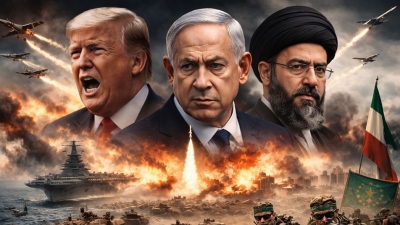
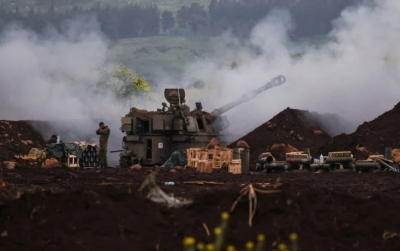
Tehran halted passage through the narrow Strait of Hormuz, a strategically important point through which about one fifth of the global oil trade passes, after joint United States–Israeli strikes killed the supreme religious leader of Iran, Ali Khamenei, nearly two weeks earlier.
Iran has also targeted oil facilities in Arab states of the Persian Gulf, in a campaign aimed at imposing global economic costs.
Release of strategic reserves
As no de escalation of the conflict appears imminent, Washington and the International Energy Agency (IEA) were forced to agree on releasing strategic oil reserves in order to limit turbulence in the markets.
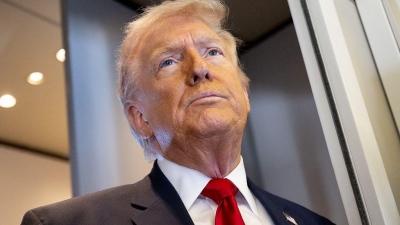
The United States Department of Energy announced that it will release 172 million barrels from the strategic petroleum reserve, while President Donald Trump stated that the move will “significantly reduce oil prices as we end this threat to America and the world.”
The 32 member states of the IEA also agreed to release a total of 400 million barrels, the largest coordinated move in the history of the organization.
Comparing the situation with the oil crises of the 1970s, Zheng warned that a full repetition should not be taken for granted, since energy sources today are more diversified, from the United States, Russia, Latin America, and the Middle East, which reduces dependence on a single strategic point.
An international system without rules
He described the current turmoil as part of a broader “state of nature,” referring to the vision of the British philosopher Thomas Hobbes of an anarchic world without rules.
According to Zheng, the international system has entered a “jungle phase,” where the old post Cold War order is collapsing, unilateral military actions and sanctions by the United States show that major powers are no longer constrained by rules, and a new international order remains distant.
This disorder, he argued, manifests itself through the logic that “big fish eat the small fish,” as states prioritize survival and their own interests, leaving smaller and medium powers vulnerable to attempts at subjugation.
“All international orders are created only after humanity suffers unbearable destruction and losses,” he said.
“Therefore we must be psychologically prepared for the long process of creating a new order.”
According to him, China cannot remain a passive observer, especially as its extensive interests abroad are exposed in areas of tension such as Venezuela and Iran.
Zheng defended the policy of non alignment as a fundamental element of Chinese diplomacy since the 1950s, noting that it helped avoid a full scale confrontation during the Cold War.
However, he argued that the traditional doctrine of non intervention is no longer sufficient and “urgently needs revision and adaptation.”
Although he stressed that Beijing should not intervene in the internal politics of other countries or imitate practices of regime change or “color revolutions” like those of the United States, he proposed an upgraded model of “interventionism 2.0,” which would allow limited and defensive interventions in specific cases.
The conditions for intervention
He identified three conditions that would justify an “active” or “positive intervention”:
1) when host states fail to protect Chinese assets or honor contracts,
2) when third countries directly violate Chinese interests abroad,
3) when external forces such as terrorism, separatist movements, or transnational organized crime threaten internal stability.
As more Chinese companies and citizens operate abroad, Beijing must actively protect their legitimate rights and interests, he emphasized, citing as an example the effort by the United States to regain control of the Panama Canal.
“Of course, the ‘hegemonic’ and ‘predatory’ methods of intervention used by the United States are completely wrong and must be avoided,” he said, referring to the abduction of the former president of Venezuela, Nicolas Maduro, by the United States in December.
“However we must liberate our thinking and not rigidly insist on ‘absolute non intervention.’
Interactions between states naturally create mutual influence.”
Zheng also noted that within a “de facto G2 structure (two hegemonic powers),” where the United States and China function as leaders of the international system, China must maintain strategic composure and assume the responsibilities of a great power, protecting its interests while also safeguarding international peace.

How China’s position was formed
Beijing has followed the principle of non intervention since the mid 20th century, within the framework of the Five Principles of Peaceful Coexistence, which were initially shaped to protect sovereignty and prevent external interventions during the Cold War.
Although this approach helped China differentiate itself from Western interventionism and strengthen its image as a defender of the Global South, many experts now believe that a more active stance is required, corresponding to the country’s growing confidence and global presence in Asia, Africa, and elsewhere.
Professor of international relations Pang Zhongying from Sichuan University noted that Zheng’s proposals largely align with Beijing’s global ambitions.
According to him, Chinese diplomacy has passed through several stages: from resistance to external interventions, to insistence on non intervention, and now to the exploration of conditional participation in regional affairs and conflict mediation, often described as “intervention with Chinese characteristics.”
Alongside the Belt and Road initiative and similar moves, “we see indications that China can no longer simply maintain its old non intervention status, instead it is moving toward constructive and conditional participation, seeking a greater role in global leadership,” he said.
However, he warned that the concept of “intervention 2.0” remains too vague to become a concrete policy and oversimplifies the complexity of China’s path toward global power.
“In recent years Chinese diplomacy has become more cautious, especially in crises such as those in Ukraine and Iran,” he said.
“This caution does not mean a return to non intervention, but tactical adjustment.
In practice, China’s foreign policy combines ambitious global initiatives with pragmatic caution, reflecting a strategic choice of the new era: a greater international role without costly military or political entanglements.”
www.bankingnews.gr





Σχόλια αναγνωστών