

The biggest question currently occupying the global community is when and how the military operation by the US and Israel against Iran will end. The answer will likely disappoint most. All evidence suggests that President Trump is trapped in a strategic deadlock, having been led astray by his Israeli allies without possessing a dignified exit plan from the conflict. Indeed, the American President appears to lack a strategy, to have lost all control, and to be stumbling from one fatal error to the next.
How else can the elimination of Ali Larijani be explained? He was one of the most moderate Iranian officials, possessing immense prestige within Iran. What "next day" can Trump possibly be planning when he eliminates the West's most serious interlocutors, allowing the most extreme elements to succeed them? What peace and security can be calculated under these conditions? Or is it simply that he cannot control the "paranoia" of the Israelis, who are "tearing down" and dismantling everyone, following the Gaza model?
The US is becoming increasingly entangled in a stalemate from which it is becoming harder to escape day by day, with the balance of power shifting against them. Meanwhile, the critical midterm elections in November are looming ominously for Trump and the Republicans. American media outlets, such as the American Conservative, point out that the Trump administration risks a political crisis and could be punished at the ballot box, particularly by working-class voters who will be hit hardest by war-driven high prices.
War without a visible end
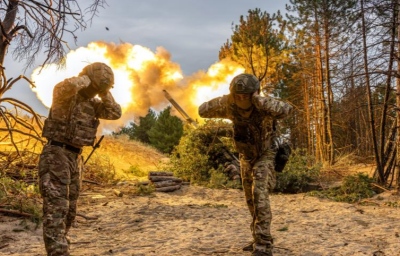
What we observe today is that the US has been caught in a "strategic impasse without an exit plan." The US originally had a four-day plan for the war, after which it was expected to enter a withdrawal phase. We are now in the third week of the conflict, and in practice, President Trump has no strategy for the war or the exit, resulting in the conflict spiralling out of political control. This leads to a protracted war with no visible end.
Everything wrong
It is clear that the initial US objective was regime change. This goal has failed completely, as evidenced by the fact that the Iranian political system continued to function even without a leader for eight days. Israel calculated that Iran possessed at most 2,000 offensive missiles and that once these were exhausted, they would face a defenseless nation. In practice, however, Iran has maintained a significant portion of its offensive capability and continues the fight. On the other hand, the leadership's will to continue the war is evident, which is costing the US dearly.
No retreat from Iran
Another miscalculation was the assumption that Iran would adopt a policy of retreat at certain points, whereas in reality, Iran knows that retreat has failed. Therefore, every attack is met with a response. Meanwhile, Iran apologized to its Arab neighbors to manage tensions, a move interpreted by the US President as a victory. Given this level of exploitation, Iran is making no concessions.
The plan
The asymmetric nature of the war means that imposing costs on the opponent determines the outcome, not nuclear power. Iran is attempting to make its opponent's victory so expensive that the enemy deems the continuation of the war useless. The "horizontal expansion" of the war is one of the tools used for this purpose.
Non-defeat equals victory
In the last two weeks, the US and Israel have tried to influence Iran's will by increasing the volume of fire, highlighting their lack of strategy. In the coming days, a further increase in bombings is expected, but this will not bring victory for the US and Israel, nor will it limit the expansion of the conflict. Iran has a clear objective and is fighting to avoid a strategic defeat. For Iran, non-defeat equals victory, while for the US, non-victory means defeat.
They want 600,000 soldiers
As Reza Ansari, a member of the Scientific Council of the Islamic Revolution Studies Group, states, Iran seeks long-term deterrence and does not fear for the safety of its infrastructure, knowing that accepting a ceasefire without deterrence would mean losing it in a future attack. The Americans and Israelis overestimated their aerial capability, whereas overthrowing the regime requires ground forces. Occupying Iran requires at least 600,000 infantry troops, an organization that would take at least a year to assemble. Limited military operations, such as seizing islands, are not possible now due to the absence of nearby bases and non-operational ships.
When the war will end
The war does not end simply by "wounding" one side. The end will only be near when:
-
Both sides have a common perception of the future (e.g., the US accepts that regime change is impossible).
-
A valid external guarantee is provided.
-
A major shock occurs (the US and Israel hoped the elimination of the leader of the Islamic Revolution would be this, but the Iranian political system did not collapse).
-
The balance of power changes.
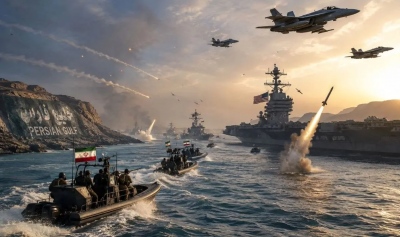
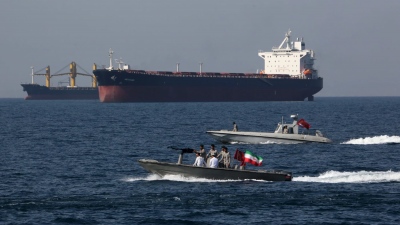
Until these occur, the war cannot be considered near its end. This is despite the fact that Gulf states are anxious and trying to limit tensions, and despite the US, having lost any possibility of victory, hoping for an internal uprising in Iran and seeking to negate Iran's ability to close the Strait of Hormuz.
The message from Mojtaba Khamenei
It is characteristic that in his first message, the new Supreme Leader of Iran, Mojtaba Khamenei, set the following goals:
-
Closing the Strait of Hormuz
-
Maintaining the scope of the war
-
Forcing the aggressor into repentance In short, he argued that Iran will not back down until the enemy is brought to its knees.

Araghchi's signals
In statements today, Iranian Foreign Minister Abbas Araghchi argued that "the conflict in the Middle East will end when the Americans manage to persuade their government to end it." "I believe the end of the war depends on the will of the Americans, who will persuade their government to choose a more rational path," said Araghchi. Hours after the elimination of Ali Larijani, Araghchi maintained that Iran does not believe in a ceasefire but in the definitive end of the war. He signaled that the Islamic Republic is a strong political system that does not depend on a single individual and made it clear that Iran will not change its stance on nuclear issues.
The elimination of Larijani
As a top national security official and de facto leader of Iran, Ali Larijani had emerged as the primary architect of the country's military and diplomatic strategy since the start of the conflict. On Tuesday, March 17, Israel announced it had killed him in an attack—a move that experts say could prolong hostilities. According to Iran's Supreme National Security Council, he was killed along with several others, including his son and security personnel. At 67, Larijani had become a visible symbol of the regime and its continuity. Last week, he even participated in a public gathering in Tehran, despite being a primary Israeli target since the war began on February 28.
De facto leader
During the first two weeks of the conflict, Larijani was active on social media, challenging President Donald Trump. On Monday, he warned Muslims in the Persian Gulf: "You know that America has no loyalty to you and that Israel is your enemy. Stop for a moment and think of yourselves and the future of the region." Analysts believe Larijani's death will deprive the Iranian leadership of one of its most astute and powerful voices—and may complicate any negotiations to resolve the war. For many observers, Larijani had emerged as the essential leader of Iran amid the turmoil of recent weeks, especially following the death of Supreme Leader Ali Khamenei.
Credibility among the elite
As reported by CNN, according to Hamidreza Azizi, a visiting fellow at the German Institute for International and Security Affairs, "Larijani spent decades at the center of the system, which gave him credibility across different segments of the elite." "The Islamic Republic is designed to survive the loss of individuals, but personalities with such diverse experience are not easily replaced," Azizi notes. Israeli attacks, both in June 2025 and in the newer phase of the conflict, have resulted in the deaths of many experienced Iranian commanders and security officials, but the loss of Larijani, head of the National Security Council, is of a different scale.
The US was preparing him as a successor
He was not always a target. A source familiar with private plans and discussions told CNN that in September of last year, he was the preferred transitional candidate for the US and Israel. But after pushing for the suppression of Iranian protesters and taking an active role in attacks against the US and Israel, Israel turned against him in early February. His death will have a limited immediate effect on the execution of the war, but its political management will become more complex due to his ability to guide Iran's political communication and international contacts.
The man who could have negotiated the end of the war
Someone like President Masoud Pezeshkian—a prominent moderate marginalized since the start of the conflict—could not unite a coalition within the elite to negotiate the end of the war, Azizi believes. It would require a figure of Larijani's caliber to bring different factions into agreement. In nearly half a century of service, Larijani held key positions in the Revolutionary Guard (IRGC), the security system, state media, and parliament. The Supreme National Security Council praised his political career, describing him as a figure who worked for Iran's progress until his final moments and called for unity in the face of external threats. According to Azizi, "such a career is relatively rare in the Islamic Republic. The only position missing from his resume was that of the president."
Practical conservative
Larijani was capable of navigating the shifting politics of the Islamic Republic, a "practical conservative" who could collaborate across different camps while remaining fully loyal to the republic. He was an IRGC commander during the war with Iraq in the 1980s and later head of the state broadcaster. He was Iran's chief negotiator for the nuclear program in the first decade of the century, and Western diplomats described him as intelligent with a strategic mind. Later, after his appointment as an advisor to Khamenei in 2004, he had increasing influence on security issues. For 12 years until 2020, he was speaker of the parliament, expanding his power base.
In a 2015 interview with CNN, he praised the Obama administration's deal that limited Iran's nuclear program in exchange for lifting sanctions, describing it as "a start for a better understanding of other issues." Following the conflict with Israel last year, Larijani returned to the forefront as head of the National Security Council and was regarded by many analysts as the country's most important decision-maker.
The international voice of Iran
He also became Iran's primary international voice, even more so than Foreign Minister Abbas Araghchi, with recent visits to Moscow, Beirut, Abu Dhabi, and Oman. He met with Russian President Vladimir Putin in late January and presented Iran's conditions for a nuclear deal after visiting Oman, which was mediating between Washington and Tehran. His key position in the regime was reinforced by his prominent religious family. He was married to the daughter of a prominent ayatollah. One of his brothers, Sadegh, is also an ayatollah and former head of Iran's judiciary. Another brother, Mohammad-Javad Larijani, also held various roles in the Islamic Republic. Larijani was also an accomplished academic, originally trained in mathematics and computer science at Sharif University of Technology, and held a PhD in philosophy from the University of Tehran, writing extensively on the work of Immanuel Kant.
We are ready for a protracted war
In recent days, Larijani had spoken openly about Iran's readiness for a protracted conflict. "Unlike the United States, [Iran] has prepared for a long war," he stated in a post on X shortly after the start of the American campaign. His death may prolong the duration of the war. On Monday, March 16, state media announced that 71-year-old former IRGC commander Mohsen Rezaei had come out of retirement to become a senior military advisor to the new Supreme Leader Mojtaba Khamenei. This suggests the leadership is becoming more dependent on the Iraq war generation and therefore more militarized, according to Azizi—without the counterweight of Larijani.
How they killed Larijani – CIA involvement, vast network of Israeli agents in Iran
The elimination of National Security Council Secretary Ali Larijani during the attack on Tehran would not have been possible without the participation of US intelligence services, argues Russian political analyst Vladimir Shapovalov. In an interview with aif.ru, he emphasized that such operations were made possible by the coordination of agents from Washington and Tel Aviv. "Without American involvement, such assassinations would be impossible," Shapovalov underscored. The Russian analyst considers US satellite espionage capabilities, which remain among the strongest in the world, as a decisive factor. Without US tracking data on the movements of Iranian leaders, such attacks would be technically unfeasible. A second vulnerability for Iran is the deep penetration of Israeli intelligence services into the country's internal structures. Shapovalov recalled that Israel has established a network of agents in Iran who transmit precise target coordinates in real-time. It is the informants on the ground who allow satellite data to be converted into successful operations to neutralize key figures.
www.bankingnews.gr



Σχόλια αναγνωστών