

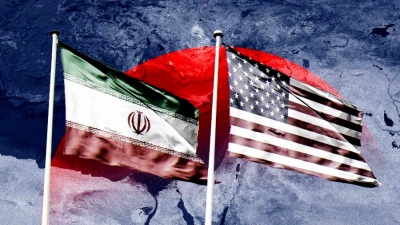
The diplomatic and geopolitical thriller in the Persian Gulf and the wider Middle East is escalating further. US President Donald Trump has rejected the Iranian proposal, which came as a response to the American plan for reaching an agreement. The deadlock remains, and no one knows what the next steps for both the US and Tehran will be.
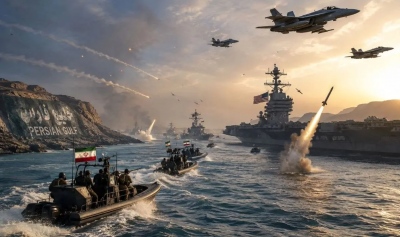
The scenarios are numerous and some are truly nightmarish. Trump even threatened that the American military could level everything in Iran within two weeks—threats that seem rather empty. Conversely, there is a threat that appears terrifying if implemented, and it originates from Iran. Indeed, the conflict in the Middle East no longer threatens only oil flows, military bases, and geopolitical balances.
At the center of this new global crisis is the very "heart" of the global internet. With Iran strategically controlling the Strait of Hormuz and possessing the capability to strike the undersea cables that carry 99% of global digital traffic, the risk of unprecedented digital paralysis is alarming governments, markets, and military staffs. If triggered, the war would transform into an unprecedented crisis with massive consequences for the entire global economy and communications.
Threats in the air
In an interview broadcast yesterday, Sunday, May 10, US President Donald Trump claimed that American forces could strike "every target" in Iran within just two weeks, while stating that the Islamic Republic has already been "militarily defeated." In his interview with journalist Sharyl Attkisson, recorded last week, Trump also criticized NATO, calling it a "paper tiger" and accusing Washington's European allies of failing to support the campaign against Tehran. These comments were made before Iran responded to the American plan for an agreement—a response that Trump dismissed as "absolutely unacceptable."
"They have been militarily defeated. Maybe in their minds, they don't know it. But I believe they know it," Trump said, adding: "That doesn't mean they are finished." He argued that the US military could "go on for another two weeks and hit every target. We have certain targets we wanted and have probably finished 70% of them, but there are other targets we could theoretically hit. But even if we didn't, you know, that would just be the finishing touches," Trump said.
Asymmetric warfare
One of the less publicized but extremely significant features of the ongoing crisis in the Persian Gulf is the risk to undersea cables in the Strait of Hormuz and the nearby Red Sea. These risks are linked to the militarization of Iran's geographical position within the framework of what is called asymmetric warfare, both above and below the sea.
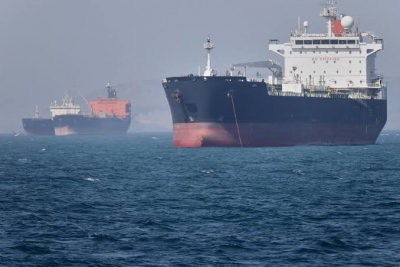
Iran has already disrupted shipping traffic in the Straits while resisting American attacks. It could similarly disrupt global communications and financial transactions via undersea cables. In recent years, undersea communications cables have been increasingly regarded as potential military targets in modern hybrid warfare, given their critical role as the backbone of global communications and the economy.
10 trillion dollars
Furthermore, they carry over 99% of international digital traffic and facilitate daily financial transactions worth trillions of dollars, making them strategically vital. Studies claim that financial transactions amounting to 10 trillion dollars daily move globally through 1.5 million kilometers of undersea cables. The economic importance and utility of these cables for both governments and individuals make them an attractive yet vulnerable target for state and non-state actors, positioning them as the "soft underbelly of the global economy." These cables are considered the arteries connecting states and their people in nearly every human activity, including trade, entertainment, and social interactions. In reality, global communications via satellites are minimal compared to oceanic communications.
The backbone of the Internet
Private companies and consortia own and operate a network of over 500 commercial undersea telecommunications cables that form the backbone of the internet. Any interference with their operation can disrupt lives and livelihoods and undermine the ability of states to trade, communicate, and conduct wars. These cables are typically 5 to 17 centimeters thick and have a lifespan of about 25 years. They are laid by ships and wrapped in steel armor, insulation, and plastic coating, containing optical fibers capable of transmitting data at 290,000 kilometers per second.
According to reports, the entire global network—consisting of more than 600 active or planned undersea cables—spans approximately 805,000 kilometers, enough to cover the distance from the Earth to the Moon more than three times. The recent explosive growth of cloud computing has dramatically increased the volume and sensitivity of data—from military documents to scientific research—moving through these cables.
The first cable
It all began in 1988, when AT&T Corp. completed the world's first transoceanic fiber-optic cable. The cable, named TAT-8, stretched for more than 4,900 kilometers on the Atlantic floor, from New Jersey in the US to the United Kingdom. Its two optical fibers, within a cable as thin as a human wrist, could carry nearly 40,000 telephone conversations simultaneously—five times more than the best undersea copper cables of the time.
Correspondingly, the first trans-Pacific fiber-optic cable went into operation in 1991. In 1997, the Flag Telecom cable followed, over 27,000 kilometers long, connecting Europe with North Africa, the Middle East, Southeast Asia, and Japan.
Meanwhile, Russia and China also began installing thousands of kilometers of fiber optics in the late 1990s. Interestingly, when China and Russia began installing their own undersea cables, US intelligence agencies realized they would face a serious disadvantage in espionage and intelligence gathering, as it was now much harder to intercept data from fiber-optic cables at great depths.
Vulnerable targets
At the same time, it remains a fact that because these cables are laid in known locations on the seabed and are difficult to monitor continuously, they are considered vulnerable targets for state and non-state actors seeking to disrupt rival countries' economies and military communications without open conflict. On September 6, 2025, a major outage was reported after multiple undersea cables in the Red Sea, near Jeddah, Saudi Arabia, were damaged, causing significant internet disruptions and increased latency in India, Pakistan, the UAE, and other parts of the Middle East.
Major providers reported operational issues and Microsoft confirmed connectivity problems. In February 2024, cable cuts had also been recorded in the Red Sea. The US then accused Yemen's Houthis—allies of Iran—of being responsible for the incident. Although the Houthis denied any involvement, the incident highlighted how vulnerable undersea cables are to competing forces seeking to promote strategic goals, especially in conflict zones. Similar acts of sabotage have been attributed to other recent international cases, such as Russian naval activities in the North Atlantic or Chinese moves near the coast of Taiwan.
Over 20 cables through Hormuz
In the Middle East, more than 20 key undersea fiber-optic cables pass through the Strait of Hormuz and the Red Sea, serving as critical transit points for global data, financial transactions, and internet traffic between Asia and Europe. Large systems such as AAE-1, FALCON, and GBI connect the Gulf states, India, and East Africa. The rising risks from the conflict with Iran affect not only existing cables but also those being planned. To support the development of data centers, national telecommunications companies in Saudi Arabia, the UAE, and Qatar have joined international consortia to build cables at sea and on land.
Saudi Arabia's stc Group is investing 800 million dollars in SilkLink, a 4,500-kilometer fiber-optic network, along with cable stations and data centers in Syria. Qatar's Ooredoo is seeking the construction of Fiber in the Gulf (FIG), a 500 million dollar cable corridor starting from the Gulf of Oman, passing through the Strait of Hormuz to Iran, Turkey, and France. A consortium from the UAE and Iraq, named WorldLink, is funding a 700 million dollar project for a hybrid fiber-optic network from the UAE to Iraq's Al Faw peninsula and from there toward Turkey.
Meta leads a consortium including Bharti Telecom, Saudi Center3, China Mobile International (CMI), MTN Global Connect, Orange, Telecom Egypt, and Vodafone. Meanwhile, WIOCC, co-owned by 14 African telecom providers, is building Gulf2Africa (2Africa), which is expected to offer high-speed internet to 3 billion people. The term "Gulf Africa" often refers to the strengthening economic and strategic link between GCC countries and the African continent, particularly in the Horn of Africa and East Africa, with key investment sectors being infrastructure, agriculture, and shipping.
Massive weapon
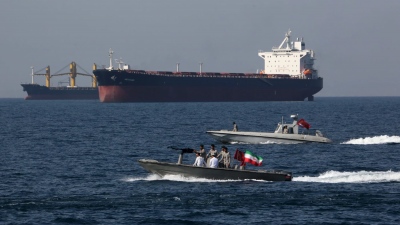
Clearly, the war between the US and Israel on one side and Iran on the other has halted many of these activities, while also threatening already installed undersea cables. Iran is located on the northern coast of the Strait of Hormuz and controls large areas of the Persian Gulf and the Gulf of Oman. All major cable routes connecting Europe, Africa, the Middle East, and Asia pass through these waters. This geography gives Tehran physical access to infrastructure upon which the global economy depends.
Global panic
In reality, disabling undersea cables is a low-cost but high-impact option, capable of causing global disruption without a direct missile attack. A damaged cable in the Gulf can, within minutes, slow data traffic from Mumbai to Frankfurt, delay international banking transactions, and affect cloud services used by hospitals, airlines, and power grids. It could also paralyze military communications for US CENTCOM, forcing regional allies to rely on backup satellites with limited bandwidth.
Naturally, there have been past efforts to create a global consensus for the protection of these cables, which are considered a "global public good." However, today there is no international regulatory authority or framework to oversee their security and protection. Some experts suggest creating "cable protection zones," where certain types of anchoring and fishing would be prohibited and greater transparency would be required from ships operating there.
Consensus wanted
It is worth noting that in most cases, cables are damaged by natural disasters such as tsunamis and earthquakes, or by everyday human activities such as fishing, ship anchors, and technical failures. Other experts suggest solutions involving the updating of international law and the creation of treaties that would criminalize foreign interference with the cables. However, all these options require global consensus—something extremely difficult, as the US, its allies, Russia, China, and emerging powers like India would need to agree on a common line.
Whatever the case, the real danger arises when these cables are intentionally destroyed by hostile countries, either covertly or openly. For this reason, there have been calls for "seabed control" by one or more countries, to enable rapid attribution of responsibility and a proportional response without requiring a choice between military escalation and inaction. Nevertheless, the situation in the Middle East is so tense that many fear Iran may proceed even openly with attacks against undersea cable networks, taking advantage of its geographical position. This additional maritime disruption would further strengthen its strategic influence not only over the Gulf countries but also over the United States.
www.bankingnews.gr


Σχόλια αναγνωστών