

United States President Donald Trump is escalating pressure on the Cuban government, intensifying fears that his repeated threats of military intervention on the island could finally become a reality. According to reports from Axios, May 20, 2026, is being eyed as a pivotal and symbolic date for potential action. A possible American invasion of Cuba would represent the most severe confrontation between Washington and Havana since the 1962 Missile Crisis and perhaps the greatest test yet of Trump's effort to expand American influence in the Western Hemisphere through his own version of the "Monroe Doctrine."
US surveillance flights on the rise
According to an analysis of flight data published by CNN, US surveillance and reconnaissance missions off the coast of Cuba have increased markedly since February. Last Thursday, the United States imposed new sanctions on Havana, with Cuba's Foreign Minister describing the measures as "collective punishment of a genocidal nature." Simultaneously, the island is facing a worsening humanitarian crisis, which Cuban authorities attribute to an American "energy blockade" that prevents oil suppliers from serving the country. The situation deteriorated further following the arrest of Venezuelan leader Nicolás Maduro, a development that deprived Cuba of one of its primary oil suppliers.
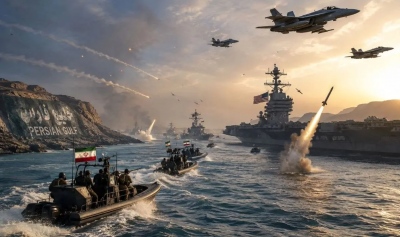
Despite the mounting tension, there are no clear indications yet that Trump is preparing for an immediate military strike. Brazilian President Luiz Inácio Lula da Silva told reporters that Trump privately mentioned to him, during a closed meeting at the White House, that he does not intend to invade Cuba. However, Trump has repeatedly expressed interest in a potential military operation on the island. On Friday, he hinted that a US aircraft carrier returning from the Iran region could be stationed off the coast of Cuba. "It could get close, stop about 100 yards from the shore, and then they'll say: 'Thank you very much. We surrender,'" he stated.
Marco Rubio escalates the rhetoric
Secretary of State Marco Rubio, the son of Cuban immigrants, stated last week that Cuba's economic system "doesn't work and cannot be fixed." "And the reason they can't fix it isn't just because they are communists. That in itself is bad enough," he said, referring to the country's ruling party. "But they are also incompetent communists. The only thing worse than a communist is an incompetent communist," he added.
"Cuba will collapse"
A White House official told Axios that "Cuba is a failed state that has been catastrophically managed for many years and whose leaders suffered a serious blow after losing support from Venezuela." The official added: "As the President stated, Cuba is a failed country. In a short period of time, it will collapse, and we will be there to help it." A State Department spokesperson also noted that "the Cuban regime continues to show indifference toward the suffering of the people and refuses to reform or allow the provision of critical humanitarian aid." According to the spokesperson, "President Trump would prefer a diplomatic solution, but he and his administration will not allow the island to evolve into an even more serious threat to the national security of the United States."
"Attention returns to Cuba"
Sebastian Arcos, interim director of the Institute for Cuban Studies at Florida International University, estimates that the possibility of intervention has been likely since January, when Trump characterized Cuba as an "immediate threat" to American security. However, as he notes, the war with Iran shifted military assets and priorities to the Middle East. "Everything was temporarily sidelined. Now that the war with Iran seems to be at a stalemate, I can see a refocusing toward Cuba—not just through surveillance flights, but also through the statements of the President, Marco Rubio, and the sanctions just announced," he said. Arcos clarified that he does not believe Trump will send ground forces to the island but considers a "remote military strike" possible, similar to events in Iran, which could "shock the regime, fracture the leadership, and perhaps create an opportunity for new political leadership."
May 20 triggers concern
Arcos also emphasized that May 20—the day marking Cuban independence and the end of the original American occupation—is considered a highly symbolic date. "Something could happen then," he warned, adding that "there is clearly a sense of anticipation and anxiety both in Miami and in Cuba."
www.bankingnews.gr

Σχόλια αναγνωστών