

Cuba warns of a "bloodbath" in the event of a US invasion, while the 94-year-old leader remains a living symbol of the Revolution.
The criminal charges filed by the US Department of Justice against the 94-year-old former president of Cuba, Raul Castro, for the 1996 downing of two civilian aircraft—an incident that killed four people, including three US citizens—have sent shockwaves globally. These developments signal that a new "hot front" is opening in Cuba. Analysts argue that this indictment could destroy any remaining chance for a deal to prevent an armed conflict between the United States and Cuba. Furthermore, it is widely believed that Donald Trump is seeking to achieve in Cuba what he failed to accomplish in Iran: regime change. Reports indicate that the aircraft carrier USS Nimitz has been ordered to move toward the Cuban region. However, this is a move that carries extreme military and political risks for Trump. Cuba is not Venezuela, and as Iran has demonstrated, the US is not an invincible military superpower. The Cubans have warned of a "bloodbath" should the US launch a military operation, emphasizing that there is no chance their revolutionary symbol, Raul Castro, will meet the same fate as Nicolas Maduro. As they stress, Raul Castro will never be captured alive by the Americans.
The indictment
The US government's indictment of the 94-year-old former Cuban president, Raul Castro, for homicide and conspiracy to murder US citizens marks a stunning escalation in the nearly 70-year confrontation between the United States and Cuba. The indictment, announced on Cuba’s Independence Day, is a significant hardening of Trump's pressure campaign. It coincides with an American oil blockade that has triggered a severe humanitarian crisis and threatens to collapse Cuban society, compounded by growing diplomatic pressure and a list of demands recently delivered to Havana by CIA Director John Ratcliffe.
"I will take Cuba"
Trump has been threatening Cuba for weeks, claiming he can do "whatever" he wants with the struggling nation and that he might have "the honor of taking Cuba." On Wednesday, he stated that he is "liberating" the country. "It is a failing state. You see it. It is collapsing. They have no oil, they have no money," Trump told reporters. "But we are there to help—we are there to help the families, the people."
The double move
The indictment against Castro regarding the 1996 downing of the two civilian planes, which resulted in the deaths of four people, appears to be a double move by the US government. Trump may be hoping to exert further pressure on the Havana regime, perhaps isolating weaker or pragmatic officials willing to negotiate. However, this new legal front could also serve as a pretext for military action or a special forces operation, similar to the one that ousted Venezuelan President Nicolas Maduro in January.
Boomerang
Lee Schlenker, a research fellow at the Quincy Institute for Responsible Statecraft, warned that the DOJ’s indictment of Raul Castro could backfire on the White House if the goal was to force Cuba into concessions. "I think this will be a death knell for any potential deal with Cuba," Schlenker said. "This will trigger a rally-round-the-flag effect and reinforce the siege mentality of the Cuban leadership."
Another test
The strategy toward Cuba is the latest test of the administration's policy of increasing economic pressure via blockades, while simultaneously enhancing the threat of force to coerce rivals into submission. This worked in Venezuela and helped elevate Delcy Rodriguez, a senior regime official who became interim president and is negotiating with the Trump team. However, the Venezuelans have yet to see their hopes for democracy realized. A similar approach has failed so spectacularly in Iran that Trump may have no choice but to restart the war.
What the Cubans say
Cuban President Miguel Diaz-Canel characterized the indictment as a political maneuver that reveals the "arrogance and desperation" of the American empire. His country's stance challenges the core belief of Trump’s foreign policy: that every situation is a potential deal and that the threat of violent US action against smaller adversaries can force them to submit and open their borders, real estate, and raw materials to American companies.
Military movements: Sending the USS Nimitz
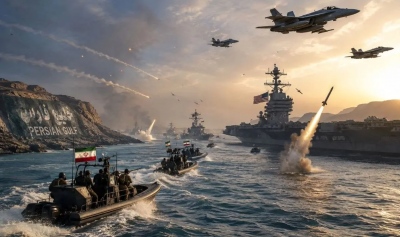
For the moment, there are no signs of a massive military mobilization near Cuba like those that preceded US operations in Venezuela and Iran. However, CNN reports that American military intelligence flights are rapidly increasing off the Cuban coast. A similar increase preceded the strikes in Iran and Venezuela. In any case, the US Southern Command announced that a US Navy carrier strike group has entered the Caribbean Sea. "Welcome to the Caribbean, Nimitz Carrier Strike Group!" read a social media post. The group includes the Nimitz-class aircraft carrier, the destroyer Gridley, and the support ship Patuxent. "The Nimitz has proven its combat power around the world, ensuring stability and defending democracy from the Taiwan Strait to the Persian Gulf."
Do they want a repeat of the Maduro scenario?
The arrest warrant for Raul Castro, a man who will turn 95 in two weeks, raises the question of whether Washington wants to repeat the operation to abduct Venezuelan President Maduro. Yes, the White House is considering it, as the success of the January operation has intoxicated them and became one of the key arguments in favor of the attack on Iran. And although things in the Islamic Republic did not go according to plan—the assassination of not only Supreme Leader Ali Khamenei but also Ali Larijani, who effectively became the most important man in the country thereafter, did not help—the idea of repeating the "Venezuela success" still circulates in the minds of Washington officials. Let’s state this from the start: the probability that Trump will eventually dare to do such a thing is extremely small, but even if he attempts to repeat the "raid on Caracas" in Havana, he will not succeed in capturing and transferring Raul to the US.
Castro will not be surrendered alive
Castro will not be surrendered alive, and the Americans themselves will not be able to carry out the operation without casualties. But are they really considering such a scenario? Yes, and as Politico writes, they are treating it much more seriously in Washington today than they did at the beginning of the year. Back then, after Maduro's arrest and the initiation of a nearly full energy blockade on Cuba (Venezuela and Mexico stopped supplies), the US calculated that Havana would make serious concessions—simply put, it would surrender. However, the Cubans are holding out—even though electricity is provided for only one or two hours a day, the economy is barely breathing, and the tourism sector is effectively paralyzed. Russian oil supplies, like the solar panels gifted by China, cannot cover the massive electricity deficit—and it is clear that the Cuban leadership wants to reach a deal with America. But not at the cost of losing sovereignty—or stepping down from power.
An unacceptable scenario
Because the Castros have ruled Cuba for almost seven decades—and they are not going anywhere. After Fidel's death in 2016, Raul has been ruling the country (in reality, he had taken over daily governance ten years earlier). And although he has held no official office for five years, his leadership position is unquestionable, while the US demands not only the departure of President Diaz-Canel but almost the migration of the entire extended Castro family. Naturally, this is an entirely unacceptable scenario for the Cubans—nevertheless, negotiations between Washington and Havana have been ongoing for several months.
The role of the CIA
Initially, they were unofficial and conducted in Mexico, but a week ago they became public: CIA Director John Ratcliffe arrived in Havana. His primary—though not public—interlocutor was Raul Castro. Not the Cuban leader himself, but his grandson, his security chief, and trusted confidant, 40-year-old Raul Guillermo Rodriguez Castro. The Cubans are ready for some concessions, but it is clear that these are far removed from American demands. The exact content of the US demands is not known, but the essence is clear: all Castros must leave, the Communist Party must lose its monopoly on power, American capital and Cuban migrants from the US must gain access to the country, and eventually, a pro-American government must be installed in Havana. No member of the current Cuban leadership will ever accept such a thing.
What Washington is waiting for
So what is left for Washington? To wait for a rebellion of a starving populace? But that certainly will not be pro-American—and besides, how much longer can they wait, given that Cubans have long been accustomed to life's hardships (even if not on this scale). To organize a military intervention? That would mean heavy casualties, including Americans—and that is the last thing Trump needs now. Not to mention the blow to the US reputation in Latin America and internationally (it is no coincidence that a few days ago Trump told Brazilian President Lula that he does not intend to invade Cuba). To abduct Castro? This is exactly where we are now—to capture Raul and lead him to an American court.
The indictment as a pretext
A pretext is needed: thus, they remembered the 1996 case, when the Cuban air force downed two small aircraft carrying Cuban exile dissidents, who were US citizens. Raul was Minister of Defense at the time, which is why they want to bring him before an American court. Four American citizens were killed—and now you will be tried. The idea is absurd, even considering the full capability to implement it. Even if the Americans manage to paralyze and isolate Havana as they did Caracas, even if the landing operation of the capture team proceeds with minimal casualties for them, even if they manage to kill all of Castro's guards and defenders, they will not be able to capture him alive—Raul prefers to commit suicide rather than fall into the hands of the Yankees.
Homeland or Death
"Patria o muerte. Venceremos!" ("Homeland or death. We will win!")—this slogan of Fidel Castro not only became the official motto of Cuba, but will remain the personal conviction of his younger brother. Raul, without a doubt, will prefer death over captivity, which means the Americans will achieve nothing beyond confirming their reputation as ruthless killers. That is why Cuban exiles in Florida should not be packing their bags, nor should Marco Rubio be testing the chair of the president of a post-communist Cuba—sooner or later, the Americans will be forced to negotiate with the Castros. With Raul, or with his grandson.
The living embodiment of the Revolution
For Cubans on the island who support the revolution, there is little chance Castro will depart, let alone end up in a Miami courtroom. "He is the living embodiment of the revolution," former US diplomat Ricardo Zuniga told CNN regarding Castro. Zuniga was a member of the secret negotiating team that reached a deal with Cuban officials, including Raul Castro’s son, to restore diplomatic relations during the Obama administration. Indicting Castro as a means of pressure to reach a deal may have the opposite effect, Zuniga warned. "Ultimately, frustration on both sides could lead to conflict, simply because Washington is cutting off communication with the Cuban government through this indictment," said the former diplomat.
Limited political capital
Trump’s low polling numbers due to the war in Iran mean he has limited political capital to support a new military adventure. Recent polls by CNN, the New York Times, and other media show that the majority of Americans oppose the war with Iran. Many have begun to directly link Trump's policies to their personal financial difficulties. Polls also show that the majority of Americans reject Trump's policy toward Cuba.
Electoral blow
A direct American conflict with Cuba—while likely popular among anti-communist exiles in Florida, who constitute a significant political force—would create even greater difficulties for Republicans in the midterm elections. The Republican Party is already burdened by Trump’s historically low approval ratings, and a new conflict would reinforce Democratic claims that the president ignores the problems of voters. Even a foreign policy success in Cuba might have little significance for citizens who are struggling to pay for housing and food.
Americans don't want it
"The American people are not asking for another war. They want us to focus on building housing in Arizona—not bombing housing in Havana," said Democratic Senator Ruben Gallego in a statement last month, when Democrats failed to block the use of American forces for any unauthorized military action against Cuba. "They want us to lower the cost of healthcare—not to condemn a generation of veterans to a life of hospital visits. They want us to make their lives more affordable—not spend their tax dollars on unnecessary wars."
Greater resistance than Venezuela
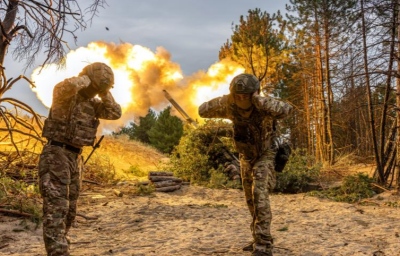
Any American attack or special forces operation would likely face much greater resistance and more American casualties than the lightning-fast operation against Maduro. The Cuban military has limited resources and often outdated equipment. However, it can still inflict casualties on any American expeditionary force.
Castro's strict security
Meanwhile, security around Castro is likely to be extremely strict to prevent any Maduro-style abduction operation. The decades of close relationship between the regime and the people also mean that cooperation with American officials and diplomats, as occurred in Venezuela, is rather unlikely in Cuba, despite reports of contacts between the Trump administration and Raul Guillermo Rodriguez Castro, Raul Castro's grandson and bodyguard.
The defensive doctrine
Schlenker pointed out that the Cubans follow a defensive doctrine that requires the entire population to react in the event of a foreign invasion. "This would cause American casualties that would also lead to the death of dozens, if not hundreds, of Cuban civilians and security force members," he said. "We wouldn't really see a total transformation of the Cuban government. Instead, we would see increased repression and minimal progress toward democracy and the free market."
Extreme deprivation
In the meantime, the stricter American blockade of oil imports to Cuba is creating an unstable situation, causing extreme deprivation that carries the risk of social collapse. This could lead to a mass exodus of refugees that might quickly evolve into a migration crisis for an administration committed to securing American borders. However, the administration's preference for quick military operations—at least until the war in Iran—means that American military action can never be ruled out. Trump often refers to the operation against Maduro with admiration in his speeches. The operation may have mistakenly led him to believe that regime change in Iran and winning the war would be an easy task.
Why the administration believes it has a strong card in Cuba
Given the risks and skepticism toward Trump's military adventures, which conflict with his pledges not to conduct any more foreign wars, why would the administration even consider provoking a new crisis in Cuba? The president urgently needs a victory to bolster a foreign policy his team claims has restored US prestige and respect abroad, but which in reality appears severely wounded, given his failure to end the war in Iran and his inability thus far to end the conflict in Ukraine or advance the phases of a ceasefire deal in Gaza. The prospect of becoming the president who succeeded where all his predecessors since the time of John F. Kennedy failed, by overturning the regime of the late dictator Fidel Castro, offers Trump the kind of historical recognition he seeks. And Secretary of State Marco Rubio, the son of Cuban migrants, has sought for years to weaken the Havana government as a key goal of his political career.
The Western Hemisphere
Transforming Cuba from an opponent into a dependent ally would strengthen the "Monroe Doctrine"—the administration’s effort to control the entire Western Hemisphere. Beyond the operation against Maduro, this policy includes financial support for the Argentine president who supports MAGA and backing right-wing populists in elections across the region. Trump's policy toward Cuba has certain elements reminiscent of previous American administrations. The US has been concerned for years about espionage and monitoring by Cuba, near American shores, on behalf of rivals such as Russia and China. Toppling the regime would also deprive these powers of political allies in Havana.
Crisis
However, the oil blockade of Cuba by the Trump administration has brought the island even closer to the brink of an economic and humanitarian crisis. Sanctions against foreign companies that deal with the Cuban government have also forced some shipping companies that import food to the island to announce they are ceasing operations. Cuban President Miguel Diaz-Canel rejected the measures, stating that no Cuban official "had assets to protect under American jurisdiction." The indictment against Raul Castro, however, who led the Cuban military at the time of the downing, raises the tension between the two Cold War rivals to levels not seen in decades. The charges also create the background for a potential US military operation aimed at his extradition—as happened with Venezuela’s Nicolas Maduro, a close ally of Cuba.
Threats of a "bloodbath"
Already, the Cuban military is preparing for a potential American attack, and Diaz-Canel has warned that a "bloodbath" awaits any invading force. Throughout the island, the military is conducting exercises while the government warns the civilian population to prepare for an attack. Any move against Castro would likely lead to open war, even if Cuba is overwhelmingly inferior in military power. Although officially retired, 94-year-old Raul Castro is still referred to in Cuba as the leader of the revolution and a general of the army. When he makes rare public appearances, he still wears a military uniform. Almost every top political and military official has been personally selected by Castro, and his successor in the presidency and the position of General Secretary of the Communist Party, Diaz-Canel, states that all important decisions pass through him. Targeting Castro may leave little room for maneuver for Cuban officials, warned former diplomat Zuniga. "From the Cuban side, by cutting off communication, they may not realize that the next stage from the US side could be some kind of attack," he said. "But there isn't much left to destroy that isn't already in ruins."
The downing 30 years ago
The criminal charges by the US Department of Justice against former Cuban President Raul Castro are a case that has been in preparation for more than 30 years, with federal prosecutors in Miami drafting an indictment against him for the first time as early as the 1990s. After three decades, the criminal charges announced Wednesday at an event in Miami focus on the role of the 94-year-old Castro—years before he became president—as Minister of Defense and his alleged role in ordering the 1996 downing of two civilian aircraft of the Cuban-American organization Brothers to the Rescue, according to people with knowledge of the case. Four people, three of whom were US citizens, were killed in the attack by two Cuban MiG fighters in international airspace. Acting Attorney General Todd Blanche announced the indictment at a ceremony honoring the victims of the downing, on the day Cuban exiles celebrate Cuba's Independence Day. Castro is charged with conspiracy to murder US citizens, destruction of an aircraft, and four counts of homicide. He is currently not in US custody. The original outline of the indictment was based on the momentum created by the successful prosecution of Manuel Noriega, the leader of Panama who was convicted in 1992 for extortion and drug trafficking. "After the Noriega case, we frankly doubled our efforts to push this case," said Guy Lewis, a former federal prosecutor in Miami, in a telephone interview. Years later, Lewis drafted a seven-page memo outlining a potential case against Castro, which in recent months reached top officials of the Trump administration, including Secretary of State Marco Rubio. The memo was originally written in 2016 and later sent to then-Attorney General Jeff Sessions. However, no case proceeded at that time—until today.
www.bankingnews.gr

Σχόλια αναγνωστών