

Trump: We can destroy them but I want a deal perhaps by June 6-7 – Ceasefire means softer fire
The US President, suddenly seeing light after the Iranian attacks, stated at the White House regarding the strike on Kuwait: "We hit them quite hard on Tuesday night, June 2, and also on June 3. And when it was explained to me that the Iranians struck, I said, okay, so we will do the same thing, but we hit them quite hard." "There is, therefore, a reason for some things, and usually, there is a reason that sometimes makes sense. And, well, they did something that wasn't exactly... a big deal. We stopped it very quickly, as we do with the biggest army in the world. But some might say they were somewhat provoked, because we had taken decisive measures for another reason. So, they retaliated," Trump said.
Negotiations are going well, we will have a deal by June 6-7
"The negotiations themselves are going very well. Very well. If it happens, it may happen, it may not happen, who knows. But if it happens, it could happen this weekend, June 6 to 7. That's about it. It is a different part of the world, you know. I say that in this part of the world, a ceasefire means you keep firing more softly." "We cannot under any circumstances let Iran acquire nuclear weapons," Trump added. "Anything can happen when you are with Iran, but when you are with other countries, it is a very unstable part of the world, probably the most unstable part of the world." "We could continue for two, three weeks and completely destroy everyone. I would prefer not to do that. It is very easy to do. They are ready to do it. They want to do it."
Better a written agreement
"But if we can achieve something in writing that does the same thing without killing everyone, I would prefer that," Trump said. "I think most of my people want that too. Some don't, but most want it. I mean, we have the greatest stock market in history, so we don't want a military conflict or a war. Some call it a war, some call it a military conflict. It's nothing major for us."
Trump: Enriched uranium buried under mountains and we want it out – "I want to take it"
Regarding the removal of enriched uranium from Iran, he said that Iran has agreed to this at various times but has changed its mind several times and that this issue has been examined. He claimed: "They agreed to the withdrawal of enriched uranium from Iran and then sometimes they denied it. That is one of the things we discussed." Referring to the International Atomic Energy Agency report, Trump said the material was "destroyed" and buried under a mountain that nearly collapsed. He added that it would be very difficult to get the material out, but emphasized: "I want to take it." According to Trump, the US and possibly China are the only countries that possess the necessary equipment for such an operation.
"The Strait of Hormuz will open immediately after the signing"
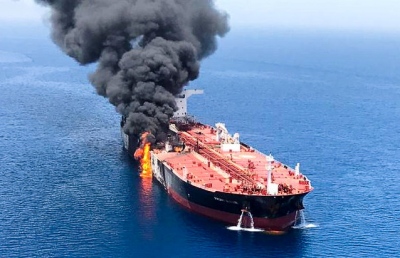
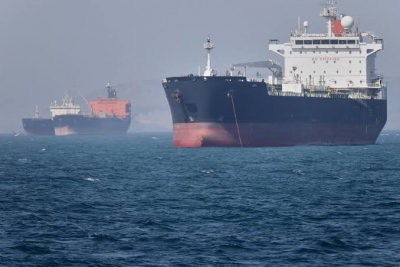
He also claimed that the three sites in question are under constant surveillance and that the US will be notified if there is any movement. Regarding minesweeping activity in the Strait of Hormuz, the US President said that the US used underwater minesweepers and cleared the mines. He added: "The Strait of Hormuz will open immediately after the signing." Answering a journalist's question regarding the definition of a ceasefire, Trump said: "It is a different part of the world there in Iran. Do you understand what I mean? In this part of the world, a ceasefire means when you shoot at a lower intensity!"
Al Hadath: The US-Iran agreement in 4 successive phases, what is planned for Hormuz and nuclear issues
Iran and the US are close to approving a provisional agreement to settle the conflict, which is expected to be implemented in four successive phases, reports the Al Hadath television network, citing its own sources. According to the report, the transition from one phase to the next will take place only after the full implementation of the commitments provided for in each stage of the agreement. The first phase includes strengthening the existing ceasefire, preventing any new escalation or the opening of new fronts in the region, as well as stopping direct hostilities between the two sides. The second phase focuses on the safety of navigation in the Strait of Hormuz and provides for the lifting of the naval blockade, as well as taking measures to protect trade corridors and energy infrastructure serving fuel transport. The third phase provides for limited sanctions relief against Iran, as well as the partial release of Iranian assets that remain frozen abroad. During the fourth and final phase, the two sides are expected to start negotiations on the Iranian nuclear dossier. The agenda includes the maximum limit of uranium enrichment allowed for Tehran, as well as international supervision and control mechanisms. Al Hadath sources point out that this final stage may require many additional months of negotiations, as it is considered the most complex and politically sensitive part of the agreement.
Rubio (US Secretary of State): The war against Iran codenamed "Epic Wrath" has ended
US Secretary of State Rubio claims: We will no longer conduct continuous attacks on Iran... the "Epic Wrath" war has ended. Talks with Iran concern uranium enrichment and its stockpiles. We will not publicly discuss whether Israelpossesses nuclear weapons. The US Secretary of State, Rubio, stated: "We will no longer conduct prolonged attacks inside Iran to weaken its army, because the 'Epic Wrath' war has ended." Rubio added: "In the context of our foreign policy, and for various reasons, we do not speak publicly about whether Israel possesses nuclear weapons."
Saudi Al-Sharq News: US, Lebanon, and Israel agreed to implement ceasefire, Lebanese Army takes over
Saudi Al-Sharq News published a joint statement by the US, Lebanon, and Israel: "The United States hosted the fourth high-level trilateral meeting between representatives from Israel and Lebanon on June 2 and 3, 2026. As a result of the negotiations led by the US, Israel and Lebanon agreed to implement a ceasefire. This ceasefire is conditional on the full cessation of Hezbollah's hostilities and the evacuation of all Hezbollah elements from the area south of the Litani River. Both sides also agreed, under US guidance, to accelerate the creation of pilot zones, in which the Lebanese Armed Forces would take exclusive control of the field and all non-state armed groups would withdraw from these areas. These steps will pave the way for progress toward a comprehensive peace and security agreement. All parties emphasized that the future of relations between Israel and Lebanon will be determined exclusively by the two independent and sovereign states of these countries. They rejected any attempt by any country or non-governmental entity to seize the future of Lebanon or impose guardianship over it. Israel and Lebanon also emphasized that they have no hostile intentions toward each other and committed to continuing direct negotiations to build trust, resolve all outstanding issues, and strive to reach a comprehensive agreement between the two countries. The delegations discussed and exchanged views regarding the security framework based on the talks held at the Pentagon on May 29. The framework aims to ensure the lasting sovereignty, security, and territorial integrity of Lebanon and Israel. The United States reaffirmed its determination to continue supporting the Lebanese Armed Forces to strengthen their capabilities and effectively exercise state sovereignty throughout the territory of Lebanon. For its part, Israel emphasized that security and respect for its territorial integrity can be achieved only through the disarmament of Hezbollah and the dismantling of its infrastructure throughout Lebanon. Israel emphasized the importance of direct negotiations, with the support of the United States, to resolve all outstanding issues and achieve lasting peace and security. However, Lebanon emphasized the necessity of mutual respect for internationally recognized borders and the urgent need for full implementation of the cessation of hostilities agreement, and insisted on the principles of territorial unity and full state sovereignty. Lebanon also committed to strengthening the capabilities of the Lebanese Armed Forces, with the support of the United States, so that they can exercise effective control throughout its territory. Both sides agreed to resume both political and security talks during the coming week, with the goal of reaching a comprehensive agreement. The United States also agreed to continue facilitating communication between the two sides during the transition period."
House of Representatives passed measure to limit Trump's war powers in Iran
The US House of Representatives approved a resolution aimed at limiting President Trump's war powers in relation to Iran, signaling a significant challenge to the administration's handling of aggression against the Islamic Republic. The measure was approved with 215 votes in favor and 208 against, with Republican lawmakers Thomas Massey, Brian Fitzpatrick, Tom Barrett, and Warren Davidson joining forces with Democrats in favor of the resolution. The vote followed a continuous effort by Democrats in both houses of Congress to limit Trump's authority for military action involving Iran, an initiative that has attracted increasing support from Republicans in recent weeks.
US suffered a reputational blow, lost 42 aircraft to the Iranians
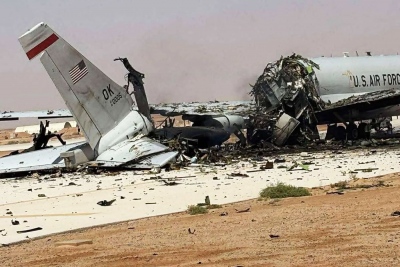
The Congressional Research Service published a report on losses during the military campaign against Iran that lasted 40 days. The government committee concluded that 42 aircraft were destroyed or damaged during this period for various reasons. The list was compiled based on media reports and Pentagon statements. In February, the US deployed significant military forces to attack Iran: two aircraft carriers, over 200 tactical aircraft, strategic bombers, seven guided-missile destroyers, a large supply fleet, and hundreds of attack drones. More than 50,000 soldiers supported this armada. For over 40 days, they caused significant damage to the military and civilian infrastructure of the Islamic Republic, but Tehran's resistance remained undaunted. In early March, three two-seater F-15E Strike Eagle fighter-bombers were shot down over Kuwait. All six pilots ejected safely, but the aircraft, worth about 300 million dollars, were lost irretrievably. The Pentagon claims they were accidentally shot down by a pilot of a Kuwaiti Air Force fighter. This theory does not seem serious. It is difficult to imagine a situation in which a pilot "accidentally" attacks three friendly aircraft at once - and effectively. The F-15Es were lost because they were hit by the Iranians.
www.bankingnews.gr


Σχόλια αναγνωστών