

A serious fire that broke out in March on the USS Gerald R. Ford, the world’s largest and most advanced aircraft carrier, was far more destructive than the US Navy had publicly admitted. Videos and images secured by CNN reveal extensive damage to crew living quarters, while testimonies from sailors and American officials bring to light serious malfunctions in the ship's firefighting systems. The incident, which occurred while the aircraft carrier was participating in operations against Iran in the Red Sea, highlighted the challenges and limits of even the strongest symbol of American naval strength.
Serious fire
When a fire broke out in March on the world's largest aircraft carrier while it was participating in operations against Iran, the US Navy issued a brief statement, reporting that the fire had been "brought under control," that two sailors received medical care for "non-life-threatening injuries," and that the aircraft carrier was "fully operational." However, a new video secured by CNN shows that the fire was more serious and caused greater damage than the Navy let on. The bunks where the sailors slept had been completely destroyed, as seen in the video. What remained of the beds were charred and deformed metal parts under a ceiling that also appeared to have been destroyed by the fire. Cables hung from the ceiling and piles of ash were scattered around the crew bunks.
WATCH: A March 2026 fire aboard the USS Gerald R. Ford (started in the laundry area) was far worse than the Navy first admitted.
— Clash Report (@clashreport) June 5, 2026
The fire-suppression system failed, so sailors fought it manually for 30+ hours; ~600 lost their bunks.
CNN aired “exclusive” footage.
A sailor…
"We could have lost the ship"
"I truly believed we would lose the ship," a sailor who served on the USS Gerald R. Ford told CNN, describing how he felt while trying to extinguish the fire. "It’s fight or die." According to the sailor and a senior American official familiar with the incident, the ship's firefighting system did not function, forcing the crew to battle the blaze manually.
The Navy downplayed it
The senior official told CNN that the Navy's public statement downplayed the impact of the fire on the Ford while it was in the Red Sea supporting American military operations against Iran, as the incident actually affected its operational capabilities. As Chief of Naval Operations, Admiral Daryl Caudle, stated in April, it took two days until the Ford was able to restart flight missions, while the ship was forced to head to Souda for temporary repairs.
Battle for 30 hours
When asked about the extent of the fire and the failure of the firefighting system, a Navy spokesperson told CNN: "The investigation into the fire is still ongoing." It took the Ford's crew about 30 hours to extinguish the fire, clean up the damage, and prevent it from reigniting. Additionally, about 600 sailors lost access to their bunks due to the destruction, as previously reported by CNN.
Serious questions
"It shouldn't have reached this point. The ship's built-in firefighting system should have put out the fire," said the sailor, who spoke on the condition of anonymity to avoid potential repercussions from the Navy. "Everyone—including myself—helped in the firefighting." The videos secured by CNN and the testimonies of Ford sailors provide, to this day, the clearest public picture of the difficulties the crew faced during an 11-month record-breaking deployment, which included war with Iran and the American military operation in Venezuela.

Fire from washing machines, dryers
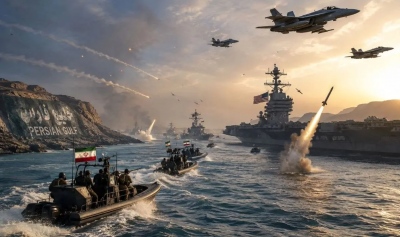
"Large fires are always a challenge, and this was significant—a fire that originated from washers and dryers," Daryl Caudle told CNN after the Ford's return to its home base in Virginia. "The crew responded superbly, fought the battle with bravery and professionalism, and within a few days returned to combat operations." The $13 billion ship was at the center of American military operations against Iran. Pilots operating from the Ford carried out successive bombing missions against Iranian targets. However, the massive aircraft carrier was not only on the offensive.
Under constant threat
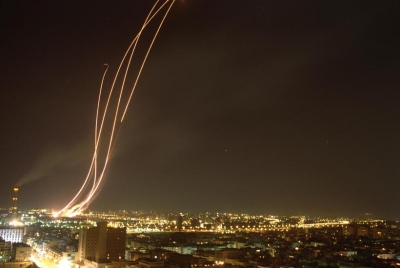
The carrier strike group to which the Ford belongs was under "constant threat from enemy missiles and suicide drones," according to a Presidential Unit Citation awarded to the force. The sailor who spoke to CNN recalled that at one point, while the Ford was in the Red Sea, he saw an orange line in the sky as Iranian munitions appeared on the horizon. When Iranian missiles or drones approached within a certain distance of the ship, "an alarm would sound warning us to expect a hit and to prepare for damage control," he said.
A problem with the… toilets too
The fire was not the only problem during the deployment. The ship's toilets were repeatedly clogging. Another video from the Ford secured by CNN shows human waste filling up a row of toilets to the brim. "If you were at the front of the ship, you had to walk all the way to the stern just to find a functioning toilet," the sailor reported.
The crew
The consequences of the fire could have been even worse. Hunter Stires, who served as a strategic advisor on naval affairs to the then-Secretary of the Navy until 2025, stated that the ship's quick restoration is a testament to the training and resilience of the crew during a record-breaking deployment. "Fire and flooding are the two greatest dangers on any ship," Hunter Stires said. "To its credit, the US Navy possesses an organizational culture and design philosophy that place constant emphasis on damage control preparation and the existence of backup systems to ensure ship survivability." Referring to the failure of the firefighting system, Hunter Stires noted: "War and battle damage are inherently unpredictable. You don't know what is going to break." He added that this is exactly why the training and preparation of sailors are so important.
$13 billion ship
The Ford entered service in 2017 and is the newest and most technologically advanced of the 11 US nuclear-powered aircraft carriers, having become a symbol of both the power and the limitations of American naval strength. The Ford's electromagnetic aircraft launch system allows it to launch everything from small drones to large aircraft, offering commanders a wide range of operational options, Brent Sadler, a Navy veteran with 26 years of service and a former submarine officer, had previously told CNN. According to him, the other 10 American aircraft carriers do not possess this capability. The deployment of the Ford, which concluded with its return to Norfolk, Virginia, in May, also included its participation in the American operation to capture former Venezuelan President Nicolás Maduro. The mission—the longest operational deployment of an aircraft carrier since the Vietnam War—also included stops in the Mediterranean and Norway.
Extensive maintenance period
The Ford is now entering an extensive maintenance period due to the wear and tear caused by the months-long journey, including additional repairs related to the fire. An American official told CNN that it may take at least a year until the Ford is ready to set sail again, a fact that may force other ships to cover the operational gap.
www.bankingnews.gr


Σχόλια αναγνωστών