

Ultimately, the US admitted it: their plan for Iran has failed, and this is now recognized by the highest leadership of the American government. American officials planned a regime change in Iran, but the plan failed, revealed American President Trump. At the same time, Vance, the American Vice President, also recognized that the US considered a ground operation in Iran but realized it would be a tragedy, a quagmire, and that it would fail. And while the Americans' revelations confirm what is internationally known—that the US and Israel clearly failed in Iran—the 12-point US-Iran Memorandum of Understanding, which will be officially signed on June 19, does not guarantee final peace. Following the signing of the Memorandum of Understanding in Switzerland, a period of 60 days or 2 months (typically until August 17, 2026) will follow for the final negotiations that will lead to a definitive peace agreement or to another impasse.
The paranoid regime of Israel has violated the ceasefire in Lebanon 86 times in just the last few days, while clearly sabotaging peace, and the Memorandum of Understanding, which includes 12 terms, among other things, includes the creation of a Fund that will give $300 billion to Iran for reconstruction. The agreement provides for a private capital fund of $300 billion to create investments in Iran, with more than $150 billion already having been raised. However, American President Trump emphasized "I will not only publish the text of the memorandum, but I will probably hold a press conference and read it word for word, so that the media can cover it correctly. It is a very important document. I will send the agreement for peace and the nuclear negotiations with Iran to Congress for review," Trump emphasized.
Vance (US Vice President): Yes, we considered a ground operation in Iran, but it would be a quagmire and a failure
We must resist the trend that says we must send ground troops into Iran, emphasized US Vice President Vance. We were never destined to enter the quagmire that many warned about. Trump is not George Bush at all, Vance stressed. The ceasefire between Iran and the US has entered its 72nd day, with the Wall Street Journal reporting that the agreement will allow Iran to immediately start oil sales. Meanwhile, as Israel continues its aggression against Lebanon, the Khatam headquarters warned that Israel should expect a harsh response if these attacks do not stop. Also, according to Reuters, the agreement provides for a private capital fund of $300 billion to create investments in Iran... more than $150 billion has already been raised so far.
Trump (US President): Yes, we attempted to change the regime in Iran, but the plan failed
US President Trump stated in a meeting with the Emir of Qatar, Tamim bin Hamad Al Thani … yes, there were attempts for regime change in Iran, but they were not successful. I do not believe in regime change; I have seen regime changes for years, and they never yield results. Trump also emphasized, "If it weren't for me, Israel would not exist; Netanyahu must act more responsibly toward Lebanon." Referring to the negotiations between Iran and the US, he also emphasized that the agreement between Iran and the United States is very important but still requires continuous efforts and the completion of the remaining details. He added that if this process continues, we can hope for significant achievements for the region and for Iran as well. In this context, Trump also announced that the agreement with Iran has entered its second phase and characterized this agreement as "fair and positive." The US President, emphasizing that he does not believe in regime change, said that for years we have witnessed regime changes that have never yielded results and acknowledged that there have been attempts to change the regime in Iran in the past, but they have not been successful. This is the first time that the US President, despite the common plans with the Zionist regime for regime change and the arming of certain groups and individuals for this purpose, admits that his efforts for regime change in Iran failed.
The White House rejects Israel's request for a "revision" of the Iran-US memorandum of understanding… they consider it a disgrace
The United States rejected an "official request from Israel for revision" of the recently announced Memorandum of Understanding (MoU) between Washington and Tehran, according to reports in Israeli media. According to Channel 12, the Israeli regime submitted an official request to Washington asking for a revision of the memorandum. The request was rejected, while Israeli officials reportedly did not know all the details of the Memorandum. The alleged US refusal came amid growing criticism of the memorandum by Israeli officials, who have publicly questioned it and stated that it does not change Israel's position toward Iran. The Israeli Prime Minister stated in a press conference that he "was not sure about the details" of the Memorandum of Cooperation. Jewish media have also reported "deep disappointment" and opposition to the agreement among Israeli authorities. According to the regime's TV channel i24, Israeli officials view the Memorandum of Cooperation negatively, especially the provisions related to withdrawal from Lebanon and the cessation of attacks in the country. An anonymous source cited by i24 described the agreement as a "disgrace."
"60 difficult days" for Iran and the US - The 4 issues that can turn the agreement… into war
The Iran-US agreement, or the 60-day Memorandum of Understanding, is to be signed and finalized on Friday, June 19, 2026. The data shows that we are entering a difficult period once again. There have been many discussions, debates, and vetting regarding the text of the Iran agreement. But in addition to the text of the agreement, "marginal" issues can also create problems in the implementation and promotion of the agreement and lead it to an impasse. These 4 issues can turn the agreement into war.
1) Israel-Lebanon war or how Israel sabotages peace
Although one of the terms of the Iran-US agreement is the end of the Israel-Lebanon war, the data has shown that Israeli Prime Minister Netanyahu is sabotaging the Iran-US agreement and trying to provoke Iran and disrupt the agreement through uncontrolled and out-of-context attacks in Lebanon. This is an issue that we have seen many times in the last few days. A few hours after the announcement of the final agreement between Iran and the United States, Israel attacked the suburbs of Beirut, so that Iran would attack Israel and the agreement would collapse. This could also happen in the coming days. During these two months, Netanyahu will likely try to provoke Iran to respond by creating tension in Lebanon and causing the destruction of the two-month agreement.
2) Nuclear negotiations and their perennial issue
The nuclear negotiations, which are supposed to resume on June 19, are among those that have always been problematic. The US insistence on suspending uranium enrichment and, on the other hand, Iran's insistence on continuing enrichment have historically led the negotiations to a stalemate. Although Trump recently tacitly accepted in his social media posts that Iran will continue to enrich uranium, it seems that this statement of his cannot be a guarantee and he may change his mind again. In general, it is unclear whether the nuclear talks will reach a stable and definitive point within two months. This is an issue that could return Iran and the US to a stalemate and destroy the two-month agreement.
3) Military tensions in the Persian Gulf and the Strait of Hormuz
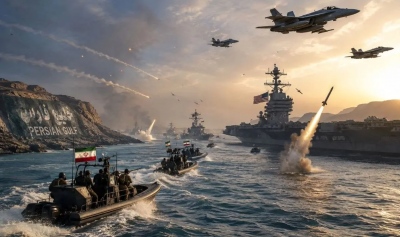
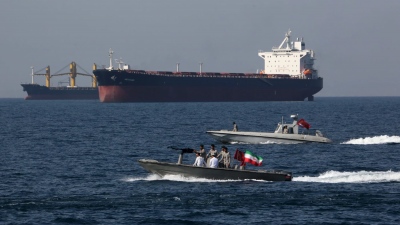
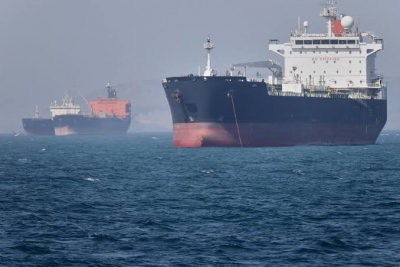
Although military tensions in the Persian Gulf have decreased, they have not ended. With the lifting of the naval blockade by the US and the opening of the Strait of Hormuz by Iran, direct conflict between Iran and the US at sea has likely decreased, but it will never disappear. The movement of ships in the Strait of Hormuz, the proximity of American ships to the Strait of Hormuz, the movement of IRGC speedboats, the movement of Iranian drones and American helicopters near the country's waters, etc., all these can increase the possibility of conflict between Iran and the US in the south. We must not forget that during the current ceasefire, the largest conflict between Iran and the US was recorded in the southern waters, and these conflicts could be repeated during the two-month negotiation period and lead this agreement into the abyss of destruction.
4) The issue of unfreezing Iran's blocked funds
The issue of unfreezing Iran's blocked funds is also one of those issues that, although mentioned in the text of the agreement, the details and the way of its implementation can destroy the agreement. The Americans have repeatedly shown that they break their promises in the field of releasing Iranian assets and even use this issue as a pawn in the context of nuclear negotiations and use it as a weapon to pressure Iran. This time, some American officials announced that they are not willing to give Iran cash and prefer to pay Iran's debt in the form of goods. This issue and the "buts" and "ifs" can destroy the two-month negotiation period and bring both sides back to an impasse.
The 12 terms of the US-Iran Memorandum of Understanding
It is pointed out that the key points of the memorandum of understanding between the United States and Iran include a series of critical commitments and arrangements for de-escalating tension. Based on the disclosed information:
1) Iran, the US, and their allies will end hostilities, including conflicts in Lebanon.
2) Iran reaffirms its commitment not to develop or acquire nuclear weapons.
3) The two sides commit to resolving the issue of managing enriched uranium stockpiles.
4) There will be talks about Iran's enrichment program and nuclear needs.
5) Iran will maintain the current status quo in its nuclear program as long as negotiations continue.
6) The United States will lift the naval blockade, will not impose new sanctions, and will not increase military forces in the region during the talks.
7) Iran will take measures for the safe passage of commercial vessels through the Strait of Hormuz, without charge, for a period of 60 days.
8) The US commits to making blocked Iranian assets available for use in the context of implementing the memorandum.
9) Provided a final agreement is reached, the US will withdraw its forces within 30 days and lift all sanctions against Iran.
10) Any final agreement will include a plan to create a $300 billion fund for the reconstruction of Iran.
11) The US will grant temporary sanctions waivers so that Iran can export oil during the negotiations.
12) Negotiations will be conducted between Iran and Oman, with the participation of Gulf states, with the goal of defining "arrangements for shipping and maritime services" in the Strait of Hormuz.
Iran Central Headquarters: Israel violated the ceasefire in Lebanon 84 times in the last 2 days
The Central Headquarters of the Seal of the Prophets announced: The terrorist army of the Zionist regime violated the ceasefire in southern Lebanon 84 times in the last two days, after the US President declared the end of the war, and continues to commit crimes and massacre the oppressed people of Lebanon. It is warned that if the child-killing army of the Zionist regime does not end its evil in southern Lebanon, it should expect a harsh response from the powerful armed forces of the Islamic Republic of Iran.
Why did the Americans ultimately fail in Iran?
Why did the Americans and Israel ultimately fail in Iran? The reasons are three.
1) The brutal assassination of the religious leader Khamenei during a period of religious celebration for Shia Muslims, causing outrage in Iranian society even among people who were not predisposed to the regime.
2) The case of the city of Minab, where 168 girls and 14 teachers were killed at the Minab school on the first day of the American "Epic Wrath" operation by a Tomahawk missile attack.
3) The US believed that by killing Khamenei, the country would collapse like Iraq did with Saddam Hussein.
"Saddam Hussein held everything in one fist: the army, the party, Iraq. The Americans cut off this fist and the state dissolved. In Iran, every province can fight autonomously. Every general has several assistants, every official has an evacuation plan. When one dies, another is resurrected." Iran has spent decades studying the destructive experiences of others and has developed a "mosaic defense" strategy. The IRGC, the Islamic Revolutionary Guard Corps of Iran, has 31 autonomous provincial commands with weapon and fuel depots. If communication with the central command is lost, each acts independently. The state cannot fail—even the elimination of the top leadership does not lead to paralysis in Iran. The enemy faces a prolonged war of attrition.
www.bankingnews.gr



Σχόλια αναγνωστών