

Trump sends the message — not only to Iran but also to others — that the determination of the US in military conflicts can be undermined if they manage to exert political pressure through economic warfare.
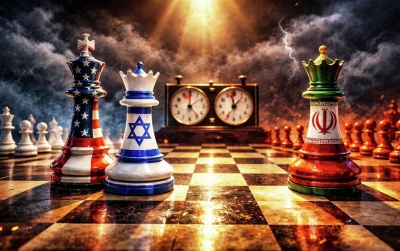
Donald Trump appears ready to gift Tehran what decades of negotiations, sanctions, and military threats failed to extract. With a deal already causing a political earthquake in Washington, the American president is accused of abandoning critical US strategic advantages, offering Iran billions of dollars, access to international markets, and an economic lifeline without securing clear and definitive concessions on the nuclear front. Behind the theatrical image of a "historic agreement" hides a less flattering reality: concern for the markets, the political cost of war, and the fear of a new energy shock seem to have led Trump to a stunning pivot. He admitted that he did not want to see the American economy at risk while watching the stock markets react to every development surrounding Iran. The development has already triggered fierce reactions even within the Republican Party. Critics warn that the deal may strengthen the Iranian regime economically and geopolitically at the very moment it was in its most difficult position in decades. The big question now is whether Trump achieved a historic diplomatic victory or if he offered Tehran a deal that will shift the balance of power in the Middle East in its favor.
The Trump pivot
Donald Trump insisted last month that he was not thinking about the finances of Americans when he was negotiating with Iran. Obviously, he has changed his mind. "I did not want to see an economic catastrophe. If this continued, it could have happened," Trump stated yesterday, Wednesday, June 17, trying to explain a deal to end the war that his critics consider deeply problematic. Trump's comment, made in France, was revealing. It shows how, under political pressure, he often prefers short-term gain over long-term strategy. At the same time, it highlights his respect for the markets, which he described as "smarter" than any of his advisors, "except for me, of course."
US weakening
However, as CNN reports, Trump's acceptance of a peace plan, which a Republican senator warned would make Ronald Reagan "turn in his grave," may weaken the US position ahead of the critical negotiations of the next 60 days that could determine the future of Iran's nuclear program. The agreement, which was designed to pave the way for these talks, seems to concede almost all of the US's negotiating leverage, offering Iran billions of dollars in revenue upfront through the lifting of sanctions. Consequently, it may damage the image Trump himself has built as the world's top negotiator — an image that led him from reality television to the White House.
So why did he do it?
For weeks, Trump tried to force Iran into retreat through bombing. He issued harsh threats about destroying the country's civilization. And when diplomacy reached a stalemate, he sent American bombers and missiles back to the region last week. But, through the realization of the economic cost of war, he perhaps finally found what he had been looking for almost since the beginning of the conflict in February: an exit strategy.
Rare honesty
Sometimes, amidst the noise of his statements, Trump demonstrates an honesty rare for a US president. After the G7 summit on Wednesday, he admitted that he was watching how the stock market "was shooting up like a rocket" every time he spoke about potential peace with Iran, while noting large losses when headlines predicted the failure of negotiations. "The only president I didn't want to become was the late Herbert Hoover," he stated, referring to the president associated with the Great Depression, which destroyed investors and plunged millions of Americans into poverty.
An out-of-touch president
The effects of the war with Iran were not that extreme, and the American economy remains strong. However, the conflict sent fuel prices soaring, fueling inflation, and its consequences seemed certain to worsen. At the same time, Trump's approval ratings have dipped into the 30% range, while the economic consequences of the war reinforced the image that he remains out of touch with the cost-of-living crisis facing many voters — something he again described as a smear campaign by the Democrats.
Strategic consequences
Trump's argument for ending the war is remarkable in many respects. It will embolden critics who believe that his public posturing on the war — particularly earlier in the week — was aimed at influencing markets and putting downward pressure on oil prices. Even more seriously, his admission seems to vindicate Tehran's strategic assessment that the cost of the conflict would exceed the endurance of American public opinion once the initial air attack by the US and Israel ended in a stalemate. This means Iran's new strong card — the ability to disrupt oil exports through the Strait of Hormuz — becomes even more powerful.
Iran is very strong
Trump warned on Wednesday that if Iran does not keep its commitments, he will "drop bombs on their heads." However, an incessant air campaign of several weeks did not lead to regime change nor did it force the Islamic Republic to accept a deal favorable to Washington. Therefore, Tehran can reasonably conclude that Trump would not risk a market collapse and a new spike in oil prices to enforce his demands. Furthermore, the threat of new bombings seems to conflict with the first clause of the Memorandum of Understanding, which prohibits the two sides from "the threat or use of force against each other."
Terms do not change
In the early stages of the conflict, the American president appeared vulnerable to criticism from Republican senators who feared he had shown too much leniency toward Iran. Now, however, after the signing of the MOU, it will be harder to backtrack or change its terms. The problem is not that Trump is wrong to seek an end to the war. If the fighting stops now, many American and Iranian lives will likely be saved. At the same time, the de-escalation of economic impacts will noticeably improve the lives of many working Americans. However, there is a significant reason why several Republicans are reacting strongly.
The great commitment
Among them is former Vice President Mike Pence, who told CNN that the emerging deal resembles "appeasement." By paying such a high price to stop hostilities, Trump is effectively sending the message — not only to Iran but also to other adversaries — that the determination of Washington in military conflicts can be undermined if they manage to exert political pressure through economic warfare. At the same time, he appears to be abandoning Iranian citizens, having assured them at the start of the conflict that the war was the "only opportunity in generations" to overthrow their authoritarian regime. In a major concession to Tehran, the memorandum commits the two countries to "refrain from interference in each other's internal affairs." Trump may thus have bound not only his own hands but also those of his successors.
Controversial statements
After the G7 summit in France, Trump insisted that the deal would end the conflict and restore the smooth operation of the Strait of Hormuz. He bases much on Iran's repeated assurance that it will not seek to acquire a nuclear weapon — a promise previously questioned by uranium enrichment to levels near those required for building a nuclear weapon. He also argued that his policy toward Iran should be evaluated as a whole over his two terms. He claimed that his decision to order the assassination of Qasem Soleimani in Baghdad in January 2020 changed the course of history. At the same time, he argued that American bombings against Iranian nuclear facilities last year eliminated the threat of acquiring a nuclear bomb.
Why did he start the war?
The president has an argument regarding the strategic impact of his previous policy toward Iran. But if he had already solved the problem, why did he start a new war? And not for the first time, Trump seemed to lose the cohesion of his own narrative about Iran during a long and disjointed press conference. The most paradoxical part was that, while he previously demanded "unconditional surrender," he subsequently hinted that Tehran has the right to maintain a missile program just like its regional rivals. At the same time, he offered further assurances to Iran, stating that he does not consider the 60-day timeframe a "strict deadline."
He will leave for good
In another unusual move, Trump signed a copy of the memorandum of understanding at the Palace of Versailles and sent a photo of the signature to the Iranians. "It is signed," he declared. "I signed it at Versailles. I just signed it." This theatrical move reinforces the impression that he considers the image of a deal as important as its content. And it raises the following question: what will happen if the signed MOU does not lead to the intensified diplomatic process everyone expects, but is interpreted by Trump as a new status quo that allows him to depart for good from the entire Iran adventure?
Iran's victory
Months of war and blockade have destroyed Iran. Its navy lies at the bottom of the Persian Gulf. Its air force has been dismantled. Its economy is in ruins. At least, that is what Trump claims… However, when the dust settles, the Iranian regime may find itself in a better financial situation than it was before the war began. The 14-point memorandum of understanding between Iran and the US includes the release of frozen Iranian assets, a significant lifting of sanctions, a massive investment package, and permission for Iran to freely sell its oil. Much remains uncertain regarding the deal, which American officials say will be signed in Switzerland tomorrow, Friday, June 19. Nevertheless, the financial incentives could provide the Iranian government with the resources to rebuild its economy and potentially normalize relations with foreign investors. This would represent a turning point.
Oil sales
According to CNN, the most significant and immediate element of the deal is the restoration of the regime's main economic engine: oil exports. With the lifting of sanctions, Iran will be able to freely dispose of tens of millions of barrels of oil stored in tankers. Furthermore, it will likely be able to export about 2 million barrels per day — about a third more than before the war, according to Jorge Leon, head of geopolitical analysis at the consulting firm Rystad. And because these sales will now be legal, Iran will not need to offer large discounts. "This sounds like a very good deal for Iran," Leon said.
50% of revenue
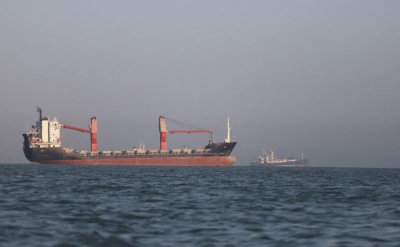
According to the US Energy Information Administration, about 50% of the Iranian regime's revenue comes from oil sales. To bypass American sanctions, Iran had relied for years on a "shadow fleet" of tankers, which funneled oil almost exclusively to China. However, the American blockade of recent months had effectively cut off all exports of Iranian oil from the Persian Gulf. The agreement provides that the US Department of the Treasury will immediately grant waivers from sanctions, allowing Iran to transport, insure, sell, and — most importantly — collect revenue from its oil through international financial institutions. But if the waiver only applies for the duration of the 60-day extension of the truce, international buyers may hesitate to participate, warns Homayoun Falakshahi, an oil market analyst at Kpler.
Free passage in Hormuz for 60 days
At the same time, Iran agreed to allow free passage through the Strait of Hormuz for only 60 days, a fact that may allow it to later reinstate charges of about $1 per barrel of oil for passing ships. This measure previously yielded about $2 million per tanker. The restart of exports already looks strong: according to the maritime intelligence firm TankerTrackers, Iran successfully exported 3.8 million barrels of oil through the Strait of Hormuz this week, following the US agreement to end the naval blockade.
Asset release
Iran could quickly restore its liquidity if the United States releases more than $100 billion in Iranian funds that remain frozen in banks around the world. Although the timeline and scope of the process have not been clarified, the agreement states that frozen funds and assets will become "fully available" for use by the Central Bank of Iran. Iranian media and analysts estimate that the country's frozen assets range between $124 billion and $167 billion — an amount that corresponds to about a quarter of the country's pre-war annual GDP, according to Frederic Schneider, a senior researcher at the Middle East Council. The most immediately available funds are the approximately $12 billion located in Qatar, notes Gregory Brew, an analyst at Eurasia Group. Iran has insisted that access to a significant portion of these funds is a prerequisite for any deal. However, an American official told CNN that "no frozen funds will be released if the Iranians do not first implement their commitments."
Investment fund
The agreement may lead to the creation of a $300 billion investment fund, which could contribute decisively to the reconstruction of the country. American and Israeli attacks caused extensive damage to critical infrastructure, including steel mills and petrochemical facilities. Iranian authorities claim that damages amount to approximately $270 billion, although this figure cannot be independently verified. The restoration of these industries will require significant resources and time, according to Adnan Mazarei, a senior researcher at the Peterson Institute for International Economics and former deputy director of the International Monetary Fund. The details remain vague, however, the Trump administration says the fund will be financed by private capital and not by American taxpayers. Trump told reporters during the G7 summit that other countries and financial institutions will be able to invest in rebuilding the Iranian economy, although he estimated that the interest of foreign investors will remain limited for quite some time. "If they do it, good," he said. "But I think they won't do it soon, until they see how the regime behaves."
Lifting sanctions
The abolition of sanctions could allow Iranian businesses and banks to trade goods and financial services freely with the rest of the world. This could encourage some foreign financial institutions to cooperate with Iran, although many will likely remain cautious, unless the US Department of the Treasury issues specific licenses for specific transactions. "When there is ambiguity, banks avoid taking risks, because many have been severely punished in the past by the US for transactions with Iran," Mazarei said. "They will want assurances that the sanctions won't suddenly return." Lifting restrictions on foreign investors operating in Iran would represent a significant change from nearly five decades of American policy. Trump and other officials of his administration have stated that sanctions will be lifted only if the regime adheres to its commitments, including those regarding the termination of its nuclear program. There is, however, one significant caveat: it is not clear how much authority Trump has to unilaterally lift all sanctions. A cautious Congress may need to approve part of the measures.
What it could mean
All of this assumes that the agreement will be implemented and kept in force — which is not certain at all. However, the framework being shaped could drastically improve Iran's economic situation. Already, exchange rates for Iranian products on the black market have strengthened slightly, which is the first sign of a potential positive development for the economy, according to Mazarei. This could contribute to reducing inflation, which has exceeded an average of 50% over the last 12 months — the highest level since World War II. Food inflation has moved above 100%. About 90% of Iranian trade passes through the Persian Gulf, notes Mazarei. Foreign investments could restore a significant part of the economic activity lost due to the American blockade in the Strait of Hormuz. Iran could also use the funds to restore internet access, as outages had forced many businesses to fire employees. At the same time, it could modernize its oil infrastructure and become more competitive in the international energy market.
Optimistic scenarios
However, these are optimistic scenarios for a regime that has proven repeatedly that it is unable or unwilling to manage its economy effectively. "Beyond the sanctions, which have severely hurt Iran, the core problem is mismanagement and corruption," Mazarei stated. This means that the Iranian people will likely not benefit much, if history is any guide. Without adequate safeguards, the money could instead be used to fund terrorist activities and covert operations in the Middle East and beyond — exactly the kind of behavior that, according to the Trump administration, it sought to prevent with the war.
www.bankingnews.gr




Σχόλια αναγνωστών