

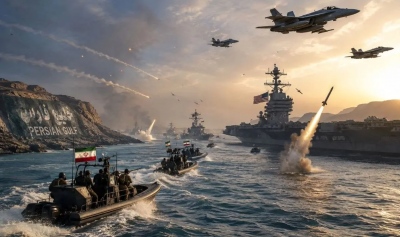
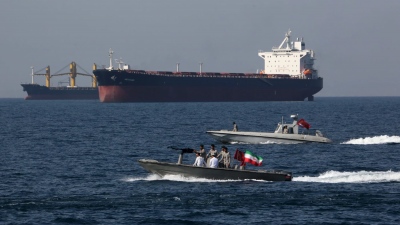
An intense diplomatic thriller is unfolding ahead of the upcoming conference between Iranian and American delegations, scheduled to take place on Friday, June 19 at Bürgenstock in the Swiss Alps, as Iran has not yet finalized its decision to send a delegation. Meanwhile, Pakistani Prime Minister Shahbaz Sharif abruptly canceled his trip at the last minute without offering further explanations, Tasnim reported on June 18. At the same time, a standoff is taking place in the Persian Gulf, with Iran appearing ready to keep the Straits of Hormuz closed until the Netanyahu regime halts its attacks against Beirut and permanently withdraws its troops from Lebanese territory. In fact, Tehran emphasizes that reopening the Straits of Hormuz while Israel is attacking Lebanon would violate its own 14-point memorandum agreed upon with the US. It is noted that Article 13 of the memorandum stipulates that the initiation of negotiations for a final agreement between Iran and the US requires the implementation of Articles 1, 4, 5, 10, and 11. In other words, a ceasefire on all fronts, including Lebanon. Consequently, the Iranians do not seem inclined to provide any relief to the US if the American-Israeli coalition does not fully respect the commitments it signed.
Major intervention by Khamenei: Iran signed the memorandum of Trump's crushing defeat - Americans desperate and defeated
Following these developments, Mojtaba Khamenei, the Supreme Religious and Political Leader of the Islamic Republic, made a major intervention on June 18 regarding the signing of the Memorandum of Understanding between Iran and the United States, which led to the end of the war in the Middle East. He stressed that this development was the result of extensive efforts by the competent Iranian authorities, while describing the pressure exerted by the American side to reach the agreement as a "sign of desperation" and an indirect recognition of military defeat.
ملت پرشور و باوفای ایران
— رسانه رهبر انقلاب اسلامی (@Rahbarenghelab_) June 18, 2026
همانگونه که مطلع شدید، تفاهمنامهای بین روسای جمهور ایران و امریکا امضا شد. در مسیر رسیدن به این مرحله، مسئولین از سر دلسوزی و حسن نظر، تلاشهای زیادی کردند و البته این رئیسجمهور امریکا بود که از روی استیصال، از انواع اهرمها برای این امر استفاده میکرد.
He noted that during the negotiations leading up to the current phase, responsible officials made significant efforts with sincerity and good faith. At the same time, he argued that the President of the United States, Donald Trump, "from a position of weakness and desperation," utilized every available means of pressure to achieve the agreement.
"The memorandum safeguards the rights of our allies in Lebanon and Yemen"
The Supreme Leader revealed that he initially held a different view regarding this path; however, he ultimately gave his consent following commitments he received from the President of the Islamic Republic, Masoud Pezeshkian, in his capacity as head of the Supreme National Security Council.
بنده علیالاصول [درباره تفاهمنامه] نظر دیگری داشتم ولی از باب تعهدی که رئیسجمهور محترم بهعنوان رئیس شورایعالی امنیت ملی از طرف خود و اعضا در پاسداشت حقوق ملت ایران و جبهه مقاومت به بنده دادند و تصریح به قبول مسئولیت آن نمودند، اجازه آن را صادر کردم. https://t.co/I6E3v7KaQM
— رسانه رهبر انقلاب اسلامی (@Rahbarenghelab_) June 18, 2026
As he stated, the Iranian President assured him, both personally and on behalf of the other members of the Council, that the rights of the Iranian nation and the so-called "Resistance Front" would be safeguarded, explicitly assuming responsibility for fulfilling this commitment.
"If the US overturns the terms we will resist again"
According to the Supreme Leader, the President of Iran also emphasized that if the American side attempts to put forward excessive or unacceptable demands, Tehran will not succumb to them, implying that Iran will not hesitate to engage in a new round of military conflict against the US and Israel.
رئیسجمهور محترم تصریح کردهاند که اگر طرف آمریکایی بخواهد زیادهخواهی کند زیر بار آن نخواهند رفت. https://t.co/XUK9xQYEAV
— رسانه رهبر انقلاب اسلامی (@Rahbarenghelab_) June 18, 2026
Concluding his remarks, the Supreme Leader underlined that the Iranian leadership and the people of the country now await the full implementation of the terms and conditions that have been set, pointing out that the assessment of the agreement will depend on the practical realization of the commitments undertaken by the American side.
Stern message from Trump to Israel: The memorandum with Iran mandates peace across the Middle East and in Lebanon
For his part, the President of the United States, Donald Trump, stated on June 18 that "the United States remain committed to peace" and called on all parties in the Middle East to maintain their commitment so that negotiations can progress smoothly and yield results, in a message on Truth Social. The American President also claimed that the markets are responding positively to the developments, noting that oil prices are recording a significant drop, while stock market indices are moving upward.

Furthermore, he expressed the expectation for a full ceasefire on all fronts, including Lebanon, Hezbollah, and Israel. "The United States are committed to PEACE and we encourage everyone in the Middle East region to remain focused so our negotiations can move forward in the best possible way. Markets are welcoming the developments, with oil prices dropping significantly and stocks marking gains. We expect a full ceasefire on all fronts, including Lebanon, Hezbollah, and Israel. Thank you for your attention to this matter," President Trump specifically stated.
Thriller over the US-Iran conference in Switzerland — Tasnim: Tehran has not decided on sending a delegation
The Iranian authorities have not yet made a definitive decision regarding their trip to Switzerland for talks with the United States, the Tasnim news agency reported on June 18, citing a source close to the Iranian leadership. According to the source, the decision on the visit is expected to be made in the coming hours.

If the visit is confirmed, the Iranian authorities will provide additional information regarding the trip. Earlier, Reuters reported, citing the Swiss Ministry of Foreign Affairs, that the United States and Iran will hold preliminary talks in Bürgenstock, Switzerland, on June 19, aiming to implement the agreement reached between the two sides.
"The signed memorandum itself does not allow us to negotiate"
Specifically, the Tasnim agency argues that the initiation of negotiations between Iran and the United States under the current circumstances constitutes a violation of the Islamabad Memorandum of Understanding. According to the first paragraph of the memorandum signed between Tehran and Washington, the termination of the war and of all military operations on all fronts, including Lebanon, is provided for, alongside safeguarding the territorial integrity and sovereignty of the country.

As pointed out, this specific provision, combined with the clarifications of the Iranian negotiating team, means that as long as Israeli military operations continue and the territorial integrity of Lebanon is not secured, the memorandum remains effectively inactive and violated. Meanwhile, Article 13 of the memorandum stipulates that the initiation of negotiations for a final agreement between Iran and the US requires the implementation of Articles 1, 4, 5, 10, and 11.
Shock: Hormuz closed as long as Israel strikes Lebanon
Consequently, according to Tasnim's analysis, as long as Israeli attacks continue and no measures have been taken to protect the territorial integrity of Lebanon, initiating talks for a final agreement contradicts the memorandum itself on the one hand, and on the other hand, political and strategic logic does not permit the reopening of the Straits of Hormuz to ease pressure on the United States while violations of Lebanese sovereignty rage on. The Iranian agency describes the issue as highly critical, underlining that the Islamabad Memorandum constitutes, in its view, an official declaration of the defeat of the United States and Israel in the war that began on March 9, 1404 of the Iranian calendar.

However, it is emphasized that to secure future successes and avoid falling into traps set by American tactics, special attention is required in applying the terms of the agreement, as well as the avoidance of errors in time management during its implementation process. The publication concludes by noting that relying solely on the negotiators cannot substitute for the need for continuous oversight regarding the correct implementation of the memorandum. As it characteristically states, such an approach does not serve the interests of Iran, especially when it faces "a deceitful and cunning adversary like the United States."
Unbelievable slap by Vance to Israel: The US pays for your weapons, do not speak
An exceptionally unusual and sharp public statement was made by the Vice President of the United States, JD Vance, during a press conference on June 18 following the agreement with Iran. He leveled direct criticism at Israel for its stance and choices, while hinting that the Israeli side seeks the continuation of the military confrontation with American backing. The American Vice President simultaneously sent a clear message to Tel Aviv regarding its relationship of dependence on Washington, pointing out that two-thirds of the weapons systems used for the defense of Israel during the conflict were of American origin and had been funded by taxpayers of the United States.

The sharpest moment of his statements came when he argued that the core problem Israel faces today is not Donald Trump, adding that those who still believe the American President constitutes the central issue for their country should revise their assessments and understand the new reality that has taken shape. JD Vance made it clear that the United States continue to recognize Israel's right to self-defense, but underlined that the country is obliged, like any other power operating in the region, to contribute actively to safeguarding the ongoing peace process. Responding to a question about Donald Trump's stance toward Israeli Prime Minister Benjamin Netanyahu, as well as recent criticisms expressed regarding Israeli military actions in Lebanon, the US Vice President stressed that the American administration does not question Israel's right to secure its national security. However, he made sure to remind everyone of the current conditions in which the country finds itself.
Vance bombshell: 20% of Israel was destroyed by Iran
In this context, he stated that Israel has suffered significant losses in terms of infrastructure, noting that approximately 20% of its urban infrastructure has been destroyed, while 5% of the Tel Aviv area has been leveled. As he underlined, these data must be seriously taken into account when mapping out the policy to be followed from now on. Returning to the issue of regional stability, Vance stressed that the responsibility for maintaining it weighs on all involved sides.

"Israel, like all other actors in the region, is obliged to protect and support the peace process," he characteristically stated. Referring to developments in the global energy market, the US Vice President stated that during the previous night, approximately 12.5 million barrels of oil were circulated through the Straits of Hormuz, a number that, according to him, constitutes the highest level of maritime transit since the beginning of the conflict. As he explained, the increased flow of oil through this strategic maritime route substantially contributed to easing pressures on international markets, resulting in oil prices returning close to the levels recorded before the outbreak of the crisis. At another point in his interview, JD Vance claimed that Iran's nuclear weapons program has now been completely neutralized. As he characteristically stated, "the nuclear weapons program has been totally destroyed and no longer exists." He even added that even if Tehran decided immediately to pursue the construction of a nuclear weapon, it no longer possesses the technical and operational capabilities to implement it.
Awe with Iran warning: "Israel will be punished for the attacks on Lebanon - We have our finger on the trigger"
Israeli forces carried out a series of military operations in southern Lebanon starting from the night the Memorandum of Understanding was signed between Iran and the United States, a fact that, according to the Tasnim agency, effectively obstructs the termination of the war and the implementation of the projected commitments. As the Iranian agency reports, the Islamabad Memorandum, which was officially signed by the presidents of the two countries, provides in its first paragraph for the termination of hostilities on all fronts, including Lebanon, as well as safeguarding the sovereignty and territorial integrity of the country. However, according to the publication, the Israeli military actions that occurred after the signing of the agreement have prevented the achievement of these goals, resulting—as argued—in the corresponding American commitment included in the same article of the memorandum not being implemented to this day. Tasnim also points out that Iranian officials and members of the negotiating team have repeatedly stated in recent days and weeks that Tehran will seek not only the implementation of the explicit provisions of the memorandum, but also the interpretations that serve the interests of Iran and the so-called "Resistance Front," without making any concessions. According to the same source, the failure to implement the terms of the agreement could send wrong messages to Iran's adversaries, negatively affecting the future moves of the country toward the United States and Israel. In this context, the publication argues that all options for Tehran remain open.

If the memorandum is not implemented, Iran could utilize various means of pressure, such as the suspension or cancellation of subsequent negotiations, the reintroduction of restrictions and serious obstacles to navigation through the Straits of Hormuz, or even military retaliation against Israel. At the same time, it is noted that a combination of these options is also possible. Tasnim further argues that if Washington desires the implementation of the memorandum, it must prevent Israel's actions from the outset, stressing that Tehran is not going to rely on statements by American President Donald Trump regarding the degree of autonomy in the decisions of Israeli Prime Minister Benjamin Netanyahu, but will evaluate the situation based on data on the ground. Under these conditions, according to the publication, initiating negotiations on other issues is considered a wrong choice. This fact is cited as a probable cause for the reluctance of the Iranian negotiating team to participate in a meeting that was reportedly scheduled in Geneva on Friday. However, as pointed out, so far no official transition or meeting of the Iranian delegation in Geneva has been confirmed.
The Pakistani Prime Minister canceled his trip to Bürgenstock
Earlier, the state television of Pakistan broadcasted that the scheduled visit of the country's Prime Minister, Shahbaz Sharif, to Switzerland was canceled, without an official explanation being given for the decision. According to the international department of the Tasnim news agency, the Al Jazeera network, citing Pakistani television, reported that the trip of the Pakistani Prime Minister was abruptly canceled, without the reasons for the cancellation being announced.

This specific visit had been scheduled within the framework of the mediating role that Pakistan is reportedly playing in the talks between Iran and the United States. However, the office of Shahbaz Sharif proceeded with its cancellation without providing further details or clarifications. Concurrently, Pakistani state television broadcasted that technical consultations between the United States and Iran are set to begin in a separate framework, without more information being released regarding the timeline or the process of the contacts.
JD Vance (US Vice President) - We terminated the naval blockade on Iranian ports
Nevertheless, the United States effectively lifted the blockade of Iranian seaports and Tehran began allowing commercial vessels to pass through the Strait of Hormuz, as disclosed by US Vice President JD Vance during a press conference at the White House, commenting on the signing of a memorandum of understanding between Washington and Tehran aimed at ending the conflict.

"For a second consecutive night, the Iranians have not fired at any ship. And CENTCOM (US Central Command) allowed more than a dozen ships to pass through our naval blockade. Therefore, we are also fulfilling our own part <...> of the agreement," he stated. It is noted that the operational area of responsibility for CENTCOM primarily includes the Middle East. According to the information provided by JD Vance, 12.5 million barrels of oil have already been transported through the Strait of Hormuz since the signing of the memorandum.
Macron bombshell: Forget the Memorandums, the war between the US, Iran, and Israel is not over yet
The war of the US and Israel against Iran is not over yet, despite the signing of a memorandum by the American and Iranian presidents, French President Emmanuel Macron stressed on France 2 television. "I don't think we can say that this conflict has been definitively resolved," he pointed out in this regard, responding to a journalist's request to evaluate the preliminary results of the Iranian crisis. He welcomed the signing of a settlement memorandum by the presidents of the United States and Iran, which, as he said, was agreed "spontaneously" and occurred "in the final hours of the G7 summit."

"This agreement means a ceasefire that also affects Lebanon and the restoration of navigation through the Straits of Hormuz," Emmanuel Macron noted. "After 60 days, we will have to determine what steps we will take regarding the nuclear program and ballistic missiles, and whether Iran has truly become less dangerous than before." Earlier this week, the US and Iran signed a memorandum of understanding dictating the immediate cessation of hostilities on all fronts, including Lebanon. Of note, Israel did not participate in the negotiations for the memorandum.
What the Memorandum of Understanding between the US and Iran provides for
1) With the signing of this Memorandum of Understanding (MOU), the United States and Iran, as well as their allies in the current war, declare an immediate and permanent cessation of military operations on all fronts, including Lebanon. They commit not to proceed with further warfare or military actions against one another, to refrain from threats or the use of force, and to secure the territorial integrity and sovereignty of Lebanon. The final agreement will confirm the definitive termination of the war on all fronts, including Lebanon, as well as the provisions of this article.
2) The United States and Iran commit to mutually respect the sovereignty and territorial integrity of the other side and to refrain from interventions in its internal affairs.
3) The two countries commit to negotiate and reach a final agreement within a maximum deadline of 60 days, with the possibility of extension upon mutual consent.
4) Immediately after the signing of the Memorandum, the United States will begin the gradual lifting of the naval blockade and of all other restrictions imposed on Iran, completing the process within 30 days. During this period, maritime traffic will be gradually restored by Iran to pre-war levels. Additionally, the US commits to withdraw its military forces from the broader region of Iran within 30 days from the signing of the final agreement.
5) With the signing of the Memorandum, Iran will make every possible effort to secure the safe and charge-free passage of commercial ships for a period of 60 days between the Persian Gulf and the Gulf of Oman. Commercial navigation will restart immediately and, following the removal of technical and military obstacles as well as the completion of mine clearance operations by Iran, the full restoration of traffic is expected within 30 days.
6) Iran will initiate a dialogue with the Sultanate of Oman to determine future governance arrangements and the provision of maritime services in the Straits of Hormuz, in consultation with the other Gulf states and in accordance with international law and the sovereign rights of the coastal states bordering the Straits.
7) The United States, in cooperation with their regional partners, commit to formulate a final, agreed plan for the reconstruction and economic development of Iran, amounting to at least 300 billion dollars. The implementation mechanism will be determined within the framework of the final agreement within 60 days. The US will grant all necessary permits, exemptions, and approvals required for the relevant financial transactions.
8) The United States commit to lift every form of sanctions imposed on Iran, including the measures of the UN Security Council, the decisions of the Board of Governors of the International Atomic Energy Agency (IAEA), as well as all unilateral American sanctions, primary and secondary, based on a timeline to be agreed upon in the final agreement. Both sides recognize the vital importance of lifting the sanctions and intend to address it as an immediate priority in the negotiations.
9) Iran reaffirms that it will not acquire nor develop nuclear weapons. The United States and Iran agree to resolve the issue of Iran's stockpiles of enriched material through a mutually acceptable mechanism and timeline, with a minimum requirement being the dilution of the material on-site under the supervision of the IAEA. The two parties also agree to discuss issues of enrichment and other nuclear matters concerning the peaceful nuclear needs of Iran, within the framework to be determined by the final agreement. The final agreement will confirm the relevant provisions. Both sides recognize the critical importance of these nuclear issues and intend to address them immediately in the negotiations.
10) Until the signing of the final agreement, the United States and Iran agree to maintain the status quo. Iran will maintain its current nuclear program, while the United States will not impose new sanctions nor deploy additional military forces to the region.
www.bankingnews.gr



Σχόλια αναγνωστών