

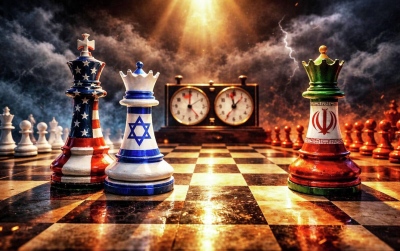
The fragile ceasefire that Donald Trump sought to present as a major diplomatic success appears to be collapsing, bringing the United States face-to-face with the exact same strategic impasse it had desperately tried to avoid. New US airstrikes against Iran, escalating tensions in the Straits of Hormuz, and the complete failure of the Memorandum of Understanding (MOU) to prevent a resumption of hostilities reveal that Washington has failed to neutralize Tehran's most critical geopolitical advantage: its absolute control over the world’s most important maritime oil artery. As global markets price in fresh risks to global energy security and the American economy, Trump is once again confronted with a sharp dilemma: either plunge into a new military escalation with unpredictable economic and political fallout, or return to a negotiating table that has proven incapable of securing either stability or meaningful concessions from Iran. This latest development only underscores what looks like a strategic victory for Iran.
At a strategic impasse due to his own choices
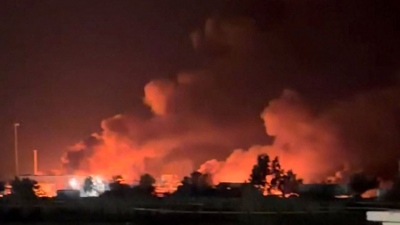
As reported by CNN, US President Donald Trump's ongoing entanglement with Iran is beginning to resemble the visual illusion known as the "Penrose stairs"—a staircase that appears to climb and descend indefinitely but always loops back to the exact same step. This deadlock is largely a direct consequence of his own policy choices. Donald Trump initiated a conflict without a clear exit strategy and subsequently drafted a Memorandum of Understanding (MOU) that failed to address the core root causes of the confrontation. Consequently, he found himself facing the same familiar dilemma late Wednesday evening, as the smoke cleared from fresh US airstrikes launched in retaliation for Tehran’s attacks on commercial shipping lanes in the Straits of Hormuz.
The next move
Will he escalate the war, potentially incurring a staggering human, economic, and political cost in an effort to overturn a new status quo that grants Iran a massive advantage? Or will he try to patch up a deeply flawed ceasefire that essentially rewards Tehran with billions of dollars simply for agreeing to sit down for talks?
At a dead end
This structural deadlock, emerging just three weeks after the signing of the MOU with Tehran—a text Donald Trump had heralded as a breakthrough deal only he could deliver—has exposed the highly limited effectiveness of current US war strategy. In essence, by ordering a fresh wave of missile and air strikes, Donald Trump ran the risk of igniting a second war purely to fix the consequences of the first: namely, Iran's expanded grip over the Straits of Hormuz.
Iran will not let go of Hormuz
Iran's targeted strikes against commercial vessels clearly demonstrated its intent to maintain this strategic leverage, which, beyond regime survival, represents its most significant gain from the entire conflict. Tehran is actively trying to transform this vital maritime transit route for oil and natural gas into a direct revenue stream by imposing transit fees. The attacks on multiple vessels appear designed to force commercial shipping lines to navigate strictly via paths dictated by Tehran, thereby formalizing its regional hegemony.
The memorandum
These shipping strikes, paired with the subsequent American retaliatory measures, appear to flatly violate the MOU. However, the document brokered by special envoy Steve Witkoff’s team and Donald Trump’s son-in-law, Jared Kushner, is so structurally vague, completely devoid of enforcement mechanisms, and built on such overly optimistic assumptions about Iran's true intentions that its practical collapse comes as no surprise.
Trump furious
Furious with the turn of events, Donald Trump declared en route to the NATO summit in Turkey that the MOU was officially "over," while simultaneously labeling Iran "crazy." Nevertheless, he left the door open for his negotiators to continue discussions if they so choose. Further compounding the impression of structural inconsistency, he added: "They will never get a nuclear weapon under our deal, but I don't know if there is ultimately going to be a deal. We might just achieve it without a deal because, you know what? It’s easier."
Escalation would carry a staggering cost
Barring some entirely novel plan that has not yet been brought to the table, Donald Trump’s available options are narrow, and none offer a guarantee of success. He could order a massive military escalation. While an outright invasion of Iran is considered completely off the table, Washington could weigh airstrikes on civilian infrastructure, power grids, or even launch operations to seize coastal pockets along the Straits of Hormuz to displace Iranian forces. Another floated scenario includes seizing the critical oil hub of Kharg Island. However, the price tag of such a move could be catastrophic, triggering the exact economic chaos that Donald Trump explicitly sought to avoid by signing the MOU. A Marine or special forces operation on Kharg Island would carry an immensely high risk of US military casualties. Despite his policy missteps, Donald Trump has so far declined to follow the playbook of past presidents who attempted to restored battered credibility through high-casualty military campaigns.
Severe retaliation
Furthermore, any American escalation would not occur in a geopolitical vacuum. Widening the target bank inside Iran would almost certainly trigger fierce retaliatory strikes against US bases and Washington's allies throughout the Persian Gulf. Regional oil and gas energy infrastructure could easily become targets, dramatically spiking the risk of a renewed global energy crisis.
Internal political civil war
Simultaneously, Donald Trump would face severe political blowback at home, as rising gas prices had already battered his domestic approval ratings during the war and clouded the Republican Party's outlook ahead of the midterm elections. It is not even certain that an all-out war would permanently eliminate Iran's ability to threaten the Straits of Hormuz, given that even a small handful of low-cost unmanned drones can disrupt commercial shipping from launch points located miles inland. Representative Adam Smith, the top Democrat on the House Armed Services Committee, told CNN that the current impasse proves that those urging Donald Trump to "finish the job" in Iran had a fundamentally flawed approach from the beginning. "You are not going to be able to 'finish the job' to the point where Iran simply collapses," he noted. "That was the original structural flaw in the logic that sparked this war. And now we are completely trapped in this vicious cycle."
Targeting Iran's economy
Theoretically, Donald Trump could re-impose a total blockade on Iranian vessels and ports, having already revoked the oil sanctions waivers that had been granted under the terms of the MOU. Yet, even after weeks of a punishing blockade, Iran never budged toward the "unconditional surrender" demanded by the US president. Retired Admiral James Stavridis, acknowledging that Donald Trump's options are profoundly constrained, suggested to CNN that the most effective path forward might involve targeting Iran's broader economic assets. "We are going into a knife fight, but we are holding a gun," he noted colorfully. "Frankly, I don’t believe we will occupy Kharg Island, but we could certainly blockade it. That would spell the absolute end of the Iranian economy." However, he warned that such a course of action would invite intense Iranian retaliation. Even so, he estimated that sustained, painful economic pressure might eventually force the regime to question whether it can indefinitely survive the political fallout of a shattered domestic economy.
New threats
Another alternative would be for Donald Trump to accept reality and pull back, leaving the international community to navigate a permanently contested environment in the Straits of Hormuz. This would translate to structurally higher energy costs and increased risks for international shipping. While global markets might eventually adapt, the United States would not be shielded from the economic ripple effects, including hits to the stock market indexes that Trump frequently uses as a barometer for his own economic success. Over time, prolonged disruptions to oil supplies could severely deplete US strategic reserves.
A politically painful defeat
At the same time, choosing inaction would amount to a politically bruising defeat for the American president and would deeply erode global perceptions of US power, allowing Iran to maintain its primary strategic leverage indefinitely. This leverage is now viewed as so incredibly valuable that Iran’s new leadership appears willing to jeopardize a deal that had guaranteed it billions of dollars via sanctions relief and reconstruction funding. Once again, the Trump administration’s core belief that any actor can be swayed through purely financial incentives—an assumption already tested and strained in the case of Ukraine—appears to be losing ground.
Iran's strategy
Simultaneously, however, Iran’s own strategy carries immense risks. If Tehran overplays its hand, it risks galvanizing international and regional backing for a far more hawkish US stance. Furthermore, its aggressive posturing may reflect intense domestic political friction, as hardline elements within the Islamic Revolutionary Guard Corps (IRGC) look to strengthen their positions by undermining more moderate officials who favor a return to negotiations.
Warnings
Washington's highly restricted options likely explain why Donald Trump, shortly after greenlighting Wednesday's fresh round of airstrikes, pivoted back to his familiar rhetoric of warning shots. "If it happens again, it will be much worse," he posted on social media. However, Iran has historically refused to back down even in the face of similar threats during the far more extensive US and Israeli bombing campaigns that preceded this standoff. Returning from Turkey aboard Air Force One, Trump repeated another very familiar talking point: "They called us just a little while ago. They want to make a deal so bad," he claimed, reviving an assertion he has repeated for months without any visible factual validation. At times, Donald Trump appears to be in a clash not just with Iran, but with reality itself.
Bought time, but not enough
Three weeks of a fragile peace bought US President Donald Trump a small window of time and slightly more negotiating leverage against Iran. But it wasn't nearly enough. Following Trump's signing of the Memorandum of Understanding (MOU) with Iran on June 18, global oil prices plunged, dropping last week below levels recorded before the outbreak of the war. Energy markets reacted favorably as the Straits of Hormuz began a partial reopening, and crude oil slowly began moving out of the Persian Gulf after months of backlogged accumulation. Consequently, domestic fuel prices began to ease off their peaks.
Oil shock
However, three weeks of a strained, partial opening of the Straits were nowhere near sufficient to reverse the largest shock to global oil supply ever recorded in history. There simply was not enough time to replenish the strategic and commercial stockpiles that the United States relies upon to guarantee its own energy independence and avert an impending economic catastrophe—one that Donald Trump warned could trigger direct comparisons to Great Depression-era president, Herbert Hoover.
Economic catastrophe
No one can predict with certainty whether the latest exchange of fire in the Middle East represents a brief, isolated incident or a slide back into full-scale, generalized war. Trump threatened on Wednesday to reinstate a total US naval blockade of the Straits of Hormuz. For the moment, the strategic passage remains technically open for commercial vessels willing to shoulder the extreme security risks. However, if the Straits snap shut completely once more, the American economy could sustain a devastating blow.
Trapped traffic in Hormuz
The latest intelligence following a second consecutive day of direct fire between the US and Iran indicates that maritime traffic through the Straits of Hormuz has ground to a near-total standstill. Citing ship-tracking data, Bloomberg reported that among major vessels, only a single supertanker currently under US sanctions was spotted exiting the Persian Gulf, alongside an Iranian-flagged container ship. In total, just 14 cargo vessels crossed the transit point yesterday in either direction, marking the lowest single-day total since the initial MOU signed between the US and Iran on June 16. By comparison, an average of 34 ships transited the Straits daily during the three weeks following the initial bilateral agreement, the report highlighted.
Barrels of time
According to Andy Lipow, president of Lipow Oil Associates, roughly 200 million barrels of crude moved through the Straits of Hormuz over the past three weeks, a volume representing about two days of total global oil demand. However, there is a major catch: approximately 60 million of those barrels were of Iranian origin. The Trump administration re-imposed strict sanctions on those specific volumes on Tuesday, July 7, giving buyers a tight ten-day window to clear transactions before they are re-designated as illegal. Despite this, the Straits remain technically open, albeit with a staggering risk premium. According to Lipow, chartering an oil tanker from locations outside the Straits to Asia costs roughly 4 to 5 million dollars, whereas loading oil from deep within the Straits to Asia runs closer to 8 to 10 million dollars—effectively double the price.
Market projections
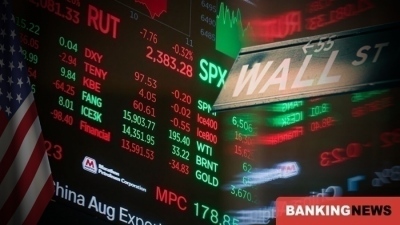
Maritime traffic has hovered stubbornly at about one-third of normal operating levels over the past three weeks, continuing even as at least four major oil and liquefied natural gas (LNG) tankers aborted their planned transits through the Straits of Hormuz this morning, according to Reuters reports. This disruption explains why global crude oil futures are rallying strongly, though they still remain below the peak pricing thresholds recorded right after Donald Trump signed the initial MOU. Brent crude futures traded just shy of 78 dollars a barrel, jumping 4% to hit their highest level since the immediate aftermath of the agreement. In other words, Wall Street views the Straits as significantly less accessible than yesterday, though crude supplies are technically still trickling out.
The inventory problem
If this trickle stops completely, it could trigger severe, systemic vulnerabilities for the United States domestic energy market. The US Strategic Petroleum Reserve (SPR), which serves as the nation's critical emergency buffer, has been heavily drawn down since the start of the conflict to offset lost imports from the Straits of Hormuz. Today, it stands at just 319.5 million barrels—a steep 23% drop relative to pre-war levels and its lowest operational point since 1983, when the Ronald Reagan administration first began building up the stockpile.
US vulnerable
This drawdown leaves the United States in a deeply vulnerable position in the event of extreme weather shocks or a fresh, total closure of the Straits of Hormuz. Even more alarming is the unfolding crisis in commercial inventories. Crude stocks at Cushing, Oklahoma—the primary hub for US oil pipelines—remain trapped well below safe operational levels. While inventories managed a modest build of roughly 700,000 barrels last week, they remain stuck below the 20-million-barrel line, a critical threshold below which the facility structurally struggles to pump crude efficiently to the nation's domestic refineries. This delicate backdrop prompted Donald Trump to warn that depleted oil reserves could hammer the US economy and spark comparisons to Herbert Hoover.
What will Trump's next move be
"I didn't want to see an economic catastrophe," Donald Trump told reporters at the G7 summit in late June. "If this kept going, that's exactly what could have happened." Wall Street investors remain highly cautious. While US equities showed little change at the opening bell, the bond market reacted with much greater volatility: the yield on the benchmark 10-year US Treasury note climbed to 4.57%, its highest level since late May, a period when oil sat at the absolute peak of the wartime crisis and the ceasefire appeared on the verge of unraveling. As Donald Trump has repeatedly demonstrated throughout his second term, when bond markets begin flashing bright red warning signs, he tends to pivot his geopolitical stance in response to market realities.
www.bankingnews.gr



Σχόλια αναγνωστών