

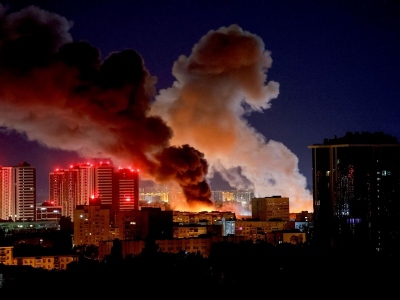
An unprecedented escalation is recorded across the entire Persian Gulf region on July 16, with the Reuters agency reporting powerful explosions in the heart of Dubai, citing eyewitnesses from the capital of the emirate of the same name.
At the same time, powerful strikes by the US military are recorded on the Iranian island of Qeshm and at the port facilities of Bandar Abbas in the Persian Gulf.
According to eyewitnesses, explosions were heard on Thursday, July 16, in downtown Dubai in the United Arab Emirates, the report states.
The details about the incident remain unknown for now.

Earlier, the Iranian Islamic Revolutionary Guard Corps, IRGC, had declared the real estate of US President Donald Trump, located in the United Arab Emirates and Saudi Arabia, as a legitimate target for strikes.
The list of facilities that Tehran considers acceptable to hit includes several golf clubs and skyscrapers in Dubai, Jeddah, and Riyadh.
The Emirates deny Reuters but photos show another reality
However, the Government Media Office of Dubai announced that it rejects the accuracy of the report by Reuters regarding reports of explosions in the center of the Emirate.

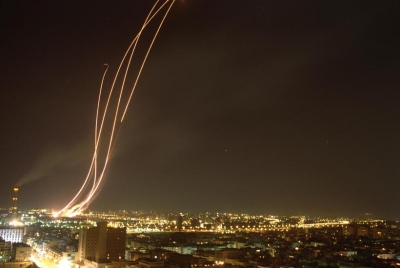
However, according to other reports, two explosions were recorded in the sky over Dubai.
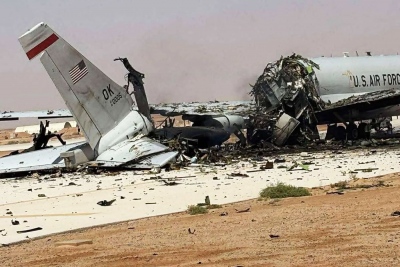
Meanwhile, the photos that came to light remain an irrefutable witness.
New wave of US attacks targeting Bandar Abbas
It is noted that on the night of July 16, the US military launched another series of strikes against Iran, marking the fifth consecutive night of attacks, according to the US Central Command, CENTCOM.
At 2:00 p.m. Eastern Time, 9:00 p.m. Athens time, BN, for the fifth consecutive night, the US Armed Forces began conducting a new wave of strikes against Iran to further degrade Iran's military potential, the command said in a statement.

In the aftermath of the attacks, powerful explosions were heard in the western part of the Iranian city of Bandar Abbas, as reported by the Mizan news agency.
Powerful US missile strikes on Bandar Abbas and Qeshm Island
Earlier, Iranian media broadcast information about new US airstrikes on the night of Thursday, July 16, amid growing escalation between Tehran and Washington.
The Mehr News Agency, citing Iranian officials, reported that US projectiles hit locations near Qeshm Island, off the Strait of Hormuz, around 6:10 p.m. local time, 14:40 GMT.
The state broadcaster IRIB reported that the strike targeted the village of Masan on the island.

US missiles also struck locations near the southern port city of Bandar Abbas, according to the office of the governor of the Hormozgan region.
No details were given regarding casualties or the extent of the damage.
Furthermore, there was no immediate comment from US authorities regarding the report.
Tensions between the US and Iran have escalated in recent days around the Strait of Hormuz, with the two sides exchanging attacks despite the memorandum of understanding brokered by Pakistan, which aimed to end the conflict and achieve a lasting peace agreement.
It all started with a drone from the Emirates against Iranian Bandar Abbas
It is pointed out that earlier, a suicide drone manufactured in the United Arab Emirates was shot down over the Hormozgan province in southern Iran on July 16, providing evidence that the United Arab Emirates attacked the Islamic Republic once again.
Most likely, this attack by the UAE was also the reason for the Iranian strikes that hit Dubai on the night of July 16.
A video posted on social media shows the Yabhon type drone being targeted by Iranian anti-aircraft weapons as it flew over the port city of Bandar Abbas.
It was later successfully shot down, according to Iranian media.
The Yabhon family of drones, which is produced by Adcom Systems, includes various types of unmanned aerial vehicles, from aerial targets and reconnaissance drones to combat drones, suicide drones, and even interceptors.
The drone spotted over Bandar Abbas is similar to the Yabhon-N, which is an aerial target, and the Yabhon-M, a reconnaissance drone.
Information about these two models, which were first presented more than a decade ago, is scarce.
However, both can reportedly be modified for suicide missions.
Given that the Hormozgan province is located about 150 kilometers from the territory of the UAE, the drone was within its operational range.
The UAE have carried out strikes against Iran amid the American-Israeli war, which began on February 28, although Abu Dhabi has not officially announced any attack.
The strikes were carried out supposedly as retaliation for the Iranian attacks on the Gulf state that caused significant damage.
Additional strikes by the Emirates against the Islamic Republic were reported even after the ceasefire came into effect on April 7.
Abu Dhabi and Tehran later engaged in direct talks, after which the Iranian strikes on the UAE reportedly stopped.
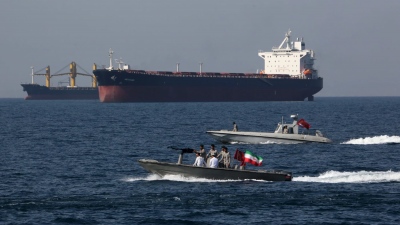
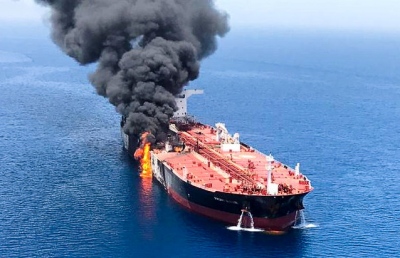
The latest incident may be a response to the April 14 attack against two Emirati-owned oil tankers, the Mombasa and Al Bahiyah, in the territorial waters of Oman.
Iran was accused of the attack, which killed a crew member on the Mombasa, an Indian national, and injured eight others.
At that time, the Ministry of Defense of the UAE stated that the country reserves its full right to respond and take all necessary measures to protect its sovereignty and security.
Iran is unlikely to tolerate the latest Emirati incursion.
The Islamic Republic could resume strikes against the UAE in the coming hours.
The ongoing limited confrontation between the United States and Iran, which began on April 7, is slowly expanding into a full-scale regional war.
The memorandum of understanding signed by the two sides last month to end hostilities may be drawing to an end.
White House: Negotiations with Iran continue - Tehran wants a deal
The US administration reports an ongoing dialogue with Iran and readiness by Tehran to reach an agreement to end hostilities, as announced by the White House press secretary Karoline Leavitt, whose statements were published by the channel White House Rapid Response 47 on the social media page X.
Iran actively continues negotiations with the United States and has stated its intention to conclude an agreement with us, the press secretary stressed.

According to her, these statements from Tehran are due to the intensive strikes by the US military against Iranian targets.
Karoline Leavitt also noted that she discussed this issue with President Donald Trump shortly before her speech.
Contacts between the sides continue, Caroline Leavitt noted.
On July 16, the Iranian Ministry of Foreign Affairs accused the United States of betraying diplomacy after they launched strikes despite the ceasefire agreement.
Since late last week, Washington and Tehran have been exchanging strikes in the Middle East.
Shocking message from Iran: Gulf states will return to the Camel Era if Trump hits refineries
Iran warned the Gulf states about the consequences of US strikes on Iranian energy infrastructure.
According to a statement by Khatam al-Anbiya, the Joint Command Headquarters of the Iranian Armed Forces, Iran will respond by attacking the infrastructure of the countries supporting the US.
Iran threatens the Arab monarchies of the Gulf with a return to camels and sandals, if they do not prevent the US from striking Iranian energy infrastructure.
Tehran claims that if the US indeed launch strikes, Iranian missiles and assault drones will respond by striking oil refineries, oil fields, ports, and anything else related to the production and processing of oil and natural gas, as well as power generation plants.
If the United States dare to strike Iranian infrastructure, we will destroy every infrastructure in the entire region as if it never existed, and we will return the Arabs to the era of camels and sandals.
The leadership of Iran expressed a somewhat calmer tone, but the essence of the statement by Mohammad Mokhber, a member of the Expediency Council of Iran, remains the same: an attack on Iran's energy installations will lead to retaliatory strikes against the energy infrastructure of the Gulf states.
The supporters of terrorism must know that attacking the security and infrastructure of Iran is a one-way ticket to the destruction of the entire energy supply chain in the region.
Iran bombshell: We will tear down Trump's skyscrapers in the Middle East
Not coincidentally, the Islamic Revolutionary Guard Corps of Iran, IRGC, earlier characterized the properties of US President Donald Trump in the United Arab Emirates and Saudi Arabia as legitimate targets for strikes, as reported by IRNA.
Donald Trump owns several golf clubs and skyscrapers in the aforementioned countries, including the Trump International Hotel & Tower in Dubai, Trump Plaza in Jeddah, and Trump Tower in Riyadh.
On June 17, the US and Iran signed a temporary memorandum of understanding that provided for the cessation of hostilities and the start of a new round of negotiations.

However, on July 8, after the resumption of strikes, Donald Trump announced that the ceasefire between Washington and Tehran is no longer valid and that he does not plan to negotiate with Iran.
Since late last week, Washington and Tehran have been exchanging strikes in the Middle East.
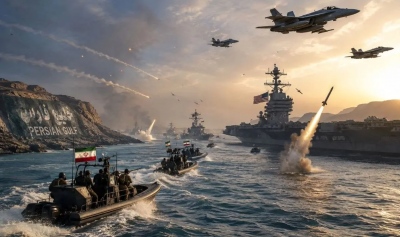
The escalation occurred amid confrontations over the Strait of Hormuz.
On the night of July 14, the American president promised several rounds of powerful strikes against the Islamic Republic and informed Congress of the resumption of military action in the region.
The Houthis received the green light from Iran to close the Bab el Mandeb Strait
At the same time, Iran reportedly gave a direct order to the Houthis of Yemen to proceed with closing the Bab el-Mandeb Strait in case the United States launch attacks against Iranian energy infrastructure, according to information cited by Reuters on July 16.
The Houthi rebels have completed their preparations, deploying missiles and drones near the maritime gateway of the Red Sea and, according to the same information, are awaiting the order to start the operation.
A senior official of the Houthis warned that a potential closure of the Strait could cause oil prices to spike up to 200 dollars a barrel.
BREAKING: Iran has directly ordered Yemen's Houthis to close the Bab el-Mandeb Strait if the U.S. strikes Iran's energy infrastructure, per Reuters.
— The Hormuz Report (@HormuzReport) July 16, 2026
The Houthis have completed preparations by deploying missiles and drones near the Red Sea gateway and are awaiting the order to… pic.twitter.com/1OU22FguVl
It is noted that Iran has already proceeded to close the Strait of Hormuz.
Now, the focus is on Bab el-Mandeb.
A double blockade of strategic maritime passages of such scale has never occurred before.
The global economy is facing one of the most serious energy crises of recent decades, as the potential disruption of two critical trade routes creates new concerns for the global energy market and international shipping.
Clear message from Iran: Control of the Strait of Hormuz is a red line
Meanwhile, Iran on Thursday, July 16, characterized the Strait of Hormuz as an inviolable red line, warning that any US attack on Iranian infrastructure, including the power plants and bridges that President Donald J. Trump has threatened to target, will trigger retaliation against critical infrastructure across the entire Gulf region.
The warning is formulated after four consecutive days of attacks against Iranian military targets, as well as the reinstatement of a naval blockade of Iranian ports.
Washington argues that the goal of the operation is to restore freedom of navigation through the Strait of Hormuz, following repeated Iranian attacks against commercial vessels.

Iranian officials argued that control of the Strait does not depend on coastal bases or islands, insisting that Tehran retains the ability to control the maritime passage from the whole of its territory.
At the same time, they reiterated that opening the Strait presupposes compliance by the United States with the already signed memorandum of understanding and acceptance of Iranian regulations governing the transit of ships.
The escalation of rhetoric comes amid a rapidly expanding regional conflict, with Iran launching missile and drone attacks against US forces and allies in Kuwait, Jordan, and Bahrain.
At the same time, analysts continue to warn that Tehran may attempt to exert pressure on global trade by extending the confrontation toward the Bab el-Mandeb Strait, through its Houthi allies in Yemen.
US attacks in Iran expand - Trump prepares island landings and tunnel strikes
Meanwhile, behind closed doors at the White House, the American president appears to be leaning toward expanding the US military operation in Iran, according to a report by the Wall Street Journal.
Among the options being considered are the seizure of islands near the Strait of Hormuz, as well as attacks against a facility which, according to Washington, may be used for secret nuclear activities.

At the same time, operations against a tunnel complex at Mount Pickaxe are also on the table, as well as the expansion of airstrikes against targets within Iranian territory.
Bahrain and Kuwait enter the war against Iran
A total of 16 targets of the Islamic Revolutionary Guard Corps of Iran, IRGC, were hit by US forces on the night of July 15, according to reports.
Looks Bahrain & Kuwait joined the war
— Baba Banaras™ (@RealBababanaras) July 16, 2026
A total of 16 IRGC targets were struck by the US forces in last 1 hour.
According to reports, Kuwait & Bahrain are also carrying out the strikes in retaliation for Iran's attacks on both countries. pic.twitter.com/w4anjwH2nb
At the same time, reports indicate that Kuwait and Bahrain are also carrying out strikes, as retaliation for Iran's attacks against the two Gulf monarchies.
This development marks a potential widening of the conflict in the Gulf region, as more states appear to be directly involved in military operations.
The Hill revelation: US will need at least 4 years to replenish its arsenal
It could take the US military at least four years to restore its weapons stockpiles to pre-war levels, according to military analysts interviewed by The Hill.
They report that this can be achieved within four years, provided that Congress allocates the necessary funds.
However, if the US continue to actively wage war against Iran, this period could be extended for several more years.
According to the US Central Command, CENTCOM, by the time the memorandum was signed in June, the military had fired approximately 13,000 munitions of all types.

More than half of the Patriot missiles and over 45% of precision-guided missiles had been depleted.
According to the latest available data, the US military spent 29 billion dollars in Iran.
The Pentagon attributed this increase to the elevated cost of repairs, replacement, and maintenance of equipment.
The largest quantity of munitions was consumed right at the beginning of the operation.
www.bankingnews.gr



Σχόλια αναγνωστών