

Tensions in East Asia are escalating as Japan lodged an official protest with China over a live-fire exercise involving Russian warships near the country's Exclusive Economic Zone (EEZ). The incident comes during a period of growing military cooperation between Beijing and Moscow and threatens to further deteriorate relations between Asia's two largest economies. In particular, Japan announced on Tuesday that it submitted an official protest to China regarding a live-fire exercise which, according to Tokyo, took place within the country's Exclusive Economic Zone (EEZ), in an incident that may further strain already tense relations between Asia's two largest economies.
Exercise with Chinese and Russian warships
According to an announcement by the Japanese armed forces, the exercise took place early Sunday, approximately 180 kilometers southwest of Okinotori Island, and involved both Chinese and Russian warships. China argues that remote Okinotori is a rock rather than an island, which according to Beijing means that Japan is not entitled to claim an Exclusive Economic Zone around it. The Chinese Ministry of Foreign Affairs did not immediately respond to a request from Reuters for comment.
Official protest from Tokyo
"The Japanese government lodged a protest with China through diplomatic channels, on the grounds that such activities could jeopardize the navigation of vessels in the area," Japanese government spokesman Minoru Kihara told reporters. A representative of the Japanese armed forces stated that this is the first time Tokyo has publicly disclosed a live-fire exercise by China within the Japanese EEZ, while clarifying that this specific activity does not violate international law.
Taiwan at the epicenter of tension
Relations between Beijing and Tokyo have been on a deteriorating trajectory since late last year, when statements by Japanese Prime Minister Sanae Takaichi regarding Taiwan — the democratically governed island that China considers part of its territory — sparked fierce reactions from Beijing and led to the imposition of economic countermeasures. At the same time, China and Russia have intensified joint naval and air operations around Japan, prompting Tokyo to increase surveillance and bolster its defense capabilities in the southwestern island chain amid growing regional security concerns.
Four warships approached the Japanese EEZ
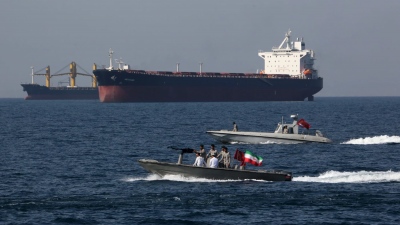
The Japanese armed forces announced that they detected four warships heading toward the country's Exclusive Economic Zone shortly before the exercise. These included a Chinese Renhai-class guided-missile destroyer, a Luyang III-class guided-missile destroyer, a Fuchi-class replenishment ship, and a Russian Steregushchiy-class frigate. According to Minoru Kihara, vessels in the area were notified via radio shortly before the start of the exercise that live-fire drills were about to take place.
www.bankingnews.gr







Σχόλια αναγνωστών