

Sweeping Iranian attack on Abu Dhabi National Oil Company tankers, UAE condemns
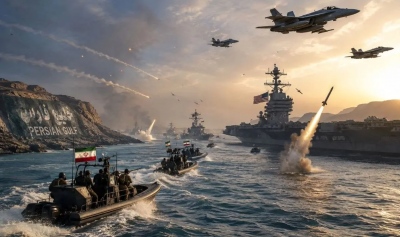
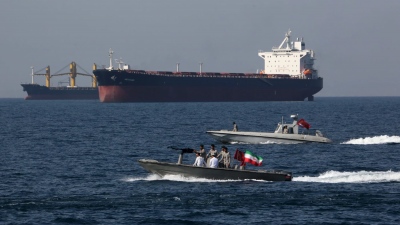
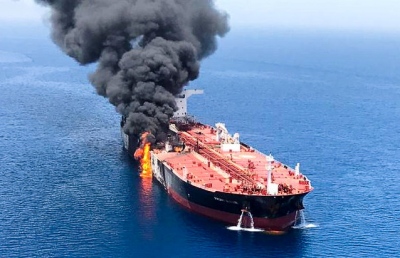
For their part, the United Arab Emirates strongly condemned what they described as an Iranian attack targeting two vessels linked to the Abu Dhabi National Oil Company (ADNOC) while transiting the Strait of Hormuz late on August 13. In a statement, the UAE Ministry of Foreign Affairs stated that no injuries were reported from the attack, which it said constituted a "flagrant violation" of UN Security Council Resolution 2817 on freedom of navigation. It noted that the targeting of commercial shipping and the obstruction of international maritime routes threaten regional stability and global energy security. The ministry also accused Iran's Islamic Revolutionary Guard Corps (IRGC) of "acts of piracy," stating that using the Strait of Hormuz as a tool of "economic coercion or blackmail" poses a direct threat to the region and its people. The UAE called on Iran to cease what it described as "unprovoked attacks" and fully commit to an immediate cessation of hostilities. Furthermore, they demanded the "full and unconditional reopening" of the Strait of Hormuz, emphasizing that this step is necessary to ensure regional security and preserve the stability of the global economy and trade. In turn, the United Kingdom Maritime Trade Operations (UKMTO) reported on August 14 two identical drone attack incidents on tankers in Hormuz the previous day, causing minor damage but no casualties. These were likely the vessels connected to ADNOC. "UKMTO has received reports from military authorities that a tanker was hit by an Unmanned Aerial Vehicle (UAV) while making an outbound transit through the Strait of Hormuz. The vessel sustained minor damage, the crew is reported safe and well, and no environmental impact has been reported," it stated in both releases.
Mehr: MQ-9 drone shot down over Hormozgan
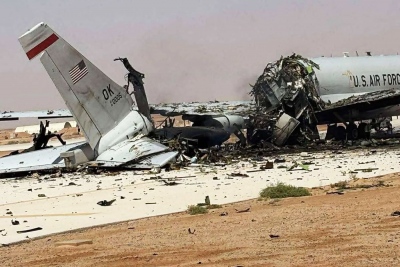
Meanwhile, new... war clouds appear over the southwestern provinces of Iran... Specifically, the Mehr news agency reported that an MQ-9 drone was intercepted and destroyed in the airspace of Hormozgan province by the Revolutionary Guards' new advanced air defense system, operating under the control of the country's integrated air defense network.
Vance distances himself from Trump, fatal White House rift over Iran
Meanwhile, Arab news outlet Al Jazeera revealed that Vice President J.D. Vance appears to have distanced himself, to an extent, from the position expressed by President Trump throughout the conflict. The report continues by noting that Trump insisted from the outset that the most critical issue is preventing Iran from acquiring a nuclear weapon. In reality, he has justified any economic cost that Americans might bear, arguing that, as he himself stated, he will stop Iranfrom obtaining nuclear weapons. Now, however, the vice president states that the primary objective is to keep oil and gasoline prices low for Americans. As a secondary goal, he sets, as he says, ensuring that Iran never acquires a nuclear weapon. This represents a subtle shift in the rhetoric of an administration that until recently insisted with particular emphasis that oil prices were a cost that had to be accepted to achieve the core objective: eliminating any possibility of Iran acquiring a nuclear weapon. This is clearly a change in stance. Whether this position will also be adopted by President Trump is expected to become clear in the coming hours.
Revolutionary Guards wiped out 25% of the US drone fleet
Meanwhile, the magnitude of financial attrition inflicted by the Iranians on the US is now reflected in military inventories. The Washington Post revealed that US forces have lost at least 45 MQ-9 Reapers since the start of the war — roughly 25% of their available fleet, according to three US officials who spoke to the newspaper. Each MQ-9 can cost $30 to $50 million, depending on its equipment and sensors. The potential value of lost assets already exceeds $1.3 billion for this weapon system alone. Not all were shot down by Iran or its allies. A US official noted that some crashed when operators lost communication with them. Yet this does not alter the strategic outcome: a fleet of advanced, expensive aircraft is being depleted at a much faster rate than designed for peacetime operations. MQ-9s have been used particularly heavily around Hormuz. They are invaluable for surveillance and strike missions, but their low speed and operational profile make them vulnerable in environments with anti-aircraft systems. For Tehran, this is the essence of asymmetric warfare: forcing the opponent to spend tens of millions to counter much cheaper threats.
USS Lincoln exposed Trump's... real problem
However, developments surrounding the USS Lincoln are actually indicative of the broader problems facing Trump. Trump seems to believe that continuing the war and maintaining economic pressure on Iran still carry, by and large, a manageable cost for the United States. The US does not have extensive ground forces in Iran, and there are nocontinuous reports of American troop casualties. So far, the biggest political problem caused by the war in the United States has been the rise in gasoline prices. Yet as the situation drags on for several months beyond the timeframe within which the administration promised the war would end, other problems are beginning to emerge. Some of these make continuing the war more difficult on a practical level. Others demonstrate that the current stalemate could still create political difficulties for the administration and its allies, which they will be forced to address. And given that the war had already turned into a heavy burden and a kind of political quagmire for Trump, with less than three months remaining until the midterm elections, recent developments are anything but positive for the president.
Maritime traffic in the Strait of Hormuz drops to unprecedented lows
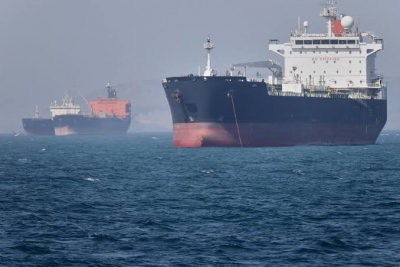
Reuters reported that maritime traffic in the Strait of Hormuz fell over the weekend below the monthly average, citing data from Kpler, amid escalating tensions between the United States and Iran. The report subsequently notes that based on these specific figures, nine vessels crossed the Strait on Thursday 8/13, an increase from the five vessels recorded the previous day, but lower than the August daily average, which stands at 12 vessels. Of the vessels that completed the transit, five entered the Persian Gulf, while four exited toward the Sea of Oman. Most of them navigated via Iranian sea lanes. In the Bab al-Mandab Strait, 19 cargo ships transited on Thursday with their transponders activated, compared to 20 the previous day.
American "bomb" against Hegseth: "Should be dismissed immediately"
US Senate Democratic Minority Leader Chuck Schumer launched a fierce attack on Donald Trump's administration Defense Secretary, Pete Hegseth, demanding his immediate dismissal amid allegations regarding the condition of the crew aboard the aircraft carrier USS Abraham Lincoln. Schumer's intervention followed reports pointing to severe psychological and physical exhaustion among sailors after an exceptionally prolonged deployment at sea as part of US operations against Iran.
Schumer: "Hegseth must be fired immediately"
Democratic leader Chuck Schumer reacted to Hegseth's statements asserting that reports regarding the deteriorating condition of the USS Abraham Lincoln crew were false or distorted. In a post, the Democratic senator argued that Hegseth's incompetence was known since his nomination for the post. "When Pete Hegseth was nominated, everyone knew he was completely unqualified. Now our brave sailors are paying the price in a terrible and unimaginable way," Schumer stated, concluding: "Pete Hegseth must be fired immediately."
Thousands of tons of weapons arrived in Israel – Maariv: "The Israeli army remains exhausted"
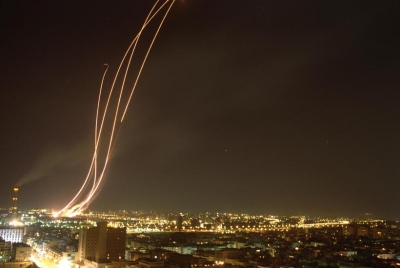
Thousands of tons of military equipment and weapon systems arrived on Thursday, August 13 at the port of Haifa, as Israel attempts to replenish the depleted stockpiles of its Armed Forces after years of military operations across multiple fronts. However, according to the Israeli newspaper Maariv, the arrival of new equipment is insufficient to resolve the issue of extensive wear and tear within the Israeli military, with the renewal of military material estimated to require years.
www.bankingnews.gr




Σχόλια αναγνωστών