

The confrontation between Iran and the United States is entering a new, exceptionally critical phase, with Tehran now attempting not merely to project resilience, but to openly construct the narrative that it has already achieved a strategic victory against the Americans and Israel.
Recent statements by the political and military leadership of Iran are telling.
Within a matter of hours, Iranian Parliament Speaker Mohammad Bagher Ghalibaf stated that his country «genuinely won» both militarily and politically, the Revolutionary Guards revealed that they overhauled their entire air defense architecture during the war itself, while the General Staff of the Armed Forces signaled that it will not retreat from its demands until Iranian interests are secured.
The political message is difficult to ignore: Tehran no longer wishes to appear as a country merely attempting to survive American-Israeli pressure.
It aims to present itself as the side that endured, adapted, and forced Washington to redefine its objectives.
Ghalibaf: «Iran genuinely won»
Mohammad Bagher Ghalibaf provided perhaps the clearest political articulation of this strategy to date.
The Speaker of the Iranian Parliament stated that Iran «genuinely won» the war on both the military and political levels. He specifically clarified that by the term «victory» he does not mean the physical destruction of the American and Israeli militaries, but the failure of adversaries to achieve their stated political and strategic goals.
This is the core pillar of the Iranian argument.
For Tehran, a war is not determined exclusively by the tally of destroyed aircraft, missiles, or installations. It is decided by whether the aggressor managed to impose its will. Mohammad Bagher Ghalibaf maintains that this did not happen, framing the Memorandum of Understanding negotiated between Iran and the United States as a «document of honor and victory» that translated what the nation won on the battlefield to the diplomatic negotiating table.
Indeed, in statements on August 15, Mohammad Bagher Ghalibaf went even further, asserting that Donald Trump, by signing the Islamabad Memorandum, ended up accepting terms that the American side had previously demanded Iran abandon.
According to the Iranian account, Washington had initially set far broader demands regarding the nuclear program, the missile arsenal, Tehran's regional allies, and the Strait of Hormuz.
It is precisely upon this divergence between initial objectives and the final outcome that Tehran is currently building its definition of «victory».

The IRGC transforms during wartime
Even more compelling are the latest disclosures from the Revolutionary Guards (IRGC).
An official from the Revolutionary Guards claimed in a Fars documentary that Iran did not simply follow pre-war doctrine, but created a «new air defense structure» during the course of hostilities.
According to the Iranian side, command elements, tactics, training, technical procedures, and the manner in which intelligence is aggregated and disseminated across the entire air defense grid were completely overhauled.
These changes are described by the IRGC as a shift from a more «classical» posture to an agile system adapted to real-world combat conditions.
If these assessments reflect the operational reality on the ground, they carry major significance.
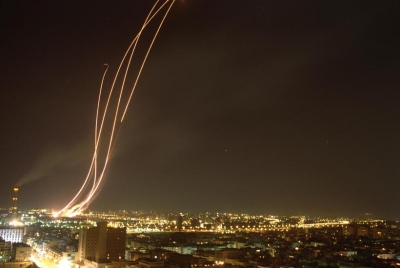
One of the primary objectives of American and Israeli operations was to curtail Iran's capability to keep missile and air defense systems functioning.
The IRGC now maintains that not only did they avert collapse, but that more than 85% of their production capacity in air defense remained intact.
An Iranian official also claimed that the rate of production and delivery of missiles and air defense systems did not decline compared to pre-war levels, and in certain sectors has already increased.
These figures represent Iranian military assertions and have not been corroborated by independent technical verification.
Yet that is precisely where their political weight lies: Tehran seeks to persuade observers that the blows it sustained did not turn time into an ally for Washington.
On the contrary, it contends that as the war progresses, Iran learns, decentralizes, replaces losses, and upgrades its defensive architecture.

«We will not back down», declare the Armed Forces
This strategic message was reinforced on Sunday, August 16, by the General Staff of the Armed Forces.
In a statement marking the anniversary of the return of Iranian prisoners of war from the Iran-Iraq war, the General Staff pledged that the Armed Forces will not back down from the «legitimate demands» of the Iranian people and the country's leadership.
At the same time, it drew a direct link between the current confrontation and the historical experience of the 1980s war, alongside the tradition of national resistance that the Islamic Republic has cultivated around that period.
This context connects directly to the historical backdrop.
The invasion by Saddam Hussein in 1980 occurred at a time when post-revolutionary Iran faced immense reorganization hurdles.
Despite initial assessments that the country would collapse, the war turned into an eight-year conflict and concluded in 1988 without Iraq managing to impose its initial strategic objectives.
It is this precise historical precedent that Tehran invokes today: outlasting an opponent who assumes they can coerce you is, in itself, a form of strategic power.

Hormuz turns into a personal feud with Trump: «He will hide in the catering truck again»
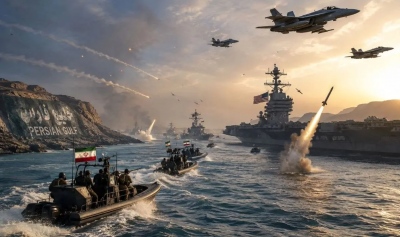
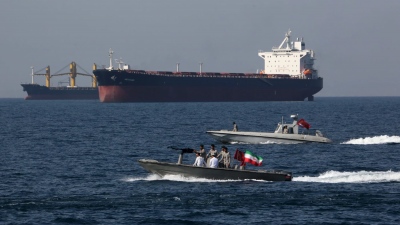
Concurrently, the dispute surrounding the Strait of Hormuz is taking on increasingly explosive dimensions.
Donald Trump stated on August 14 that he could «soon» designate the Strait of Hormuz as «United States territory», arguing that the American naval presence grants Washington effective control of the maritime passageway. The seriousness of the statement and whether it represents an actual new American policy remain unclear.
The response from Tehran was swift and exceptionally combative.
Ebrahim Azizi, head of the National Security and Foreign Policy Committee of the Iranian Parliament, urged Donald Trump to attend to his own security rather than «bluffing» over the Strait of Hormuz, warning ironically that otherwise he might find himself once again «hiding in a catering vehicle».
The phrasing was deliberate.
Just days earlier, it was revealed that during his departure from Ankara in July, American security details executed an extraordinary protocol to shield Donald Trump from a threat deemed «credible and immediate».
According to Reuters, the American President was discreetly transferred via a catering van from Air Force One to a smaller C-32A, while the primary presidential aircraft departed separately carrying officials, White House staff, and journalists.
For Iranian political messaging, the incident delivers a potent symbolic weapon: the image of a superpower publicly threatening Iran while simultaneously enforcing extreme security measures to protect its own president.

The real struggle is now over who defines «victory»
The decisive factor is that both sides are now deploying the exact same term.
Donald Trump claims that Iran is being defeated. Tehran counters that it has already prevailed.
This rhetorical clash is not mere messaging; it forms the core of the upcoming diplomatic contest.
If Washington manages to enforce terms that drastically curtail missile power, the nuclear program, and the control that Iran seeks to exert around the Strait of Hormuz, it will be able to claim that military pressure succeeded.
If, however, Iran emerges from the conflict retaining its primary military apparatus, manufacturing capabilities, missile inventory, and a decisive voice over Hormuz, then Mohammad Bagher Ghalibaf's argument that initial American aims failed will carry far greater weight.
And this represents the essence of contemporary Iranian strategy.

Tehran does not need to demonstrate that it is militarily stronger than the United States.
It only needs to demonstrate that the United States cannot compel it to surrender what it considers vital for its sovereignty and security.
The statements by Mohammad Bagher Ghalibaf, the disclosures by the IRGC regarding the new air defense structure, the stern communique from the General Staff, and the escalation surrounding the Strait of Hormuz indicate that Iranian leadership believes this struggle is far from lost.
On the contrary, on August 16, 2026, it is attempting to convey a far more ambitious message: that the war designed to break Tehran may ultimately have produced a more adaptable, more resolute, and politically far harder to coerce Iran.
www.bankingnews.gr


Σχόλια αναγνωστών