

Ready to spread terror at US targets even in Europe, Iran appears poised to act, with reports indicating that the Iranians have targeted Bulgaria and Cyprus, among others. In fact, the Iranian military rushed to warn Gulf states, emphasizing that since they grant their territory to the Americans to launch attacks against Iranian soil, they are accomplices and will suffer the consequences. It is now clear that the Iranians are ready to go on the offensive if there is a new escalation from the US and Israel. In this context, they have already reorganized their military leadership, reinforced the army with missiles and drones, and are now sending the message that the next phase of the conflict will be fought on their own terms. And all this while US President Donald Trump is still searching for a proper strategy to avoid humiliation in the Gulf.
Attacks on US targets in Europe
According to the Financial Times, Iran has considered attacking US military targets in Europe if Donald Trump escalates the war. Two regime insiders told the Financial Times that Iranian forces have considered striking US facilities in southeastern European countries such as Bulgaria, which last month approved the use of Bezmer Air Base by US refueling aircraft.
Cyprus also in the frame
One of these sources added that Cyprus, where a British air base was struck by an unmanned aerial vehicle in March, is also among potential retaliation targets in the event of a new US attack. The same sources stated that Iranian forces have separately considered attacking undersea fiber-optic cables in the Strait of Hormuz in the event of an escalation.
Abdollahi (Iranian military) warning to Gulf states: Do not help the Americans, you will be accomplices
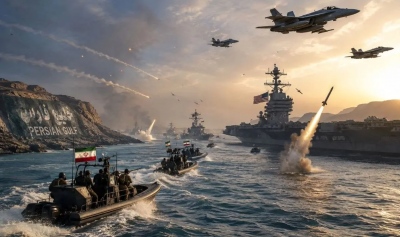
Ali Abdollahi, Chief of Staff of Iran's Armed Forces, warned Gulf states against providing assistance to the US military, stating that nothing "escapes our eyes." In a statement carried by the Iranian news agency Fars, Abdollahi noted that the presence of such a large number of military aircraft, particularly refueling aircraft, at bases in the region would be difficult to explain without the knowledge of host countries. "The countries on the southern shore of the Persian Gulf, which announce through various statements that they do not permit the US to use their territories against Iran, must know that nothing escapes our attention. The presence of such a large number of military aircraft, especially aerial refueling aircraft, at bases in the region could hardly occur without the knowledge of the countries hosting them. We warn: any provision of assistance or facilitation to the aggressor US military is equivalent to participating alongside US military forces," Abdollahi stated.
Resumption of war a matter of time
According to the FT, the threats reflect an atmosphere of defiance and determination in Tehran, where many within the regime increasingly view the resumption of war as a matter of time rather than possibility. Negotiations to reopen the Strait have stalled, while Iran's Supreme Leader, Mojtaba Khamenei, last week placed hardline figures in top security and military command positions. Trump stated on Tuesday that "no talks or contacts are being conducted or planned" with Tehran.
The warnings
The Islamic Revolutionary Guard Corps and other military commanders have warned that, in the event of a new full-scale conflict, Iran would exceed its previous strategy—which focused on attacks against US military facilities, energy infrastructure, and other targets in the Middle East—and strike targets at greater distances. Last month, the Guards threatened the United Kingdom over the use of British military bases by the US, stating that "any base used to launch an attack against Iranian territory will be considered a legitimate target."
Real but limited threat
Sidharth Kaushal, a researcher at the British institute Royal United Services Institute (RUSI) in London, described the threat posed by Iranian missiles to targets in Europe and elsewhere as "real, but limited." Iran could use medium-range ballistic missiles against US facilities in southern and southeastern Europe, such as Shahab-series missiles; however, according to Kaushal, these would struggle to cause significant damage at longer distances. The extent of Iranian retaliation would depend on Washington's actions, according to the sources.
Escalation plan
One source stated that the regime is preparing a plan to further broaden the conflict if Trump carries out previous threats to attack Iranian infrastructure. Last month, the US president stated that Washington would destroy an Iranian bridge or power plant every time the Islamic Republic targeted a ship in the Strait. The second source stated that Iran would set "no limits" on its response in the event of an American attack. "If the US goes too far, Iran will defend itself at any cost, go beyond the region, and strike Europe as well," the source said.
Attacking distant targets
Iran has already shown that it is willing to attack distant targets. In the weeks following the start of the war by the US and Israel in February, Washington accused Tehran of launching multiple missiles—none of which reached their target—toward Diego Garcia, a joint US-UK military base in the Indian Ocean roughly 4,000 kilometers away. Turkey announced in March that NATO air defenses intercepted several ballistic missiles launched from Iran, while the British air base at Akrotiri in Cyprus was struck that same month by an unmanned aerial vehicle. Western officials stated at the time that they suspected it was an Iranian-made drone launched by regional forces close to Tehran rather than directly from Iran. Sources stated that the Iranian attack last month on the US base in Jordan, which killed three American military personnel, was the most precise long-range attack conducted by the Islamic Republic and demonstrated its capability to hit targets at longer distances.
Message to Europe
"This was also a message to Europe: it can be targeted by missiles, so it should know what stance to take in this war," said the first source. "A very big mistake, such as striking our infrastructure, could take the war beyond the region and all the way to Europe," Iranian sources stated. A memorandum of understanding between the US and Iran, concluded in June, collapsed last month after Tehran attacked ships in the Strait and both sides traded accusations over violating the preliminary agreement. Successive retaliatory strikes and a renewed US blockade of Iranian ports followed.
Heavier missiles, smaller warheads
Weeks of diplomatic efforts have produced no meaningful progress on reopening the maritime waterway or resuming negotiations for a broader agreement to end the war, while Trump appears increasingly frustrated by the stalemate. RUSI's Kaushal stated that heavier missiles could also be used, but to reach a sufficient distance, they would need to carry a smaller warhead—meaning damage would be limited. He argued that "it would be more effective for Iran to act through proxy forces," which include armed groups such as Shiite militias in Iraq, Hezbollah in Lebanon, and the Houthis in Yemen.
Weapons with a range over 2,000 km
Douglas Barrie of the International Institute for Strategic Studies stated: "The attacks they attempted this year against Diego Garcia show in some way that they possess weapons with a range over 2,000 kilometers." "How many of these they actually possess is a different matter, as is whether they would be willing to use even a few to make a dramatic display of power—that remains an open question." "The risk is that the missiles fail or are shot down, so what would they gain? The greater the range, the harder it is to achieve really high accuracy," the analyst points out.
Tehran's message
Some within the Iranian regime worry that Tehran is overplaying its hand and going too far, according to the FT. Many hardliners in the system believe the US is unreliable regarding the implementation of any agreement and that Iran must impose greater costs on Washington to ensure it honors its obligations under a final settlement. These include Mohsen Rezaei, a former Guards commander, whom Mojtaba Khamenei appointed last week as the country's top security official. Iranian analysts interpreted the move as a sign that figures like Mohammad Bagher Ghalibaf, the country's chief negotiator, have been temporarily sidelined as prospects for reaching a viable deal look increasingly grim. Iran "is sending a clear message that if you don't reach a deal with Ghalibaf, you will have to deal with Rezaei," said the second source. "The message is: Don't go crazy, because I am crazier than you..."
End of an era for the US in the Middle East: Iran shatters the American "shield" – Bases turned into a death trap
The war revives a fundamental and particularly difficult question regarding the strategic logic behind the long-standing US military presence in West Asia. In this specific context, countries hosting American forces are not truly protected, but rather dangerously exposed. Their national security is sacrificed on the altar of American strategic objectives that have little to do with the well-being of local societies. Allies thus become hostages to an agenda they did not design and do not control.
The "protection paradox"
This situation can be described as a "protection paradox." Persian Gulf states host foreign military forces with the expectation that these forces will enhance their security. However, this same military infrastructure can rapidly turn into a source of strategic vulnerability when the power supposed to protect these states engages in dangerous military operations in the region. The presence of military bases, logistics hubs, air bases, and intelligence facilities linked to the US military essentially turns the territory of host countries into potential targets for retaliation. Thus, the distinction between protecting a country through an alliance and exposing it geographically because of that same alliance is dramatically narrowed. Host countries risk being transformed into forward military bases in a war against their neighbor—a war they never sought.
The image of the "security shield" collapses
The recent war shattered the decades-long assumption that the US military presence acts as a "security umbrella." Instead, the American military footprint has converted host nations into shields, as their territories have become legitimate targets for Iranian retaliation. For decades, the United States built an extensive network of military bases in the Middle East, including in Kuwait, Bahrain, Jordan, Qatar, the United Arab Emirates, Iraq, and Saudi Arabia. All of these military facilities operate under the guise of providing security to host countries. This vast military infrastructure was presented to regional countries as an undeniable guarantee against external threats. However, the recent war exposed this guarantee as a dangerous illusion: a one-way street where the cost of Washington's reckless military choices is ultimately borne by its own allies.
Bases turned into targets
When the US–Israel coalition launched its attack against Iran on February 28, Tehran's response was not only immediate, but also devastating for American targets located in these very countries. Host countries may or may not have had a say in the decision to attack Iran. However, they were the ones forced to confront the full and destructive weight of the consequences. They were dragged into a war they did not want, and their sovereign territories were turned into active battlefields due to the presence of foreign military infrastructure. This is the essence of what could be termed a "dependency trap." States that sought American protection to enhance their security ultimately found themselves trapped, with their fate dependent on the choices of a superpower in crisis whose strategic interests not only fail to align with their own, but may stand in complete opposition.
Smaller Gulf states pay the highest price
The illusion of protection has proven particularly disastrous for the smaller Persian Gulf states. These countries, with limited military capabilities and vulnerable populations, sought American security guarantees precisely to offset their strategic weaknesses. Yet, rather than becoming safer, they now realize that these very guarantees have made them more vulnerable than ever. The core contradiction is now starkly visible: the military presence intended to serve as a protective shield can, under conditions of general conflict, turn a country into a potential target. In this light, the removal of foreign military forces and related military infrastructure emerges as a prerequisite for a new regional security architecture, one based far more on de-escalation, regional cooperation, and avoiding the entanglement of states in wars they did not choose.
Billions of dollars in damages
The scale of destruction was immense, with estimates citing billions of dollars in damage across numerous US military facilities in multiple countries. Among the worst-hit facilities was Naval Support Activity Bahrain, home to the US Navy's Fifth Fleet. The base suffered heavy damage to its command facilities, barracks, and warehouses, with symbols of American naval power in the region reduced to rubble. Other US bases in the region suffered even greater damage, while expensive air defense systems were completely destroyed, leaving the bases themselves and their host countries increasingly exposed.
US bases became targets for Iran
If the United States was willing to use bases in host countries to launch offensive operations against Iran, then those specific bases constituted legitimate military targets under any reasonable interpretation of international law. The Iranian leadership had repeatedly warned that it would strike American military bases and facilities throughout the region if the American war machine launched an attack against Iran. That is precisely what happened. The Iranian response followed the script Tehran had long foreshadowed, targeting critical American military infrastructure in the region and, inevitably, exposing its host countries to incoming fire.
www.bankingnews.gr





Σχόλια αναγνωστών