

While Europe discusses the green transition, new environmental regulations, and reducing the footprint of agriculture, at the very same time Russia is mapping out an entirely different strategy.
It is investing aggressively in agricultural research, domestic seeds, genetics, and productivity growth.
Russia, despite sanctions and a war economy, treats agriculture as a strategic weapon.
It is not content with selling wheat to the world. It wants to control seeds, genetics, technology, and ultimately the entire production chain.
At the same time, in Europe, agriculture faces an explosive mix of costs, environmental constraints, demographic aging, and a declining number of agricultural holdings.
The message from Moscow is clear... food security is not considered merely a matter of agricultural policy, but an issue of national security and economic power.
And here lies the stark contrast with Europe and, by extension, with Greece.
Russia wants «super» seeds within 2-3 years
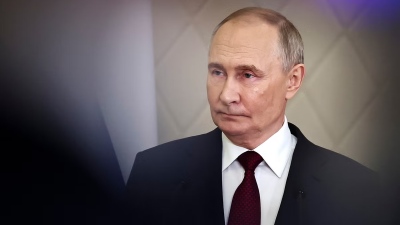
At a meeting of the Presidential Council for Science and Education, Russian Minister of Agriculture Oksana Lut presented the PUSK platform, which is being created at Timiryazev University, to Vladimir Putin.
Participating in the platform are 86 research and educational organizations, as well as businesses, aimed at accelerating the development and market release of new crop varieties and hybrids.
What is interesting is that the program is not limited to traditional crop breeding.
Russia is attempting to transition to a genomic selection model, utilizing whole-genome sequencing and genetic markers in order to identify much earlier the traits that confer high yields, drought resistance, and adaptation to specific climatic conditions.
The goal is striking: reducing the development time of new varieties and hybrids from the 7-10 years traditionally required down to approximately 2-3 years.
Why Moscow considers seeds a matter of national security
The logic behind the Russian strategy is straightforward.
A country can be a major grain producer, but if it depends on foreign corporations for the genetic material of its crops, its agricultural self-sufficiency remains vulnerable.
This is precisely what Moscow is attempting to alter.
According to the presented data, the share of domestic sugar beet seeds increased from just 8% in 2024 to 20% in 2025 and to 24.2% in 2026, with the target for Russia being to reach at least 75% domestic coverage by 2030.
The Russian state is attempting, in other words, to create the entire value chain: research, genetic material, seeds, production, processing, and exports.
And this does not concern only self-sufficiency.
It also concerns profits.
From food security to exports
Russia has evolved into one of the most important exporters of agricultural products worldwide and holds a leading position in wheat exports.
However, increasing per-hectare productivity means far more than simply producing more food.
It means lower production costs and higher profit margins.
This is why Russian strategy links the increase in agricultural output to the expansion of exports.
The objective is for Russian agricultural exports to move toward $41-$47 billion by 2030.
In other words, Moscow does not view agriculture as a sector that must merely survive.
It views it as a strategic export weapon.
And what about Europe?
Here begins the broader debate.
The European Union remains one of the largest producers and exporters of agricultural goods globally.
However, the European agricultural sector is confronted with a challenging triad: high production costs, stricter environmental demands, and intense competition from third countries.
Farmers' protests in many European nations in recent years highlighted precisely this contradiction.
On the one hand, Europe asks producers to become greener.
On the other, it asks them to remain competitive against products that are often produced under different cost structures and different regulatory standards.
The question, therefore, is critical:
Why is Europe pursuing the farmer until they abandon the field?
Greece finds itself in the most difficult position
For Greece, the matter is even more critical.
Greek agriculture faces chronic issues: an aging farming population, small and fragmented land holdings, increased energy and input costs, irrigation challenges, extreme weather events, and limited access to new technologies.
Climate change adds yet another risk factor.
The agriculture of the future will not simply need more water or more subsidies. It will need better seeds, more resilient varieties, precision farming, automation, and significantly higher per-hectare productivity.
And this is precisely the core of the Russian bet.
The battle of the next four years will not be fought only in the fields
The real battle for food security will not be determined solely by how many hectares are cultivated.
It will be determined by who holds the technology and genetic material required to produce more with less water, less labor, and lower costs.
Russia is attempting to move aggressively in this direction.
Europe possesses an immense research and technological foundation, but is called upon to balance environmental policy with maintaining competitive agricultural production.
And Greece stands before an even larger dilemma.
If the farming population continues to shrink, if production becomes economically unviable, and if investments in technology and genetics do not accelerate, the risk remains that the country will find itself increasingly dependent on food imports.
The real problem
Europe is not agriculturally powerless.
However, it is called upon to solve an exceptionally difficult equation: higher output, lower environmental footprint, fewer pesticides, higher compliance costs, and concurrent competition from countries with vastly different production costs.
It is no coincidence that European agriculture stands at a critical crossroads, nor that the debate surrounding the Common Agricultural Policy (CAP) recognizes the necessity of aligning climate policy with food security.
The problem is that the field does not operate on ideological terms.
If costs become prohibitive, the farmer stops producing.
And if enough people stop producing, then Europe will import the food it previously produced.
The 3 million farms that were lost
The scale of the change is striking.
Between 2010 and 2020, the European Union lost approximately 3 million agricultural holdings, with the greatest contraction affecting smaller operations.
And now comes the reality of climate.
In 2026, Europe finds itself facing consecutive heatwaves and severe drought, resulting in major crop losses.
In France, for example, corn production is estimated to have fallen by 35% compared to 2025, while in Italy approximately 60% of agricultural land has been affected by drought.
Therefore, the question is no longer theoretical.
Russia looks to 2030 - We look to the next subsidy
This is perhaps the harshest realization.
Russia is planning what it will plant, with which seeds, and using which technology in the coming years.
Europe is debating how to strike a balance between the green transition and farm incomes.
And in Greece, a massive part of the discourse still revolves around subsidies, compensation payouts, payment delays, and production costs.
Naturally, subsidies are indispensable.
However, a country cannot consider post-disaster compensation payouts as an agricultural strategy.
The real strategy is preventing the destruction of production from the very start.
www.bankingnews.gr




Σχόλια αναγνωστών