

At a time when millions of Russians are rushing to the ballot boxes from today, Friday, September 18, through Sunday, September 20, in order to renew the State Duma as well as local and regional parliaments, the Russian army continues its advance unabated on the Ukrainian front.
Military analysts even argue that the Russian armed forces experienced yesterday, September 17, their finest day on the front throughout the entire war, capturing more than 100 square kilometers within a few hours...
And while the Russians advance, the West watches in bewilderment as Russia manages to dismantle critical military targets daily in Kyiv, Odesa, Kharkiv, and other Ukrainian cities without exhausting its reserves of strategic missiles...
Indeed, the situation is desperate for the Ukrainians, as revealed by the Prime Minister of Poland, Donald Tusk, who maintained that the Ukrainian army suffers losses (killed and wounded) on the order of 27,000 on a monthly basis...
Although this figure appears greatly understated compared to the reality, Poland's acknowledgment of this casualty count is yet another indication of the destruction being sustained by Ukraine and its people...
Inexhaustible arsenal
The West is attempting to explain the Russian «miracle» consisting of daily, massive air strikes on Kyiv, Odesa, and other Ukrainian cities without simultaneously registering any shortage of missiles and ammunition.
Western media, including Reuters, argue that Russia managed to increase the volume of strikes on Kyiv without depleting missile stockpiles by modifying a target practice missile.
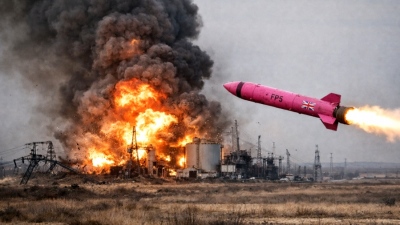
Specifically, it is noted that Russia's massive deployment of converted target missiles, or RM-48U, led to record levels of air attacks in recent months.
According to data compiled by military analysts, RM-48U missiles accounted for more than half of the 228 ballistic and hypersonic missiles launched against Ukraine in July and early August.

The... miracle
Reuters adds that the scale of the RM-48U deployment, which had not been previously reported, helps explain how Russia managed to expand its summer strikes without exhausting stockpiles of Iskander and other primary strike missiles.
As noted, launching large volumes of RM-48U missiles provides Russia with a method to deplete remaining stockpiles of Ukrainian interceptor missiles and strike less significant but easy targets, such as food warehouses, without expending high-precision guided missiles.
«Their use allows the Russians to preserve their stockpiles of more advanced missiles, such as Iskander, Kh-23, and Zircon, for the winter, when they will genuinely need to intensify the ballistic missile campaign», analysts state.
Furthermore, it is emphasized that in July, as strikes with RM-48U missiles increased, the number of Iskander missiles launched dropped to 38, down from more than 100 the previous month.

The RM-48U missile
The RM-48U target missile follows a ballistic trajectory at high speeds.
However, it is less powerful and less accurate than the Iskander.
Ukrainian data indicate that this summer marked the first confirmed large-scale deployment of this ordnance, which is launched from Russian S-400 anti-aircraft missile systems.
Concurrently, it is emphasized that, according to official Ukrainian data, in July Russia launched the highest number of ballistic and hypersonic missiles in a single month since the start of the war.
Out of 158 strikes, 87 were carried out using RM-48U missiles.
Additionally, it is reported that the tempo of air attacks continued to climb.
According to Ukraine, during the first eight days of August, 70 ballistic and hypersonic strikes were conducted by Russia, 36 of which were executed with RM-48U missiles.
The Main Directorate of Intelligence of Ukraine (GUR) stated that Russia plans to more than double the production of RM-48U missiles, raising it to 480 units this year, compared to 200 last year.

Shock for Ukraine: 27,000 dead and wounded each month
And while Russia continues finding ways to strike the Ukrainians with tremendous ferocity while enduring this war of attrition, the Ukrainian military, and the Ukrainian nation, counts its wounds.
Monthly losses of the Armed Forces of Ukraine reach 27,000 dead and wounded.
This was revealed by the Prime Minister of Poland, Donald Tusk, who emphasized that this is the highest figure since the outbreak of the conflict.
Addressing the Polish Parliament, Donald Tusk noted that if this trend persists, the winter in Ukraine could prove exceptionally difficult.
«With such a trend, winter in Ukraine could indeed prove catastrophic», Donald Tusk warned.

Unable to replenish battlefield losses, at least 2 million casualties
It is worth noting that the Polish prime minister's assessment is presented as rather optimistic.
Foreign military experts, for instance, consider that the Armed Forces of Ukraine lose at least 30,000 people on the front every month.
Analysts point out that Ukraine simply cannot keep up with replenishing military losses through compulsory mobilization.
As Western think tanks report, since the outbreak of hostilities against Russia, the Ukrainian military has lost at least two million personnel, excluding missing persons.
In their view, precisely this factor will prevent the Armed Forces of Ukraine from sustaining their defense along key axes in the zone of the so-called «special military operation» over the long term.
It must be underscored that indirect confirmation of high personnel losses for the Ukrainian armed forces is provided by regular exchanges of bodies.
The previous day, such a procedure took place on the border between Belarus and Ukraine.
Within this framework, Russia handed over 252 bodies of deceased Ukrainian armed forces personnel to Ukraine and received in return 23 bodies of fallen servicemen from the Russian army.

Financial Times: West must close the gap with AI
The Financial Times urges Western countries to accelerate the development of Artificial Intelligence (AI) for military applications, suggesting that the experience of Ukraine serve as a benchmark.
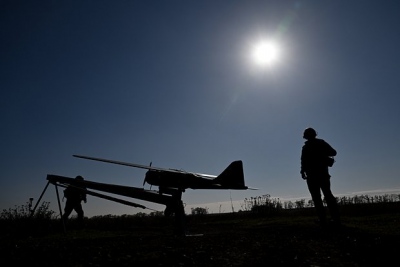
The report argues that the war demonstrated how AI has ceased to be the subject of long-term defense programs and has now been integrated into the daily operations of armed forces, primarily in drone deployment, data processing, and intelligence.
According to the FT, Ukraine reports a tenfold increase in the number of drone strikes utilizing AI guidance since early 2026.
These are systems that help the unmanned aerial vehicle orient itself during the terminal phase of flight, when communications or satellite navigation might be jammed by electronic warfare assets.
The Ukrainian Ministry of Defense and the Brave1 platform are already conducting large-scale trials of drones featuring AI guidance.
The ministry has stressed that the technology boosts strike effectiveness, though the decision to employ weapons continues to be made by a human.
The best day of the war
At the same time, Russian experts speak of the finest day of the war for the Russian military.
As reported, updated data were published for the Sumy and Kharkiv regions.
In the area of responsibility of the Russian military grouping Sever, numerous advances were recorded over the past 24 hours, described as exceptionally significant on a strategic level.
The numbers are presented as impressive.
«It was the best day, [...] a record day for September, and not just for this year but for this entire war.
More than one hundred square kilometers came under our control», declared Russian military analyst Dmitry Degtyaryov, creator of the «General Staff» channel on Telegram.

What is happening in Sumy
On the Sumy axis, there is currently no news from the Shostka bridgehead.
Fighting continues for Ulanovo and Tolstodubovo.
By the end of the month, according to information arriving from the area, it is considered likely that these villages will be captured.
In the main Sumy bridgehead, advances were registered, though limited.
Forested belts northeast of the settlement of Khoten and a wooded expanse between Novaya Sech and Kiyanitsa were captured.
The clashes are described as fierce and slow: «We are gradually breaching this main defensive line covering Sumy from the north, but for now there are no major breakthrough successes.
Great progress was made in the «pocket» between Yunakovka and Mogritsa, north of Sadki.
The «pocket» was cleared, with an advance exceeding 6 kilometers.
The most significant aspect, however, is not the kilometers, but the fact that dense forested expanses north of Sadki were brought under control», Dmitry Degtyaryov points out.

The objective was achieved
Furthermore, forested expanses south of Sadki were seized, and the Russian army reached the edges of the Sumy forest.
As the analyst noted, the target set for September, as the final month of the summer offensive campaign, has almost been accomplished.
A primary component of it was the clearing of forested areas south and north of Sadki.
The total surface area of these two sectors alone exceeds 30 square kilometers and passed entirely under Russian control.
The next objective is firm consolidation inside the Sumy forest and the gradual expansion of the control zone.
Indeed, this does not represent the sole entry of Russian forces into this specific forest, which reaches up to the outskirts of the regional capital.

Everything depends on the advance
Everything now depends on the tempo of the advance.
Consolidating inside the forest and pushing forward before autumn sets in could establish conditions for battles around Sumy.
However, based on front configurations and deployed forces, it is considered likely that such battles will commence only in April or May 2027.
Until then, this specific sector will serve another major purpose: lengthening the Ukrainian army's front, compelling it to constantly shift its limited reserves.
Available data also reveal significant progress further south, where forces are driving toward Sumy from the east.
Troops are likewise reported to be securing notable successes.
Wooded sectors and forest belts on the approaches to Malaya Rybitsa were brought under control.
The advance front there spans nearly 6 kilometers in width and up to 3 kilometers in depth.
Simultaneously, the control zone between the villages of Veliky Prikol and Maryino was widened across a 7-kilometer front.
Forested areas, vegetation belts, and small woods were also cleared, while the village of Prokhody came under control.
The advance is characterized as exceptionally significant, as it broadens the control zone into surrounding woods as well, leaving the opponent with movement opportunities primarily across open terrain.

Pocket within a pocket
On the Kharkiv axis, an expansion of the control zone was registered in the area east of Goptovka.
Along the border, the Antoshkina ravine and a forest belt extending parallel to the road were captured.
The position lies 13 kilometers from Lyptsi, where fighting has continued since the spring of 2024.
Reports indicate that the Ukrainian military is prepared to absorb very heavy losses for a settlement spanning 5 square kilometers, as its capture by Russian forces would open the shortest route to the outskirts of Kharkiv and could sever a major supply route for Ukrainian forces in the area.

The Vovchansk pocket
The most significant advances of the 24-hour period occurred on the Velykyi Burluk axis and inside the so-called Vovchansk pocket.
Forces closed the «pocket» between recently captured Shevchenkove and Bilyi Kolodiaz.
An area of approximately 3 square kilometers passed under control.
Simultaneously, the control zone surrounding Bilyi Kolodiaz expanded significantly, pushing the contact line away from both the settlement borders and the Bilyi Kolodiaz–Prykolotne road axis.
Forces also reached the outskirts of two villages, Petropavlivka and Novooleksandrivka, after breaching a three-tier defensive line.
In the Vovchansk pocket, the control zone is widening along the perimeter across a broad front.
The width of the advance reaches nearly 17 kilometers.
Forces are also reported to have created the so-called Vilkhuvatka pocket, while the settlement itself is reported to have already been cleared:
«While the Armed Forces of Ukraine pour all their forces into the Lyman sector, the Russian military grouping Sever, exploiting the situation, is significantly expanding the control zone in its area of responsibility.
If we review the balance of the last 24 hours, we have the following result: one settlement came under control and, mind you, 110 square kilometers of territory. [...]
For September, these are naturally record numbers», Russian analysts maintain.

Thousands of dead soldiers
«The situation remains identical to the last three months.
Our actual territorial gains (meaning areas under full control) stand at approximately 250 square kilometers per month.
The opponent's are virtually zero.
Casualties on both our side and theirs remain at the lowest levels of the past six months.
Let me remind you that from the statistics of body exchanges, it is impossible to determine the absolute number of casualties and mobilization flows», stated Russian analyst and retired colonel Aslan Nakhushev.
He calculates territorial gains based on land that has in practice transitioned into the rear, while regarding the remainder as part of the immediate contact zone.
Regarding enemy casualties, in his view, these hit peak levels during the new military operations of Volodymyr Zelensky.
Cited examples include the incursions into the Kursk region and local «counteroffensives», such as current attempts to recapture Lyman, enter Chasiv Yar, or halt Russian forces along the Sloviansk, Kramatorsk, Druzhkivka, and Dobropillia axes.
Fighting for 384 days
Regarding Chasiv Yar, according to information attributed to Colonel Vladimir Antonyuk of the Ukrainian Special Operations Forces, Ukrainian forces attempted to breach the «pocket» west of the town.
The transfer of the 210th Assault Regiment from the Zaporizhia region and several airborne assault brigades from the Dnipropetrovsk region reportedly failed to resolve the operational encirclement of Ukrainian units.
«Russian forces consolidated in Chervone, Izhivka, and Popasne, a development that permanently severed withdrawal routes for the remnants of the 24th Mechanized Brigade and the 18th Brigade of the National Guard of Ukraine», said Vladimir Antonyuk.
As a result, the «pocket» is reported to be virtually closed.
Battles for the area had essentially continued since the capture of Chasiv Yar in 2025, lasting 384 days.
As noted, even Ukrainian sources now concede that the Armed Forces of Ukraine suffered exceptionally heavy casualties there and were defeated.
Many of those who survived are reportedly attempting to flee, although it is estimated that most will not manage to escape the area.
www.bankingnews.gr





Σχόλια αναγνωστών