

The spokesperson for the Islamic Revolutionary Guard Corps, Hossein Mohebi, claimed that the United States has suffered a "historic and humiliating defeat" in the war, while asserting that Tehran maintains no official or unofficial communication with Washington. In an interview, Hossein Mohebi addressed the IRGC's assessment of the war with the US, Israel, and their allies, arguing that Washington has been strategically defeated but lacks the political courage to acknowledge its loss. "America has been defeated in this war, and its defeat is historic and humiliating. However, it lacks the courage to admit and accept this humiliating strategic defeat," he stated.
"The US defeat is strategic"
Hossein Mohebi argued that the defeat of the US and Israel is recognized, according to him, by military and political analysts, even within the United States itself. As he noted, part of the discussion regarding the American defeat concerns the failure to achieve the goals set prior to the onset of operations. "This is only one dimension of the issue," he noted. "The primary dimension is the strategic defeat of America at the very foundation of its power." In his view, this represents a "historic, unprecedented, and exceptionally significant military loss" for the United States.
The Strait of Hormuz at the center
One of the central arguments presented by the Revolutionary Guard spokesperson concerned the Strait of Hormuz. Hossein Mohebi claimed that despite possessing the largest naval force in the world and presenting the protection of energy flows and freedom of navigation as the primary rationale for its regional presence, Washington failed to reopen the passage. "America could not reopen the Strait of Hormuz. It brought all available assets to the region and failed. This constitutes a direct military failure for Washington," he stated. At the same time, he asserted that Washington failed in its self-stated objective regarding maritime security. "The nation that supposedly came to ensure security ultimately became an agent of regional instability," he declared. According to him, prior to the onset of American strikes, the Strait was open, whereas the disruption to navigation occurred only after the US attack.
"American bases were targeted"
The Revolutionary Guard spokesperson subsequently turned his focus to US military bases located throughout the Middle East. As he claimed, the US had built an extensive network of installations across the Persian Gulf states over several decades, as well as along the eastern and western borders of Iran. These facilities, according to him, contained command centers, logistics and support operations, airfields, intelligence hubs, and critical military infrastructure. "However, what happened? All these American military installations became targets for Iranian missiles and drones, to the extent that many were rendered completely operational failures." Hossein Mohebi asserted that the US was forced to relocate personnel and equipment to more distant locations, including Al Azraq in Jordan, sites in Syria, and areas near the border with Israel. However, he maintained that even in those locations, full security could not be established.
"The American fleet was driven from the Persian Gulf"
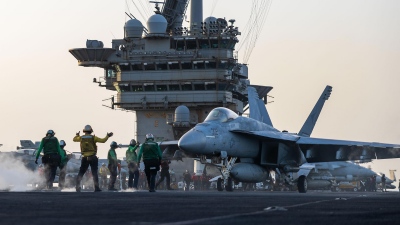
The Revolutionary Guard spokesperson also claimed that, following the outbreak of hostilities, American warships withdrew from the Persian Gulf. "All American naval vessels were driven out of the Persian Gulf waters and pushed back approximately 400 kilometers," he declared. According to him, American installations are no longer capable of effectively defending themselves. "A major portion of their energy and military power was consumed simply in defending their own military bases," he noted.
A blow to American intelligence services
Hossein Mohebi claimed that the conflict exposed severe vulnerabilities within the American intelligence framework. He noted that a perception had long existed that American intelligence services possessed technology rendering their facilities virtually invulnerable. "Yet, when American intelligence centers in the Persian Gulf and northern Iraq were hit by Iranian missile strikes, it was proven that they were far from unreachable," he argued. According to him, Iran successfully located and targeted these specific installations. "This represents a massive intelligence system failure for America relative to both its rivals and its regional allies," he said.
"The image of American technological superiority collapsed"
Hossein Mohebi also addressed the technological dimension of the conflict. He contended that before the war, a widespread belief existed that the US possessed technology against which no countermeasure existed, across both offensive and defensive weapon systems. He referenced F-35 fighter jets, Patriot air defense systems, offensive strike missiles, refueling aircraft, submarines, and drones. "In this war, it was proven that all this American technological dominance is not untouchable," he claimed. According to him, this sent two distinct messages: first, to competitors of the US who realized that American hardware can be effectively countered; and second, to Washington's allies who realized that US military hardware cannot even guarantee the safety of American forces.
"American hegemony has suffered defeat"
The Revolutionary Guard spokesperson then raised the issue of American geopolitical hegemony. He argued that a nation's hegemony rests upon three primary perceptions: that it is invincible, that it can guarantee security for its allies, and that it possesses political and moral legitimacy. "America failed on all three fronts," he asserted. In his view, Washington lost its image of invincibility after taking heavy casualties while simultaneously failing to protect its own installations. Hossein Mohebi further criticized American operations, referencing the bombing of a school in Minab, an attack in Lamerd, and the bombing of a wedding ceremony. "Today, US global hegemony no longer exists," he argued. "America did not merely lose a war. It lost an entire systemic apparatus and its control over the new world order."
"We determine the new regional system"
According to the Revolutionary Guard spokesperson, the US can no longer independently guarantee security within the region. "America has concluded that it cannot establish security in the region against Iran. Nor can it establish security without Iran," he noted. He claimed that regional nations have recognized this shift, linking this evolution directly to recent regional diplomatic initiatives. At the same time, he asserted that Iran has won the conflict and is currently working to convert this outcome into permanent regional deterrence power.
"The war is not over"
When asked whether the current situation represents a new phase of the war or a continuation of the same conflict, Hossein Mohebi replied that, from the Iranian perspective, it remains the same ongoing confrontation. "The war continues," he declared. He further asserted that the Revolutionary Guard has prepared for a long-term conflict and is even more prepared today. "If a new wave of attacks occurs, we are undoubtedly prepared and will execute a swift defensive response," he added.
"The US expected Iran to surrender within days"
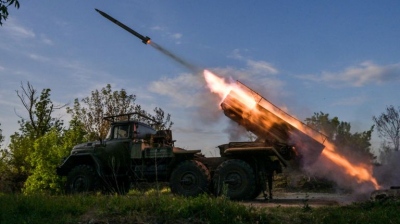
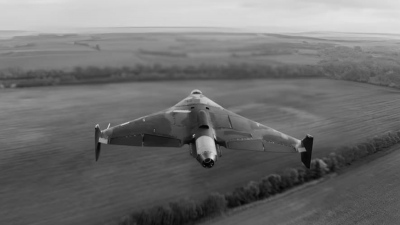
The Revolutionary Guard spokesperson claimed that the US operated under an erroneous assessment of Iran's endurance, calculating that the country would succumb within a few days. According to him, this specific assessment had been passed to American leadership by the Israeli side. "We possess intelligence indicating that the leader of the Israeli regime told the American president that within three to five days at most, you could force Iran into surrender," he stated. According to him, the American side was caught off guard by the capability of Iranian missile technology. He specifically referenced their range, destructive firepower, precision, radar-evasion capabilities, and the diverse array of missiles and drones deployed.
"We have zero official or unofficial contact with the US"
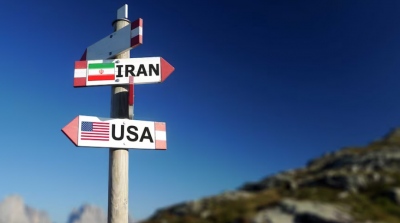
When asked whether any channel of communication exists between the Revolutionary Guard and the United States, Hossein Mohebi was definitive. "No such communication exists," he declared. He explained that the Revolutionary Guard operates under a military and defense mandate dictated by the Iranian Constitution, whereas diplomatic matters fall strictly under the Ministry of Foreign Affairs. "The Revolutionary Guard, neither now nor in the past, has maintained any formal or informal relation with the United States, and we do not participate in bilateral diplomatic channels," he maintained.
Warning of a new attack: "We will change the geography of the war"
The Revolutionary Guard spokesperson issued an especially stern warning regarding the possibility of renewed hostilities. "If a new attack occurs, there will be major structural changes in our defensive and counter-offensive operations," he noted. He added: "We will change the geography of the war." According to him, this transformation will apply both to the geographical scope of the conflict and to the weaponry deployed. "We will introduce advanced strategic weaponry with novel capabilities into the fight, and the world will be shocked," he asserted. Furthermore, he noted that a renewed conflict would involve targeting assets that have remained untouched to date.
"There are strategic weapons we have not yet used"
Hossein Mohebi claimed that Iran possesses weapons systems that were not deployed during earlier stages of the conflict. "We possess weapons that we have been manufacturing for years and whose capabilities we continuously upgrade. We did not use them in earlier phases of the war. These are unrevealed strategic assets that will be deployed if necessary," he stated. He also referenced targets that he claimed were not factored into adversary calculations. Among others, he pointed to potential strikes on Al-Tanf and the Gulf of Aqaba, arguing that additional targets exist that the opposing side has failed to anticipate.
"Resistance forces are not proxies of Iran"
The Revolutionary Guard spokesperson also addressed the organizations comprising the so-called Axis of Resistance. He rejected the characterization that groups operating in Yemen and Lebanon constitute proxy forces for Tehran. "They are not proxy forces of Iran. They maintain their own independent policies, make their own internal decisions, and command their own operational movements," he asserted. Conversely, he claimed that Israel operates as a proxy force for the US and Europe.
"Yemen can resist the US and Israel"
Referring to Yemen, Hossein Mohebi claimed that the nation's forces possess the capacity to stand against both the US and Israel. In his view, the fundamental source of a nation's strength lies in its political and societal resolve. "I know the determination of the Yemeni people and their ideological, spiritual, and patriotic strength. They can resist any aggressor and alter regional power balances," he stated.
Hezbollah: "Pressure will only strengthen it"
Regarding Hezbollah, the Revolutionary Guard spokesperson argued that it is not a marginal armed group lacking social roots in Lebanon. "Hezbollah is not a rootless guerrilla group inside Lebanon. Hezbollah represents a massive segment of the Lebanese population and constitutes part of the state apparatus," he declared. In his view, the organization's social base inside Lebanon remains strong, and pressure from the US and Israel will not lead to its eradication. "Greater pressure against Hezbollah will only lead to greater fortification and expansion of its defensive military capacity," he noted. When asked about the future of the organization and the possibility of reconstituting its operational capabilities, he responded: "Yes, 100 percent."
"Hezbollah will become stronger"
Hossein Mohebi argued that Israeli strikes have, according to Iranian assessments, increased public support for Hezbollah. "The people of Lebanon, regardless of religion or sect, stand behind their nation," he stated. At the same time, he claimed that the group will progressively expand its military and technological capabilities. "I can assure you that Hezbollah will become stronger day by day, more capable, and will acquire advanced military technologies," he noted.
American bases in neighboring countries
Addressing American military facilities located in nations neighboring Iran, the Revolutionary Guard spokesperson argued that one should no longer speak of functional American bases in the region. "There were countries hosting installations. Now, however, those bases no longer exist as functional units," he declared. He sought to separate Iran's relationships with its immediate neighbors from its ongoing confrontation with the US and Israel. "Our ties with our neighbors are founded on good neighborliness. We share a common religion, have been neighbors for centuries, and maintain active commercial trade," he noted.
"We have no issue with our neighbors – The target is US bases"
Hossein Mohebi maintained that Tehran strictly distinguishes neighboring states from the US and Israel. "We will not attack our neighbors. We separate our neighbors from our enemies," he stated. However, he voiced Tehran's firm opposition to the presence of American installations within Persian Gulf states. "What caused us to launch missiles toward Bahrain? The presence of an American base. What directed our strikes toward Qatar? The presence of a base. What directed our strikes toward Saudi Arabia? The presence of a base," he argued.
He added: "If those bases were not present, why would we fire? We did not attack those sovereign nations. We targeted only foreign military installations." Finally, the Revolutionary Guard spokesperson expressed Tehran's dissatisfaction with neighboring countries hosting American military infrastructure. "Why grant installations to an actor located 2,000 kilometers away who comes from that distance purely to serve its own geopolitical interests?" he questioned. Despite these criticisms, he reiterated Iran's desire to maintain constructive relations with neighboring states. "We will never attack our neighbors. We wish to maintain positive relations with them, and today, by God's grace, we maintain good relations. The standing of our neighbors is entirely distinct from the standing of our enemies," he concluded.
www.bankingnews.gr








Σχόλια αναγνωστών