

The decision by Donald Trump to reject the Iranian proposal for the reopening of the Strait of Hormuz leaves an essential dilemma unresolved: if the priority of the US is indeed freedom of navigation, regional de-escalation, and averting a nuclear standoff, why dismiss a track that could yield all three?
Donald Trump confirmed that he rejected the proposal of Iran to reopen the Strait of Hormuz, even as Qatar and Pakistan continue functioning as intermediaries in an attempt to rekindle talks between Tehran and Washington.
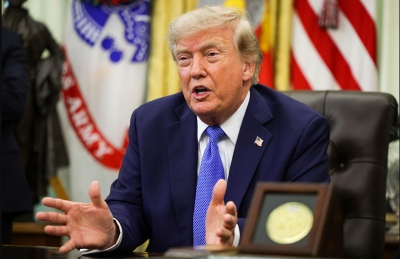
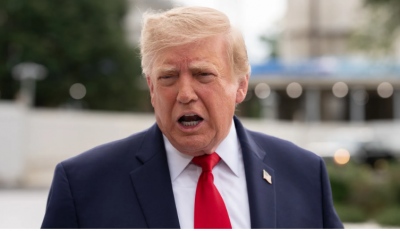
«They made a proposal, but I rejected it», the American President declared outside the White House, maintaining that Iran pursues an agreement because «they are losing so badly».
Reuters confirms that the initiative had been conveyed to the US through Qatari mediators and set out a seven-day framework to restore transit through the strategic waterway.
The underlying contradiction is difficult to disregard.
Washington states that it seeks the normalization of unhindered transit through the Strait of Hormuz, yet turned down an offer placing that exact reopening at the center of an overarching diplomatic framework.

The immense American contradiction
According to Iranian Foreign Minister Abbas Araghchi, the blueprint stipulated that once mutually agreed benchmarks were achieved, the strait could return to regular traffic within under a week, followed by wider negotiations on matters of shared concern, potentially including the nuclear program of Iran.
Reuters likewise notes that the Iranian side conditioned the framework on lifting the American naval blockade, easing sanctions against oil exports, and enforcing a cessation of hostilities.
From this vantage point, rejecting the proposal is not merely another routine friction point in long-running US-Iran tensions.
It gives substance to criticism that the American administration demands unilateral concessions from Tehran that it appears unwilling to foster through reciprocal diplomacy.
Donald Trump insists that Iran must under no circumstances develop nuclear weaponry.
This stance constitutes a long-standing American baseline.
However, the decisive question touches not solely the strategic objective, but the instruments deployed to attain it.
The Iranian proposal itself left room for resuming nuclear negotiations.
Concurrently, Iran maintains that it will not forfeit its sovereign right to uranium enrichment nor accept transferring its inventory of highly enriched uranium abroad, demonstrating that reaching common ground would prove anything but simple.
Yet that represents the essence of diplomacy: it does not demand consensus prior to the launch of talks.
It rests on the reality that opposing parties come to the table precisely because they disagree.

From negotiation to power projection: Bombing campaigns against Iran after the November 3 midterms
The posture of the American administration becomes more striking when measured against reports published by The Wall Street Journal and relayed by Reuters and The Guardian.
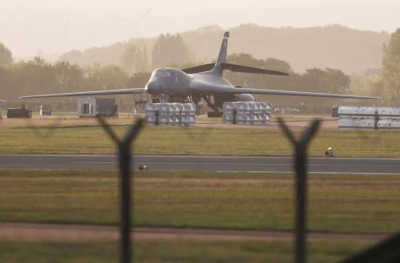
According to American officials quoted by the outlet, Donald Trump indicated to associates his view that a renewed bombing campaign targeting Iran remains probable following the midterm elections in November.
The same dispatches note that he had not finalized an operational order to return to comprehensive large-scale combat.
The reality that potential airstrikes are weighed concurrently with operational backchannels routed via Qatar and Pakistan deepens skepticism regarding whether negotiation ranks high among the genuine priorities of Washington.
Donald Trump chose to accompany the dismissal of the Iranian blueprint with a symbolic show of strength: posting a cartographic graphic on Truth Social renaming the Strait of Hormuz as «Trump Strait». This post came during a period in which the American President asserted that the US exercises «total control» over the maritime passage.
In a theater where nomenclature, borders, and sovereignty carry immense historical and political sensitivity, such a maneuver scarcely communicates de-escalation. Rather, it reads as a political assertion of hegemony at the moment third-party mediators endeavor to carve out diplomatic space.

The crisis of confidence
Iranian President Masoud Pezeshkian stated that Tehran no longer places trust in engagements with Washington, arguing that prior rounds of talks were immediately followed by renewed strikes and economic sanctions. He substantiated that Qatar and Pakistan continue shuttling communications between both capitals.
This represents the Iranian perspective of the crisis rather than a neutral assessment.
Nonetheless, systemic distrust cannot be discarded as an incidental factor when it functions as the principal roadblock to diplomatic progress.
From the American viewpoint, the core justification remains skepticism over whether Iran will honor commitments.
Washington also regards any operational trajectory enabling Tehran to assemble nuclear warheads as intolerable.
These represent substantial, deep divisions.
Yet the path between distrust and diplomacy is rarely binary.
International accords are structured around multilateral verification bodies, sequenced benchmarks, reciprocal incentives, and compliance audits.
The Guardian reported that the draft framework included protocols facilitating the return of UN atomic inspectors to damaged Iranian nuclear installations.
The systemic fallout of the American choice is not confined to Iran
The Strait of Hormuz is not a secondary regional channel.
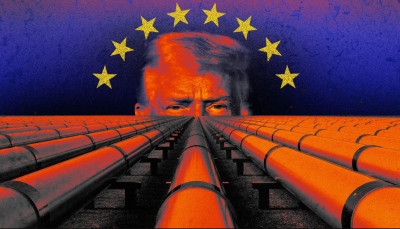
Under normal conditions, approximately one-fifth of global crude and natural gas trade traverses this passage, according to data cited across diplomatic efforts.
Sustained hostilities have constrained energy shipments and imposed heavy burdens across global commerce.
Thus, the decision by Washington to reject an offer restoring transit extends beyond bilateral friction with Iran.
It carries tangible fallout across energy markets, global logistics, inflationary pressure, and economies thousands of miles removed from the theater of operations.
At the same time, American foreign policy exhibits a sharp tension between the language of diplomacy and the mechanics of military enforcement.
Before the UN General Assembly, Donald Trump cast himself as a leader deploying American might to restore global equilibrium, while concurrently threatening Iran with «annihilation» absent a deal.
The Wall Street Journal highlighted this exact dichotomy between an image of peacebuilder and the projection of unilateral military force.
The diplomatic channel remains open, but not indefinitely
Despite the public rejection from Donald Trump, diplomatic options are not exhausted.
Abbas Araghchi stated that mediators had not formally conveyed a definitive American response to the Iranian side.
It was previously noted that an American official characterized indirect exchanges as «positive and constructive».
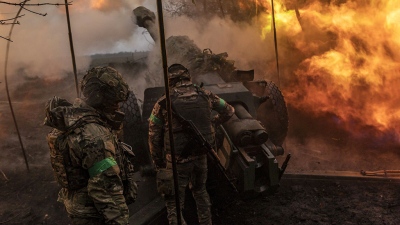
This dichotomy captures the entire contemporary standoff: on one side mediators, proposals, tradeoffs, and a potential roadmap toward negotiation; on the other, a naval blockade, coercive rhetoric, active combat operations, and open discussion of renewed bombing sorties.
It cannot be taken for granted that the Iranian offer would yield an enduring settlement.
Tehran preserves rigid negotiating positions, while regional hostilities and regional proxy initiatives have likewise propelled escalation.
However, spurning a concrete diplomatic initiative shifts the burden of proof onto the American administration: what actionable alternative does it advance beyond endless economic and military pressure?
Here lies the essential dilemma. Washington may calculate that its military superiority allows it to wait for superior leverage.
It may also assume that escalating pressure will force Iran into greater capitulation.
Yet the conflict’s arc demonstrates that brute force does not equate automatically to an enduring political settlement.
Following the rejection of the plan, the danger of military escalation remains acute, particularly as American media report expectations of renewed airstrikes after the November balloting.
This does not mean full-scale war is inevitable.
It means that so long as an off-ramp lacks agreement, the steep cost of renewed warfare remains on the table, not merely for Iran and the US, but for the entire region and the global economy.
www.bankingnews.gr


Σχόλια αναγνωστών