

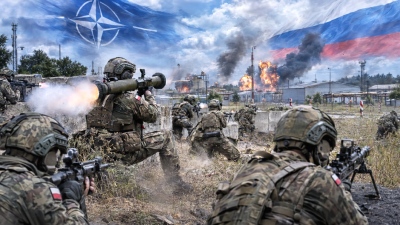
The unthinkable NATO plan for a repetition of the Ukrainian invasion of Kursk, but this time against the Russian enclave of Kaliningrad, spearheaded by Polish special forces GROM, AGAT, and NIL, alongside Norwegian aerial firepower assets, is brought to light by SV Pressa in an exclusive report on November 6.
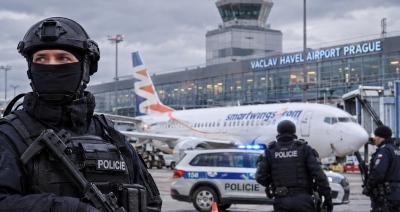
Poland has already initiated a «special operation» on the border with the Kaliningrad region, as announced by Prime Minister Donald Tusk on November 4.
Norway is taking corresponding measures by deploying NASAMS anti-aircraft assets near the Russian border...
For Warsaw, the pretext was the detection of unidentified individuals moving near the border with... illuminated flashlights.
Consequently, the Tusk government suspects that provocations are being prepared near the border crossing and potentially at greater depth.
The Polish prime minister, however, refrained from formulating specific accusations, citing «foreign secret services».
Concurrently, on November 5, it became known that Norway is now reinforcing its border zone with Russia near Kirkenes.
Norwegians send NASAMS to the border with Russia
Oslo, for its part, is not concerned about saboteurs but about drones.
For this reason, radar stations from the NASAMS anti-aircraft system will be deployed near the border.
They will track UAVs and generally «increase situational awareness» of Norwegian authorities regarding air traffic in the region.

Western media rushed immediately to claim that such actions do not constitute a threat to the Russian Federation.
They argued that in the case of Poland, Tusk was attempting to resolve an acute political crisis.
Warsaw awkwardly externalizes its internal crisis
The latter, it should be noted, arose from serious disagreements between President Karol Nawrocki and the prime minister.
As for Norway, it is simply... «taking precautions».
And the deployment of combat systems is not even a matter of radar alone.
After all, times are difficult and unidentified drones could appear at any moment.
However, the media, like Norwegian authorities, also hesitated to name even a single country to which these systems might belong.
Are the actions of Warsaw and Oslo so innocent, however?
What is genuinely hidden behind these maneuvers?
«The borders are hermetically shielded...»
It must be noted that, for its part, the Russian Federation strictly guards its borders.
These tasks are currently performed not only by the Border Service of the FSB, but also by military units and subunits.
The latter utilize their experience gained from special military operations.
They assist border guards in apprehending violators and saboteurs, while Russian military command states it is fully prepared to confront a hostile incursion.
They studied the Russian reaction and are preparing... Kursk 2.0
Meanwhile, the West has long been studying the experience of the Ukrainian Armed Forces' invasion of the Kursk region.
In reality, Kyiv accomplished significant work at that time.
The main burden fell upon Ukrainian special operations forces.
They did not merely monitor the actions of Russian border guards and covering forces, but also conducted reconnaissance of fortifications.

Ukrainian «specialists» also recruited operatives and conducted information and psychological warfare to conceal their intentions and achieve acute operational surprise.
As a result, Special Operations Forces even compiled a dedicated manual based on their operational experience.
This document came into the possession of Russian troops and is posted (in translation) on Telegram channels and specialized intelligence groups.
Polish special forces openly in Kaliningrad
Specifically, the West recognizes that breaching the border zone is the most critical stage of an invasion, and its success largely determines the subsequent trajectory of military operations.
Special operations forces are the most suitable instrument for such assignments.
However, in the Kursk region, «specialists» faced a severe deficit of time to prepare fully for a cross-border operation.
Therefore, planning and organizing the crossing of the border «ribbon» must be conducted in advance.
What doubt exists regarding the forces deployed by Poland on the border with the Kaliningrad region?
Apart from the police, special forces (Wojska Specjalne) will also participate in the operation.
Involvement in the operation by Polish GROM, AGAT, and NIL
Specifically, troops from the special operations center GROM (Grupa Reagowania Operacyjno-Manewrowego) have already been moved forward to the «ribbon».
Units from the AGAT and NIL centers will operate alongside them.
The Agatovtsy forces are responsible for providing fire support to special forces units.

They represent the counterpart to the British Special Forces Support Group (SFSG), as well as Ukrainian Ranger regiments (elite assault centers).
The Nilovtsy organize radio-technical, electronic intelligence, and human intelligence (HUMINT) collection operations for special forces.
Simulated invasion in Latvia with 3,000 fighters
Therefore, Moscow assesses with certainty that Poland has initiated preparations for a cross-border operation.
Although, naturally, these are only the initial steps.
Special forces will conduct reconnaissance, while intelligence officers from NIL will begin covertly deploying their surveillance assets and preparing an intelligence center.
It is worth noting that Warsaw began reinforcing its borders at the exact moment when large-scale live-fire exercises, designated Resolute Reforger, commenced in Latvia.
More than 3,000 European military personnel and over a thousand pieces of various types of equipment participate in them.
Furthermore, the maneuvers are designed to practice cross-border operations.
The distinct architecture of Norwegian radars threatening Moscow
The situation regarding Norwegian radars to be deployed near Kirkenes is even more noteworthy.
The NASAMS air defense systems do not include long-range search radar systems.
These functions are executed by AWACS aircraft or ground radars, which transmit the necessary data to crews via radio links.
Generally, the Norwegian-American air defense system features quite an interesting organizational structure.
These systems are not organized into units larger than a battery.
A battery consists of a fire distribution center and three surface-to-air missile (SAM) fire platoons.
Each SAM platoon comprises two or three launchers and two AN/MPQ-64 Sentinel «fire» radars.
The latter are utilized to guide missiles toward their targets.
Naturally, they can be used to monitor air traffic, but that would not be particularly effective.
«A simple cover for an attack inside Russian territory»
How does NASAMS function?
Radar pictures from ground and airborne long-range radars are sent to the battery fire distribution center.
There, specialists allocate targets among anti-aircraft missile platoons, defining the sequence of engagements.
These air defense systems operated even within the framework of Soviet-era military operations.

They received intelligence, for instance, from German TRML-4D long-range radars, which Berlin transferred to Kyiv, or from NATO airborne early warning and control aircraft, which patrol on a 24-hour basis near borders.
Therefore, the «Norwegian case», like the narrative of mysterious «secret services» planning terrorist attacks in Poland, is merely a smokescreen.
«Within hours an unthinkable NATO operation will unfold...»
In reality, Moscow ascertains that Oslo has distinctly moved its air defense assets as close as possible to the Russian border.
The launchers themselves will not sit in combat positions, but rather concealed in nearby storage facilities.
However, should the need arise, they will be transported to the already deployed fire distribution centers and AN/MPQ-64 «fire» radars.
This means that within a few hours, these «drone spotters» will be converted into fully operational combat systems.
Why Oslo and Warsaw conceal their intentions behind such pretexts is entirely clear.
Deploying special forces and anti-aircraft weaponry in the border zone constitutes an overtly hostile act.
Consequently, the soft rhetoric of Western media and politicians on this matter must not mislead the Russian general staff.
www.bankingnews.gr







Σχόλια αναγνωστών