

The surprise by Trump was absolute in the case of Venezuela, and now China is reassessing oil-based investments and overseas risks, as American intervention reshapes its strategy in Latin America.
Beijing has drawn up plans to limit its losses in Venezuela and to finely readjust its broader strategy in overseas investments, following the arrest of the Latin American country’s leader, Nicolás Maduro, by the United States on 3 January.
From the moment of the American military operation in Venezuela, the Chinese government has been intensively evaluating the situation that has taken shape and calculating the potential losses to its economic interests.
On Wednesday and Thursday (7-8/1), Chinese officials, media, and commentators began to express their views publicly, indicating that Beijing has completed its assessment of the situation after the initial shock.
In general terms, Beijing has begun to realize that it “put too many eggs in the same basket” and that it was overly willing to believe that its investments in Venezuela would face minimal risks under international law.
At the same time, it recognizes that it had underestimated the ambition of the Trump administration in the Western Hemisphere.
Venezuela’s loan obligations at 10-20 billion dollars
Some commentators note that, in the short term, China wants to ensure that it will continue to receive crude oil from Venezuela, which still owes it approximately 10 to 20 billion US dollars.
In the medium and long term, China may seek the sale of certain fixed assets in Venezuela to western companies or the formation of partnerships with them, in order to limit losses.
This analysis followed the statement by US President Donald Trump that the temporary authorities of Venezuela will deliver to the United States between 30 and 50 million barrels of oil, worth approximately 2.75 billion dollars at current prices.
“Trump wants roughly 2 billion dollars worth of oil.
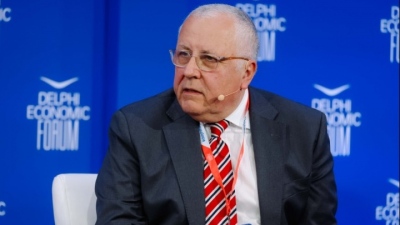
If that is the case, things can continue provided China can receive the oil for which it has already paid through its investments,” said Einar Tangen, senior fellow at the Center for International Governance Innovation (CIGI), in an interview with the Asia Times.
“We are talking about more than 60 billion dollars in Chinese investments in Venezuela over all these years, in various projects, not only in oil but also in other critical infrastructure,” he said.
He then listed some critical factors: “The Maduro government still exists nominally. The Vice President has assumed duties.
The same cabinet remains in place.

The strange ‘regime change’
No one has resigned and no one has physically entered the country to seize assets. The key issue at this moment is the blockade. At present, no shipment enters or exits because of the blockade.”
Tangen pointed out that only 2% to 4% of the oil that China imports comes from Venezuela, and that this quantity can be secured elsewhere.
“I do not think China has lost anything yet, but even if that happens, China still has cards to play and has done so effectively, especially with rare earths,” he said.
“While China’s Belt and Road Initiative (BRI) will suffer a tactical blow, the strategic outcome will be the opposite,” he added.
“American actions set in motion a powerful wave of growing distrust toward Washington across the Global South, confirming China’s warnings about American unilateralism.”
He added that Trump’s ‘Monroe Doctrine 2.0’, aimed at excluding “competitors in the Western Hemisphere,” constitutes a long-term gift for Chinese diplomacy, as it provides “irrefutable, real-time evidence” of the long-standing Chinese narrative that the United States is an unreliable and predatory power that replaces rules with naked force and cooperation with unilateral dictates.

Particularly uncertain situation
Responding to questions about Venezuela at a regular press briefing on Thursday (8/1), Ministry of Commerce spokesperson He Yadong stated that China’s willingness to further deepen economic and trade cooperation with Venezuela remains unchanged.
“China – Venezuela economic and trade cooperation is cooperation between sovereign states, protected by international law and the domestic law of both countries,” he said.
“No other country has the right to intervene.”
He added that the actions of the United States constitute hegemonic behavior that seriously violates international law, infringes on Venezuela’s sovereignty, and threatens peace and security in Latin America.
“China’s economic and trade cooperation with Latin American countries is always guided by the principles of equality and mutual benefit.
We do not pursue spheres of influence nor do we target any third party,” he stated.
“The strong economic complementarity constitutes the solid foundation of China – Latin America cooperation, which is characterized by openness, an inclusive approach, and mutually beneficial outcomes.”
He said that China will continue to work with Latin American countries in a spirit of solidarity to address changes in the international landscape, to implement economic and trade cooperation on the basis of equality and mutual benefit, and to achieve common development.
Zhang Jianping, deputy director of the Academic Committee of the Chinese Academy of International Trade and Economic Cooperation (CAITEC), which falls under the Ministry of Commerce, said on Thursday (8/1) that China has significant investments in Venezuela and imports oil from the country, attaching great importance to long-standing economic ties.
“China will do everything possible to safeguard its economic interests and its overseas rights there,” he said. “Although the situation remains extremely uncertain, China will take the necessary measures to defend its interests and rights.”
The contracts with the oil industry

‘Law of the jungle’
When the Trump administration stated in the National Security Strategy of 4 December that the United States would strategically reorient toward the Western Hemisphere, many Chinese commentators initially reacted with irony, arguing that the United States is no longer wealthy or capable enough to maintain military dominance simultaneously in the Pacific Ocean, Europe, and its own “backyard.”
This assessment has now changed drastically, with commentators acknowledging that the arrest of Maduro had a significant negative impact on Chinese investments in Venezuela and more broadly in Latin America.
A columnist in a major Chinese media outlet writes that China’s long-standing “oil-for-loans” agreements with Venezuela have left Beijing particularly exposed.
“Since 2007, China has extended loans to Venezuela totaling 60 billion dollars.
By the end of 2025, more than 10 billion dollars remained unpaid,” it states.
“The debt is repaid with crude oil, requiring Venezuela to send approximately 610.000 barrels per day to China.”
It points out that, with the arrest of Maduro, China may face significant losses.

Significant losses for China and an increase in military power
It warns that Chinese companies have invested billions of dollars in Venezuela’s energy sector, including large drilling platforms and oil projects, many of which could be forced to suspend operations, while daily crude oil shipments for debt repayment could be interrupted.
Such disruptions, it adds, would force refineries in eastern China to seek alternative supplies, potentially at higher oil prices and higher final fuel costs.
At the same time, a series of infrastructure, manufacturing, and telecommunications projects in Venezuela, in which Chinese companies have invested, would face increased default risks.
“This incident delivered an almost humiliating lesson to all countries committed to peaceful development, and that is that the ‘law of the jungle’ never truly disappeared,” it states.
“When a country possesses absolute military superiority, the United Nations Charter and international law become, in its eyes, something that can be overcome.”
It concludes that Beijing may, to some extent, have underestimated the determination of the United States to maintain its hegemony, while this incident reminds China that it must strengthen its military power in order to protect its overseas assets.

www.bankingnews.gr




Σχόλια αναγνωστών