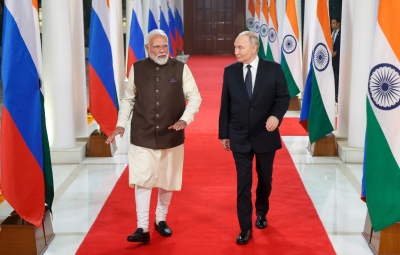
Russia is not in a hurry to push for a common BRICS currency or for a reform of the global financial system, stated President Vladimir Putin to India Today in an exclusive interview to India Today on Friday 5 December 2025, arguing that excessive speed could trigger unnecessary economic risks.
His comments come at a time when discussions around de-dollarization, alternative payment networks and trade in local currencies have intensified within the BRICS bloc, especially after Western sanctions reshaped the global economic environment and threaten the hegemony of the euro.
Putin, developing Russia’s logic in the context of the transformation of the monetary order, noted that the idea of developing alternative payment systems is legitimate, but emphasized that this must be done slowly and carefully so as not to cause excessive monetary risks.
Referring to the European experience with the common currency, he warned that rushed entry into monetary unions without economic preparation creates far more problems than it solves.
"There is no need to hurry. And if there is no hurry, then you will avoid many serious mistakes," he said.
He described, developing his argument, how the eurozone absorbed economies that were not ready for a single currency and later struggled with social and financial imbalances. "You know, you cannot simply impose a common system when the fundamental economic structures are not aligned," he added.
These asymmetries, where trade surpluses accumulated in the North, as well as the absence of a unified fiscal policy and of a deep and liquid bond market similar to that of the United States, made it almost impossible for the euro to acquire a hegemonic role, and this is something that Russia and particularly the Russian leader understand.
Loss of economic sovereignty
The Russian leader in the recent past noted that Greece should consider the possibility of returning to its national currency, the drachma, in order to exit its current economic crisis.
The statements of the Russian president were made while he was attending an event organized by the Valdai Discussion Club in November 2024, a think tank and discussion forum based in Moscow, founded in 2004.
Putin was asked what the European state should do to get out of its current economic crisis, which seems to have no end.
Answering the question, Putin stressed the importance of economic sovereignty, referring to Greece’s decision for the new bailout program, the third memorandum, in 2015 and its commitment to the European Union.
"Many of today’s economies, for various reasons and due to their commitments within economic or military-political alliances, have voluntarily relinquished part of their sovereignty," the Russian leader commented, emphasizing that adherence to sovereignty remains a characteristic that Russia would like to dominate in the multipolar world.
If we also consider the testimony of the then Prime Minister Alexis Tsipras about Russia’s stance during the Greek debt crisis at the time, we will understand how wise Putin’s suggestion was that Greece should come to terms with Merkel.
The monetary and economic obstacles to transactions in local currency
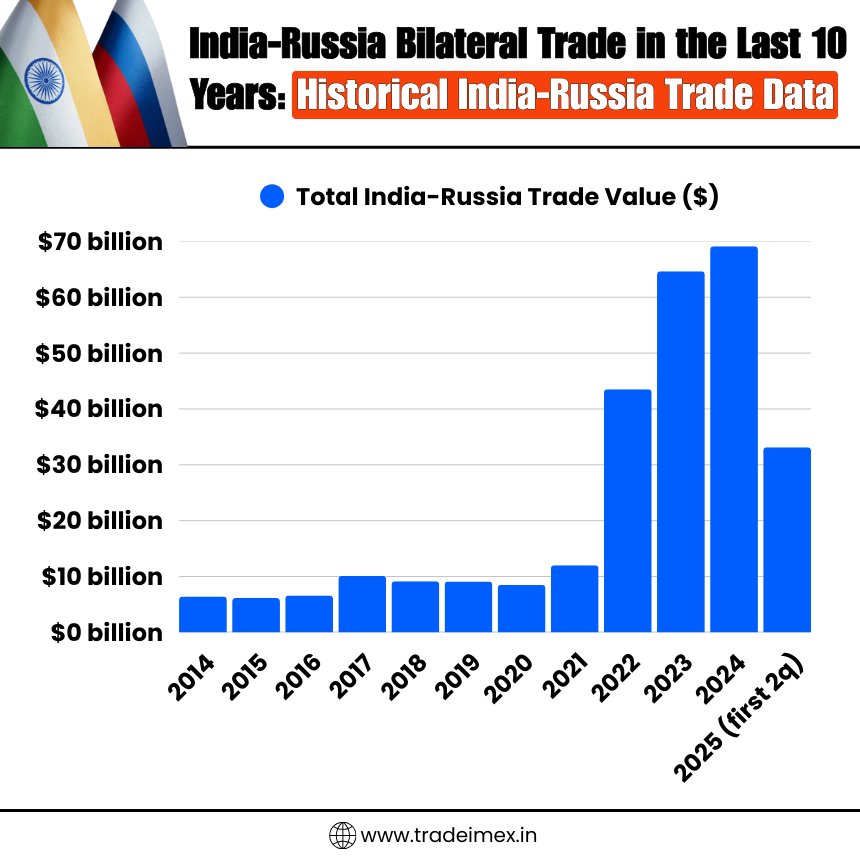
When asked why the mechanism for conducting trade in rupees and rubles has not taken off, despite mutual support for settlements in local currency, Putin said that the obstacle is not political but purely economic.
He acknowledged what New Delhi has been pointing out for months: the trade deficit between India and Russia makes settlement in rupees complicated, because Russia earns far more rupees from oil sales than it can spend in India.
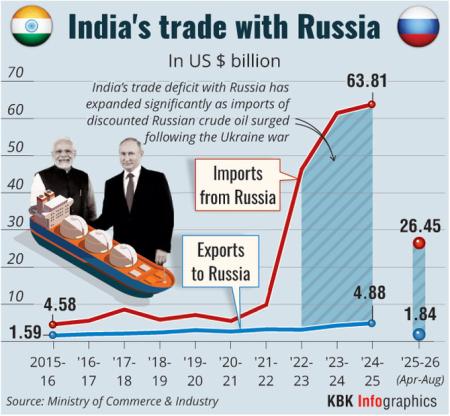
Exports to India
"There is no obstacle here. It is a matter of economics," Putin said.
He explained that India needs Russian oil, petroleum products and fertilizers, which naturally increases Russian revenues in rupees.
The issue does not concern the acceptance of rupees, but what Russian companies can buy in India with the amounts they accumulate.
"Please, it is not a question of rupees or payments, but of what our companies could buy with these rupees, and we are examining this," he said.
Putin also made clear that India has not imposed any restrictions on bilateral trade.
On the contrary, he said that Prime Minister Narendra Modi is asking Russia to increase fertilizer supplies to support Indian farmers.
"The Indian government is asking for larger purchases of Russian fertilizers because they are urgently needed for India’s agricultural sector," he said.
To address the trade deficit, Putin stated that Russia is taking active measures.
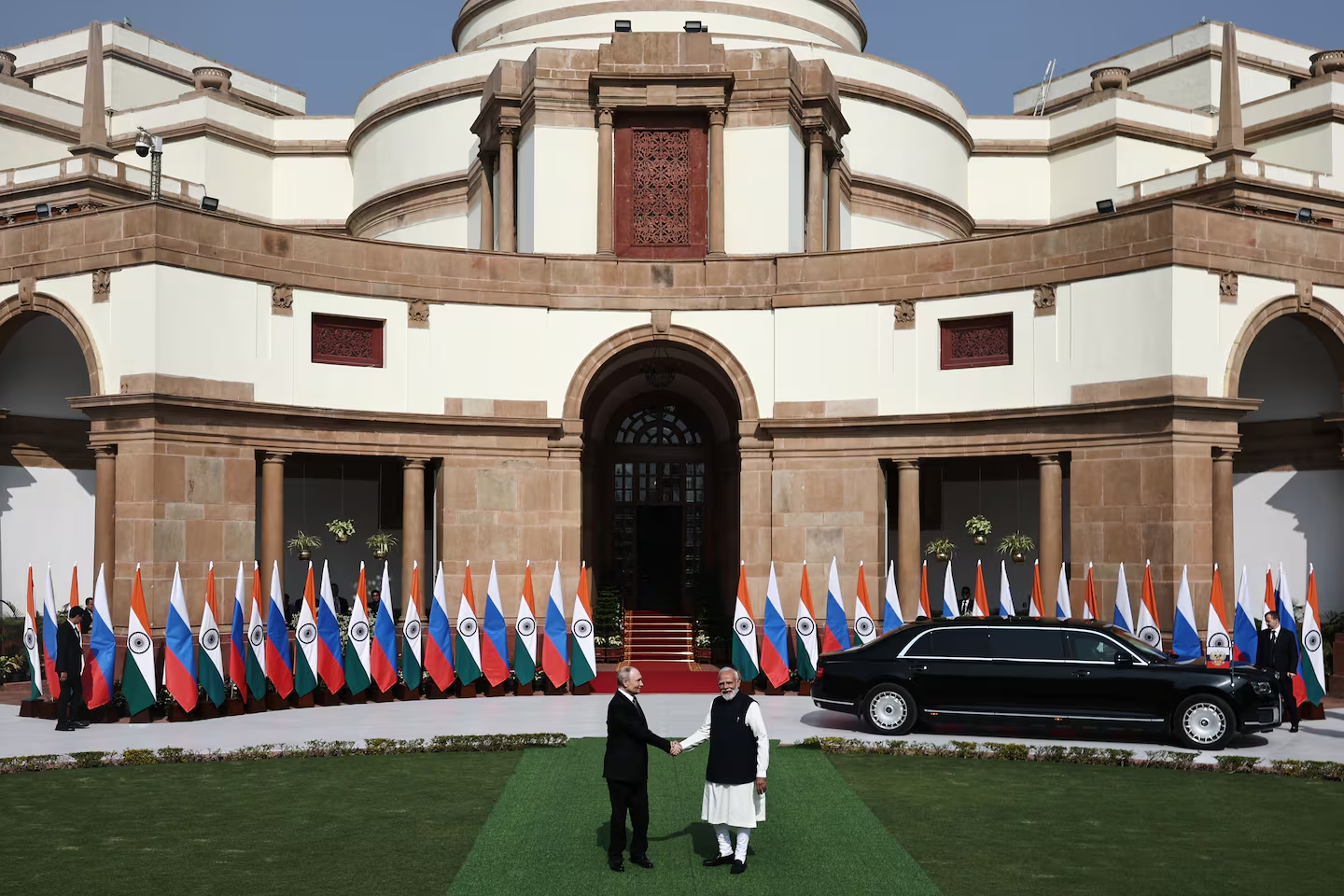
During his visit, Moscow will host a special meeting of Russian importers in order to identify Indian products and sectors from which Russia can increase purchases.
www.bankingnews.gr



Σχόλια αναγνωστών