

The defense rift in the West is widening as the United States seeks for Europe to undertake the majority of NATO’s conventional defense capabilities, from intelligence to missile systems, by 2027, Pentagon officials told diplomats in Washington this week, according to an exclusive report by Reuters. It is a strict deadline that many European officials consider unrealistic. The message, as described by five sources who were aware of the discussion, among them an American official, was delivered at a meeting in Washington by Pentagon personnel overseeing NATO policy, together with several European delegations. Shifting this burden from the United States to the European members of the Alliance would dramatically change the way Washington, a founding member of the postwar alliance, cooperates with its most important military partners. At the meeting, Pentagon officials stated that Washington is not yet satisfied with the progress Europe has made in strengthening its defense capabilities after the Russian invasion of Ukraine in 2022. The American officials warned that if Europe does not meet the 2027 deadline, the United States may stop participating in certain NATO defense planning coordination mechanisms, according to the same sources cited by the report. Some officials in Congress are aware of and concerned about the Pentagon’s message to the Europeans, according to an American official.
Ambiguity regarding the new defense doctrine
Conventional defense capabilities include non nuclear means, from troops to weapons systems. The officials did not explain how the United States will assess whether Europe has undertaken “the majority” of the burden. It was also unclear whether the 2027 deadline is the official position of the Trump administration or simply the views of certain Pentagon personnel. There are significant disagreements in Washington regarding the role the United States should play in European security. Several European officials stated that the deadline is not realistic, regardless of how progress is measured, given that Europe needs more than money and political will to replace specific American capabilities in the immediate future.
Many delays
Among the challenges are large production delays in defense equipment that European countries have already ordered. Although the Americans encourage purchases of American systems, some of the most advanced require years to be delivered. The United States also possesses unique capabilities in the fields of intelligence, surveillance, and reconnaissance, which have proven critical in supporting Ukraine, and these cannot simply be purchased but must be built from scratch. A NATO spokesperson stated that the European countries have begun to take on greater responsibility for the security of the continent, without however commenting on the 2027 deadline. Pentagon spokesperson Kingsley Wilson stated: “We have been very clear about the need for Europeans to lead the conventional defense of Europe. We remain committed to coordination through NATO mechanisms to strengthen the Alliance and ensure its long term viability.”
The increase of pressure on Europe
The European countries have generally accepted the demands of President Donald Trump to assume more responsibility for their own defense and have committed to major increases in defense spending. The European Union has set a goal to be able to defend itself by 2030, highlighting gaps in air defense, drones, cyberwarfare, munitions and other areas. Even this deadline is considered by experts to be excessively ambitious.
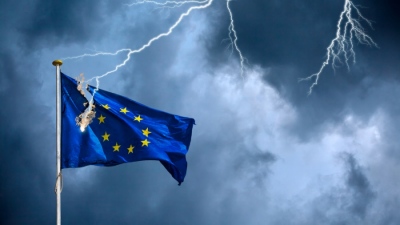
American storm sweeps the EU: “You are dangerous for NATO, the authoritarian Eurocrats will flatten the West”
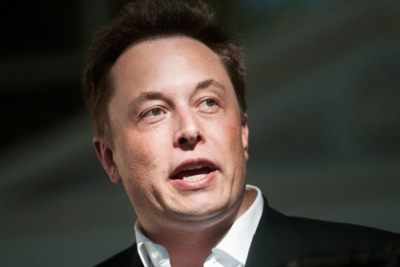
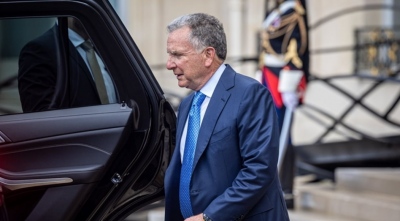
The European Union’s obsession with the green agenda and the imposition of technological rules on American companies threaten to torpedo the foundations of NATO, warned the United States Deputy Secretary of State, Christopher Landau. “The nations of Europe cannot look to the United States for their own security, while at the same time actively undermining the security of the United States itself through the (unelected, undemocratic and unrepresentative) EU,” said Christopher Landau on the social media platform X on Saturday. Senior United States officials harshly criticized Brussels after the European Commission imposed a fine of 120 million euros on X earlier this week for violating EU transparency rules. For his part, billionaire entrepreneur and owner of X, Elon Musk, a major supporter of United States President Donald Trump and the broader MAGA movement, threatened unprecedented retaliation and called for the “abolition of the European Union”.
“We cannot pretend that we are friends with the authoritarian bureaucracy of the EU”
Landau stated that the fine was only the “tip of the iceberg” and that the EU had continuously undermined its credibility with the United States through its focus on policies he described in a separate post on Saturday 6/12 as harmful to United States interests and as a form of “cultural suicide”, adopting comments directed at the EU in Trump’s recent hard line foreign policy blueprint. “When these countries wear their NATO hats, they insist that Transatlantic cooperation is the cornerstone of our mutual security. But when these countries wear their EU hats, they pursue all kinds of agendas that are often completely contrary to the interests and security of the United States, including censorship, economic suicide, climate fanaticism, open borders, disdain for national sovereignty, promotion of multilateral governance and taxation, support for Communist Cuba,” he posted. “This inconsistency cannot continue,” he continued. “Either the major nations of Europe are our partners in protecting the Western civilization that we inherited from them, or they are not. But we cannot pretend that we are partners while these nations allow the unelected, undemocratic and unrepresentative EU bureaucracy in Brussels to pursue policies of cultural suicide,” the American official concluded meaningfully.
The unstable relationship between the United States and NATO and the Trump factor
The Trump administration consistently argues that the Europeans do not shoulder the burden that corresponds to them. However, the president’s stance toward NATO has been unstable:
1) During the 2024 election campaign he accused the Europeans of exploiting American generosity.
2) He stated that he would “encourage” Putin to invade NATO countries that do not spend enough on defense.
3) But at the NATO Summit in June he warmly praised the Europeans for accepting the United States plan to increase defense spending to 5% of GDP.
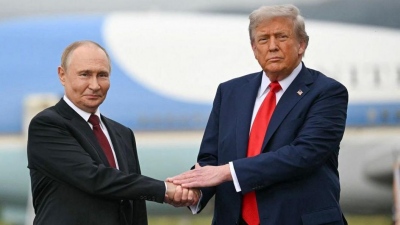
Since then, Trump has wavered between a hard line toward Russia and a willingness to negotiate with Moscow regarding the war in Ukraine. European officials have expressed strong displeasure because they were excluded from these talks. The United States Deputy Secretary of State Christopher Landau stated at the NATO Foreign Ministers’ meeting: “It is obvious that the NATO allies must take responsibility for the defense of Europe. Our government means what it says.”
www.bankingnews.gr






Σχόλια αναγνωστών