

The European Union's nightmare is beginning. Euroclear is at the center of a legal battle with Russia over $230 billion, while at the same time, the American rating agency Fitch is "threatening" it with a "potential negative rating," citing the possibility of legal and liquidity risks.
It is noted that the European Union intends to use 210 billion euros of Russian central bank assets, which have been frozen in Europe following Moscow's 2022 invasion of Ukraine, to support a loan for Kyiv's military and civilian needs in 2026 and 2027. EU leaders agreed on Friday to freeze the assets indefinitely, arguing that they must support Ukraine because they do not want Moscow to one day attack NATO—something Russia denies it plans to do.
However, according to lawyers who spoke to Reuters, although Euroclear does not hold assets in Russia that could be seized, following a widely expected court decision in favor of the central bank's lawsuit, Russia could attempt to enforce it in jurisdictions it considers "friendly."
On January 16, the hearing for the lawsuit against Euroclear
On January 16, a hearing will take place in a Moscow court regarding the Russian central bank's lawsuit against Euroclear, which holds most of the Russian assets frozen in Europe since the 2022 invasion. The Central Bank of Russia has filed for $230 billion in compensation from Euroclear, marking the first step in what the Kremlin has warned will be a legal nightmare for the EU due to its plans to use frozen Russian assets to back Ukraine.
The EU, seeking a way to fund Ukraine's defense and budgetary needs for 2026 and 2027, plans to use up to 165 billion euros of Russian central bank assets frozen in Europe. Euroclear, the Belgian Central Securities Depository, held bonds on behalf of the Russian central bank since the start of the invasion. The bonds have since matured, but the funds remain at Euroclear due to EU sanctions against the Kremlin.
The threat from Fitch
Nonetheless, Fitch warned Euroclear of a downgrade by placing it on "negative watch," citing the potential for a multitude of legal risks and liquidity issues arising from the European Union's plans to use frozen Russian assets for a compensation loan to Ukraine. For its part, Euroclear announced today (12/17/2025) that Fitch's decision highlights the need for greater clarity and detail regarding the proposed compensation loan for Ukraine and that it is preparing for a range of scenarios.
"With the right comprehensive safeguards, we are confident that the significant risks to Euroclear will be appropriately addressed in both the short and long term," a Euroclear spokesperson stated. Fitch warned that insufficient legal and liquidity protection for such a plan could create a mismatch on Euroclear's balance sheet if the Russian central bank's liabilities become payable.
The agency stated it would decide on Euroclear's rating once there is sufficient clarity regarding the policymaking process and the implementation of the compensation loan, which could emerge at an EU summit this Thursday and Friday. This move affects the long-term issuer default ratings of Euroclear Bank and Euroclear Holding at "AA," short-term IDR ratings at "F1+," viability ratings at "AA," and debt ratings, according to Fitch.
The critical moment for the EU
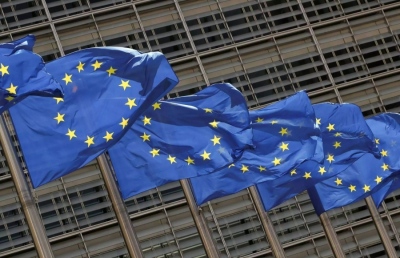
The European Union is at a critical crossroads. If the EU manages to enforce the seizure of Russian assets without resistance, it will create a dangerous precedent for the international financial system. The consequences for the rule of law, the global economy, and the geopolitical balance will be incalculable.
The weakening of rules protecting state assets may negatively affect international relations and damage trust in EU financial markets. If the Union becomes known for its willingness to use financial tools as political weapons, investors and governments may begin to reconsider their strategy toward European markets and institutions.
Global reactions and impact
The international community is closely monitoring developments. The United States, China, and other major powers view the situation with concern, as a potential spread of this policy to other countries could shake global financial and diplomatic balances. Russia, of course, will continue to oppose these moves, resulting in the strengthening of anti-Western sentiment and trends among its population.
Reactions are also coming from countries that, while not part of the EU, have strong economic ties with it. Japan, India, and other economic powers may re-evaluate their cooperation with the EU if the Union's moves threaten basic principles of international law and economic stability.
The future of Europe as a financial center
Europe faces the risk of losing its title as the world's safest financial center. With the uncertainty surrounding the management of Russian assets, the potential political manipulation of financial markets, and contradictions in its decisions, the EU threatens to undermine the foundations upon which it has built its economic power. Continuing this course risks leaving Europe isolated from the rest of the world, as other players will turn to other markets for greater security and political stability.
The EU's inability to maintain internal cohesion and adhere to international rule of law standards could have long-term consequences for its economy and its position on the global stage. History will judge the EU not only for its decisions regarding Russia and Ukraine but also for the way it manages this internal crisis and the impact it will have on future generations.
If the EU manages to restore order and rebuild trust in its financial markets, it might be able to recover. However, if it continues on this path, its very existence as an economic and political institution may be called into question. The day after for Europe is uncertain and full of challenges. Yet, the decisions made today will determine the future of the Union, international politics, and the economy for decades to come.
www.bankingnews.gr




Σχόλια αναγνωστών