

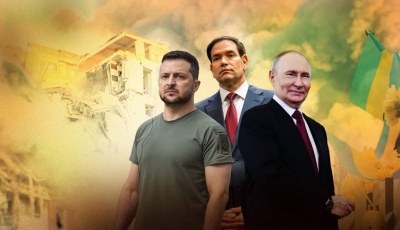
Sudden but restrained optimism for a rapid resolution of the Ukrainian issue, which is not justified by developments, was expressed by United States Secretary of State Marco Rubio on Friday 19/12/2025.
For the first time so clearly, a senior US official publicly states that Washington can lead Russia and Ukraine to a compromise, even within the coming week.
These statements, broadcast by the Associated Press and repeated during a briefing at the State Department, are not merely diplomatic rhetoric.
On the contrary, they reflect a deeper shift in the US stance, from the strategy of “support until final victory” toward the search for a realistic political end to a conflict that does not appear to be moving toward a military solution.
The American side is now determined to inform Russia of the results of consultations with the Ukrainians and to leave the parties involved to decide.
In an indirect manner, Rubio foreshadows the impending end of American intervention.
It is no coincidence that for the first time the State Department even refers to an end of the war through capitulation, since Ukraine and Europe have taken the decision to continue the conflict into 2026.
“The decision belongs to Moscow and Kyiv” - Trump will decide whether the USA withdraws from the negotiation
One of the most critical points in Rubio’s statements is the explicit admission that the final decision on settling the conflict will not be taken in Washington, but in Moscow and Kyiv.
This is a phrase of particular political weight, as it runs counter to the dominant narrative of recent years, according to which the USA acts as the primary guide of Ukrainian strategy.
“We understand that an agreement cannot be achieved unless both sides agree to take something and give something.
Both sides will have to make concessions. Perhaps we will not be able to reach an agreement,” Rubio stated.
Responding to a request to clarify whether the United States is ready to abandon the role of mediator in negotiations on Ukraine, he said that he himself would not make that decision.
“Ultimately, this decision will have to be made by President Trump, in the case and when he judges that our involvement is no longer productive or is not in our national interest.
This is the decision that the president must make,” he stressed.

With this statement, American diplomacy:
1) acknowledges the limits of its influence,
2) transfers responsibility for the final choice to the directly involved parties,
3) and at the same time prepares the ground for a possible agreement that will not fully satisfy either side.
War or negotiation - The blunt reality
Rubio expressed with unusual candor the fundamental dilemma of every armed conflict: “Conflicts generally end in one of two ways, either with the surrender of one side, or with a settlement through negotiations.”
This phrase was accompanied by an even more revealing admission, that neither side is expected to surrender.
This means that the only realistic way out is negotiation.
This position dismantles the maximalist stances that have dominated public discourse, especially in the West, regarding an “absolute victory” or a “strategic defeat” of Russia.
At the same time, it acknowledges that the continuation of the war does not lead to a decisive outcome, but to prolonged bleeding of human, economic, and political resources.

The search for terms - What the two sides are willing to accept
According to Rubio, the United States is in the phase of mapping the terms that could be accepted by both Russia and Ukraine.
The goal is not to impose a solution, but to bring positions closer and shape common ground.
This stage is perhaps the most difficult, as Russia seeks legal and political guarantees for the territories it controls and for its future security, while Ukraine seeks to avoid an agreement that would be perceived domestically as a defeat.
For their part, the USA is called upon to balance between supporting Kyiv and its broader strategy toward Russia.

The Miami background - Direct Russian American contacts
Particular interest is sparked by a report from Politico, according to which Russian American negotiations may take place this weekend (20 -21/12) in Miami. The names reportedly involved do not go unnoticed.
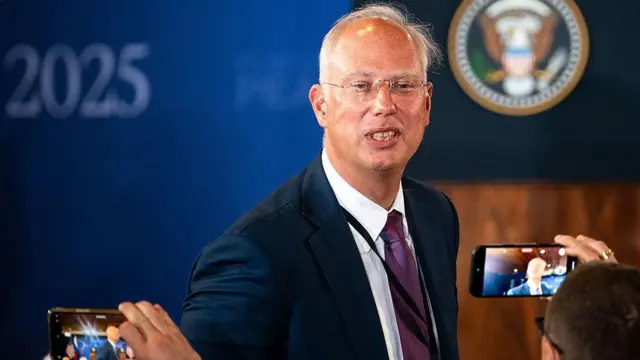
From the Russian side, Kirill Dmitriev is mentioned, head of the Russian Direct Investment Fund and special envoy of the Russian president, a choice that indicates the economic dimension of peace is considered central.
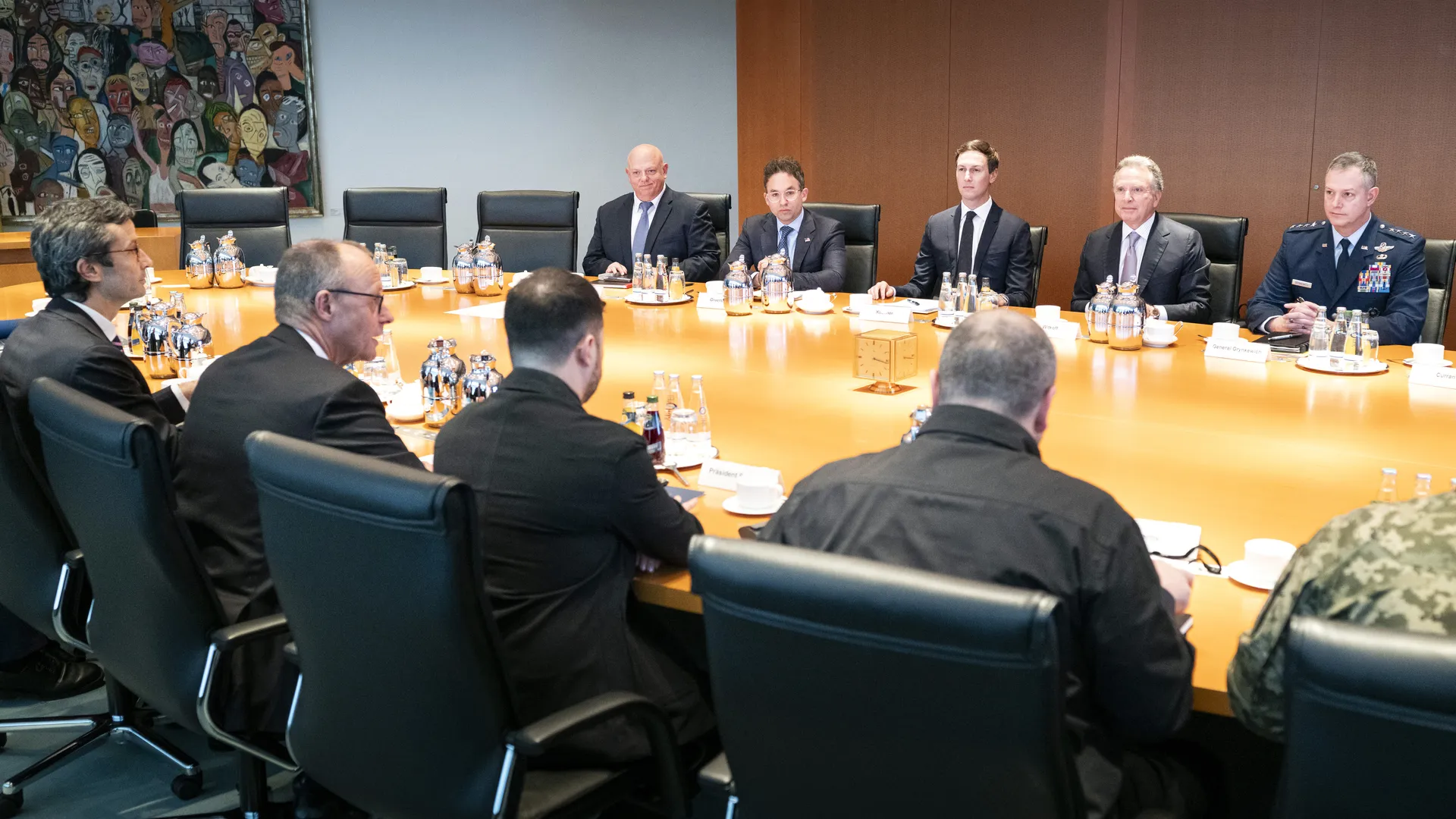
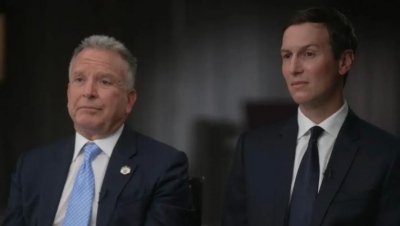
From the American side, the special envoy for the Ukrainian issue Steve Witkoff appears, along with Jared Kushner, son in law of Donald Trump and a figure with strong influence in informal diplomatic channels.
This composition shows that, beyond official diplomacy, parallel and informal channels are also being activated, with the aim of reaching an agreement away from the public spotlight.
Europe on the sidelines
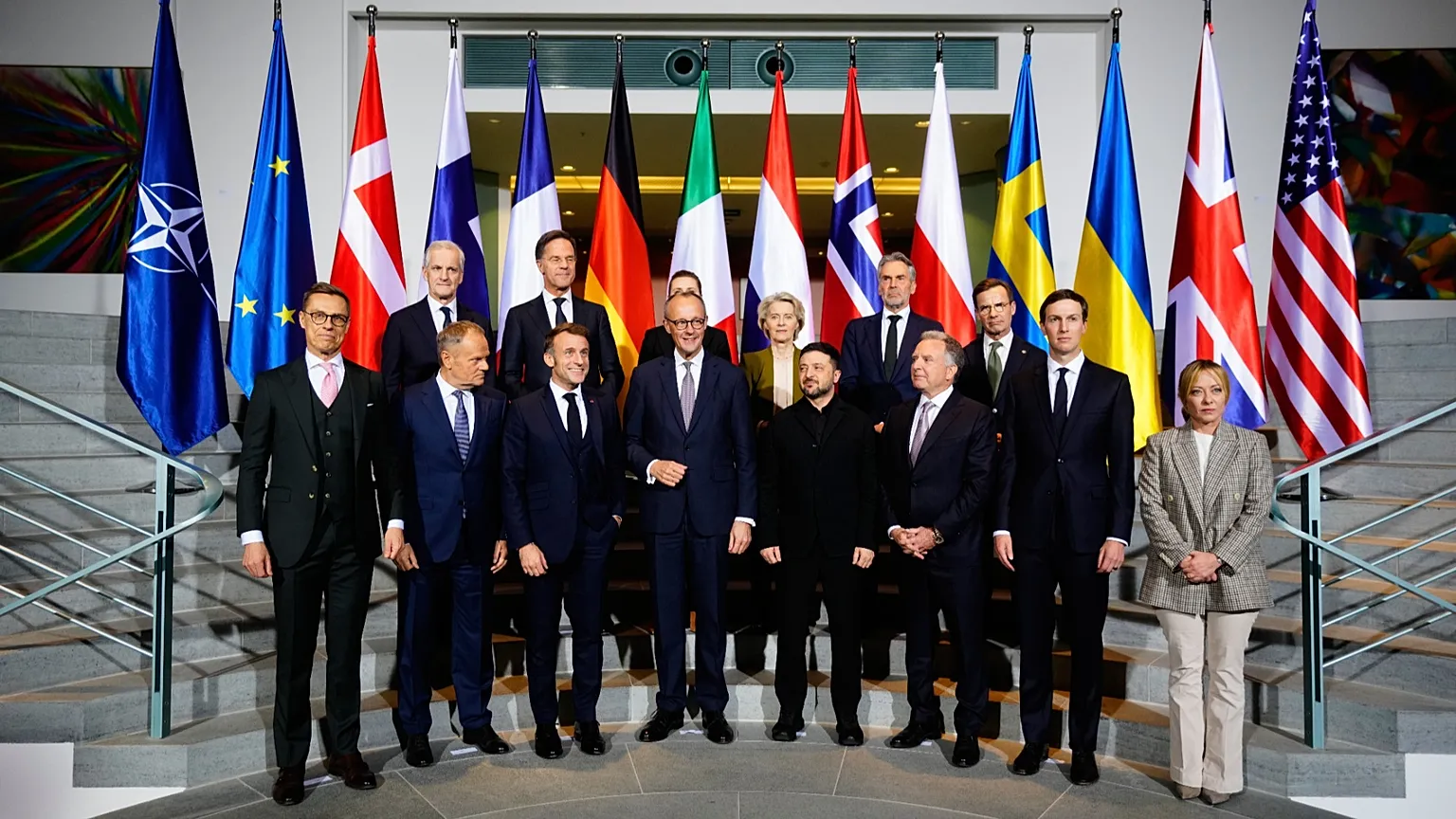
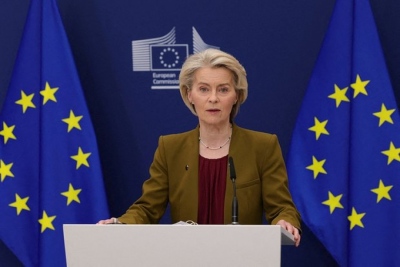
It is noteworthy that throughout this discussion, the European Union appears more as an observer than as a protagonist.
Despite the fact that the EU has borne enormous economic cost, the critical talks appear to be conducted bilaterally between the USA and Russia, with Ukraine present but not dominant.
This raises serious questions about Europe’s role in the post war security architecture, its ability to influence developments that directly concern it, and whether it will ultimately be called upon to finance an agreement in which it had no substantive say.

From war to hard negotiation
Rubio’s statements mark a turn toward realism.
Washington recognizes that the war in Ukraine cannot be resolved militarily and that the only path is a painful, imperfect but necessary compromise.
Whether this compromise will be achieved soon depends on the will of Moscow and Kyiv, and on whether external players will accept that no side will leave the negotiating table as an absolute winner.
In any case, the public acknowledgment of this reality by American leadership constitutes perhaps the clearest sign that the war is approaching not its end, but a new, decisive phase.
The critical phrase about “surrender” and the silent shifting of responsibility
Of particular significance is Marco Rubio’s wording that wars end either with the surrender of one side or with negotiations, immediately adding that “we do not expect the surrender of either side.”
This is an ostensibly balanced statement which, if analyzed carefully, leaves room for a much more complex and politically charged interpretation.
In today’s theater of conflict, the possibility of a military surrender by Russia is considered unrealistic by most international analysts.
Moscow retains strategic depth, territorial control, military initiative on critical fronts, and most importantly does not face an existential internal threat.
From this perspective, Rubio’s reference to “surrender” clearly points to Ukraine and the possibility of its surrender.
Negotiation or “controlled defeat”?
American diplomatic language often avoids blunt terms.
The word “capitulation” is not used, but is replaced by concepts such as “realistic compromise,” “painful peace,” or “negotiated solution.”
However, in practice, an agreement that would entrench Ukraine’s territorial losses, limit its military options, and indefinitely postpone its ambitions for full restoration of sovereignty can hardly be presented domestically as a victory.
Rubio’s statement appears to prepare the ground precisely for this shift in narrative, not that Ukraine “lost,” but that it “chose negotiation over surrender.”
This is a rhetorical nuance of enormous political significance, as it allows the USA to gradually withdraw its support without being accused of abandonment, to transfer responsibility for the final decision to Kyiv, and to keep channels open with Moscow.
A message to Kyiv and to the West
Ultimately, Rubio’s reference to “surrender” also functions as an indirect message.
Not so much to Russia, but to the Ukrainian leadership and European allies, the era of absolute objectives is approaching its end.
Washington no longer appears willing to support indefinitely a conflict without a clear horizon of victory.
Without stating it openly, the American Secretary of State implies that the real choice remaining is not between victory and defeat, but between a controlled political retreat through negotiations and an uncontrolled attrition without end, especially from the moment Ukraine secured financing from the EU.
www.bankingnews.gr






Σχόλια αναγνωστών