

Silent military escalation: American KC-46A Pegasus fill the skies of the Eastern Mediterranean.
Three American aerial tankers of the Boeing KC-46A Pegasus type are currently en route to the Middle East, sparking questions about their purpose and final destination. So far, the exact destination remains unclear, as the lead aircraft has just entered the Eastern Mediterranean. It appears they are disabling their transponders before landing, while suspicions are mounting that they will land at Al Udeid.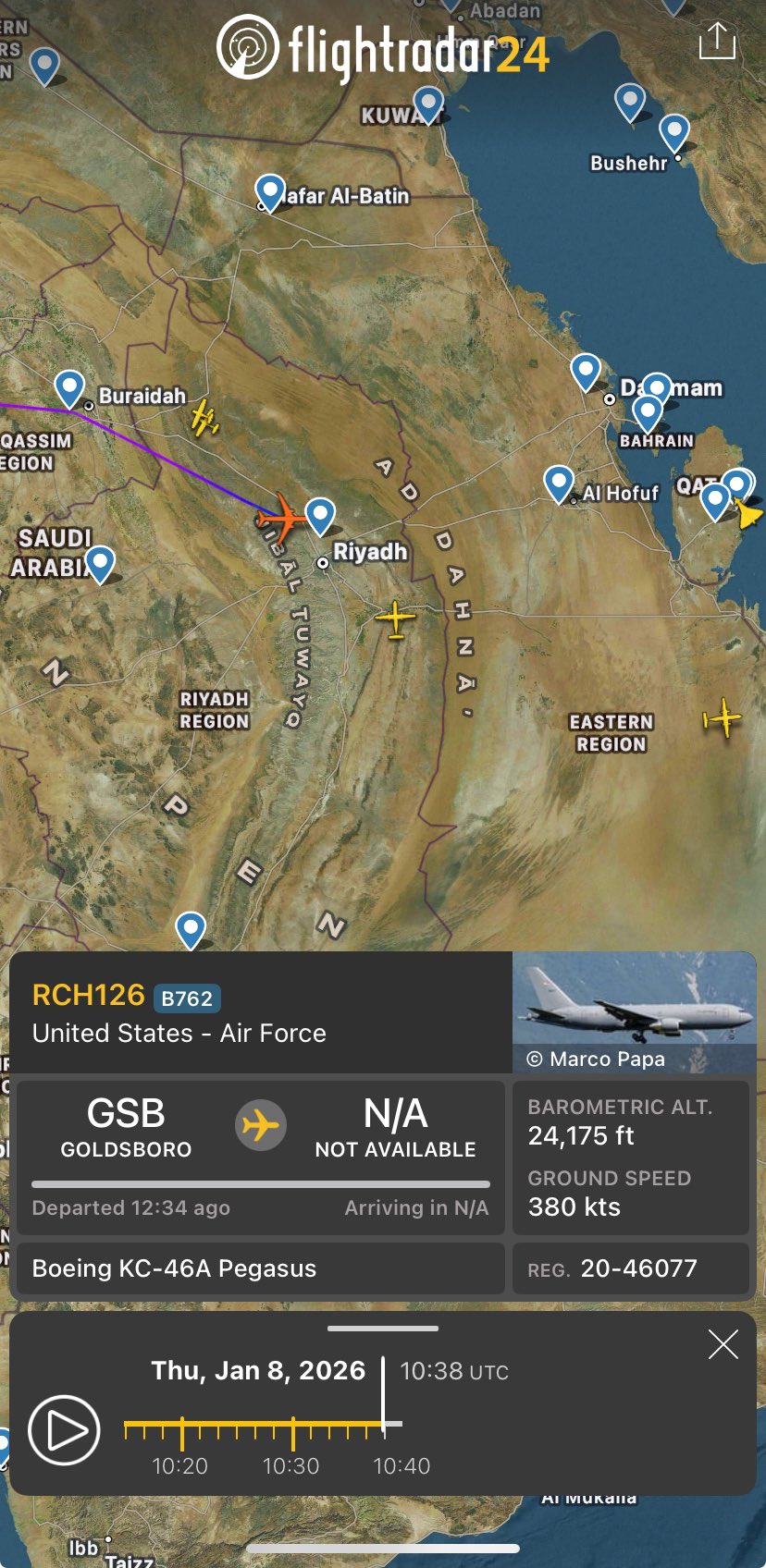
Strategic origins and deployment
All three aircraft took off from Seymour Johnson Air Force Base in Goldsboro, North Carolina. This is one of the most significant US air bases, home to the 4th Fighter Wing, which operates F-15E Strike Eagles and plays a role in both training and global deployments. The base also hosts the 916th Air Refueling Wing, a reserve unit providing aerial refueling support.
Earlier position
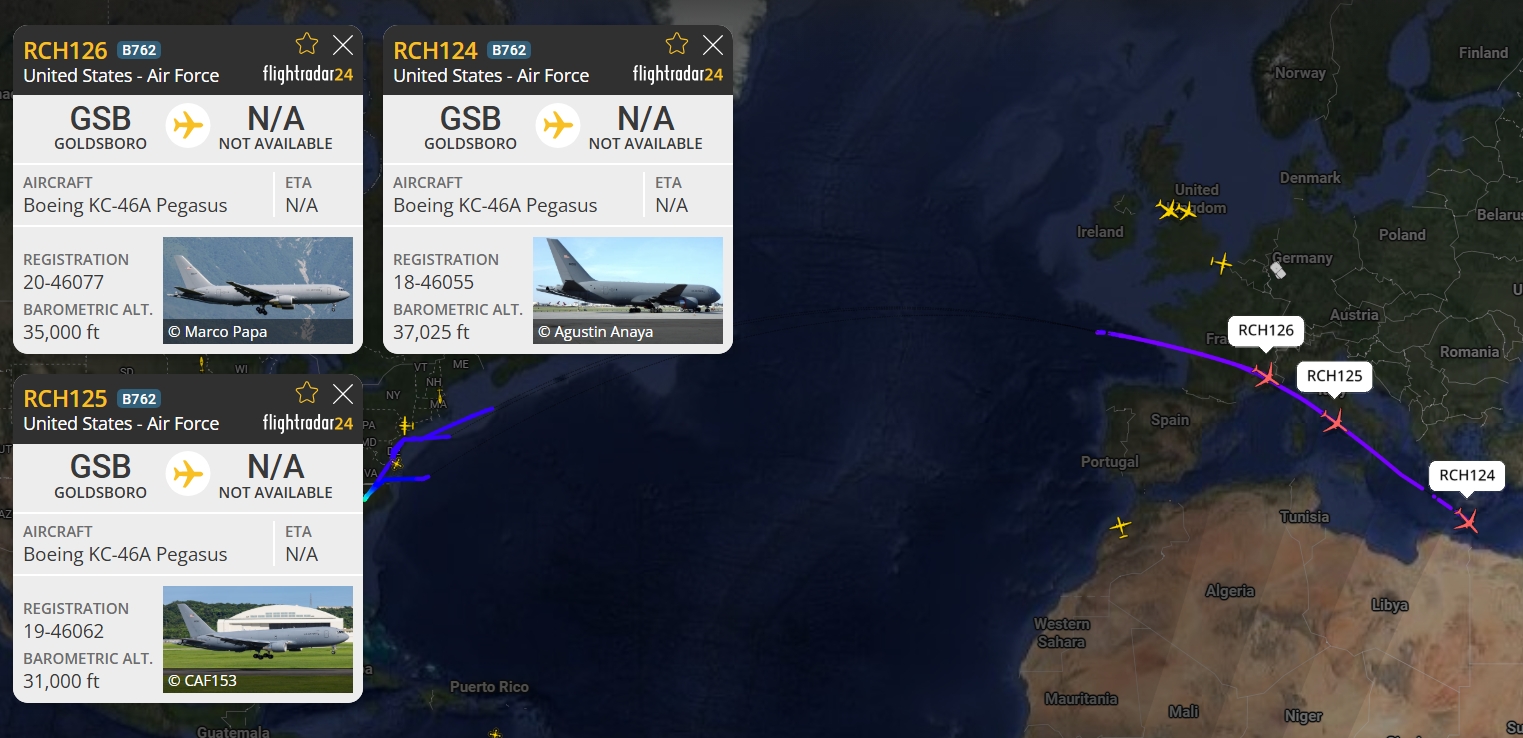
Possible destination: Qatar
New data indicates that the three KC-46A Pegasus heading toward the Middle East now appear to have a clear destination. The lead aircraft, after disabling its transponder for a considerable time over Egypt and the northern Red Sea, is now spotted moving east, crossing Saudi Arabian airspace.
This specific course significantly strengthens the scenario that the American tankers are heading to Al Udeid Air Base in Qatar, the largest US military base in the Middle East and a pivotal operational hub for US Central Command (CENTCOM). The use of "silent" flight via transponder deactivation, combined with the lack of evidence of similar assets departing the region, bolsters estimates of a military buildup rather than a simple rotation of forces. In a period of heightened geopolitical tensions in the Middle East, the concentration of aerial refueling assets is considered a critical indicator of preparation for potential large-scale air operations.
The scenarios
The most likely explanation for this move is the forward deployment of aerial tankers in the region. The second most likely version is that this is a refueling mission either preceding or following the deployment of fighter jets. In previous instances, fighters have been transferred simultaneously with tankers, a possibility that cannot be ruled out.
Less likely interpretations include a rotation of tankers already in the theater, contingency planning in support of Israel—a scenario gaining particular weight if a military strike against Iran is imminent—as well as the possibility of participating in a military exercise, which objectively happens several times a year. However, regardless of the scenario, the fact that tankers are entering the region without a simultaneous departure of other units constitutes an indication of a reinforced military presence. In a period of intense escalation in the Middle East, this mobility cannot be ignored.
Iranian officials requesting visas for their families – French media
According to a report by the French newspaper Le Figaro, high-ranking Iranian officials have requested French visas for their families in recent days. Iranian-French journalist Emmanuel Razavi reported on Le Figaro's Points de Vue program that “since yesterday, high-ranking officials from the reformist camp—including the president of the Iranian Assembly—have been trying to obtain French visas for their families through a lawyer in Paris.” The news comes during a period of rising political tension in Iran, amid an ongoing internal crisis and international pressure facing the country.
Chaos in Iran
The mass protests continuing for a 12th day across Iran against the regime of Ali Khamenei are taking on "civil war" dimensions. Latest information indicates that anti-government demonstrations have now expanded nationwide, with protesters occupying entire cities. The toll is tragic, as it is estimated that over 36 people have been killed, while arrests exceed 2,000.
For its part, the Iranian regime warns that there will be no leniency toward those helping the enemy of the Islamic Republic. Reports are intensifying that behind these unprecedented movements, where slogans like “Death to Khamenei” are heard, lie the USA and Israel. Iran’s Supreme Leader Ali Khamenei signaled that we will not surrender to the enemy, amid Western reports that he has drafted an evacuation plan with Moscow as the most likely destination.
Chaos in 92 cities
According to the Iranian human rights organization HRANA, mass riots have spread to 92 cities across 27 provinces. Over the last 24 hours, protests took place at 285 locations, including 22 universities. During these demonstrations, 36 people are estimated to have lost their lives and 2,076 were arrested.
On January 7, protests occurred in 16 major cities, including the capital, Tehran. It is recalled that Iranian police opened fire on protesters in the city of Karaj, located near Tehran. However, experts argue that the intensity of the protests has not yet reached the scale of the 2022-2023 movement, let alone the 2009 mobilizations following the controversial elections.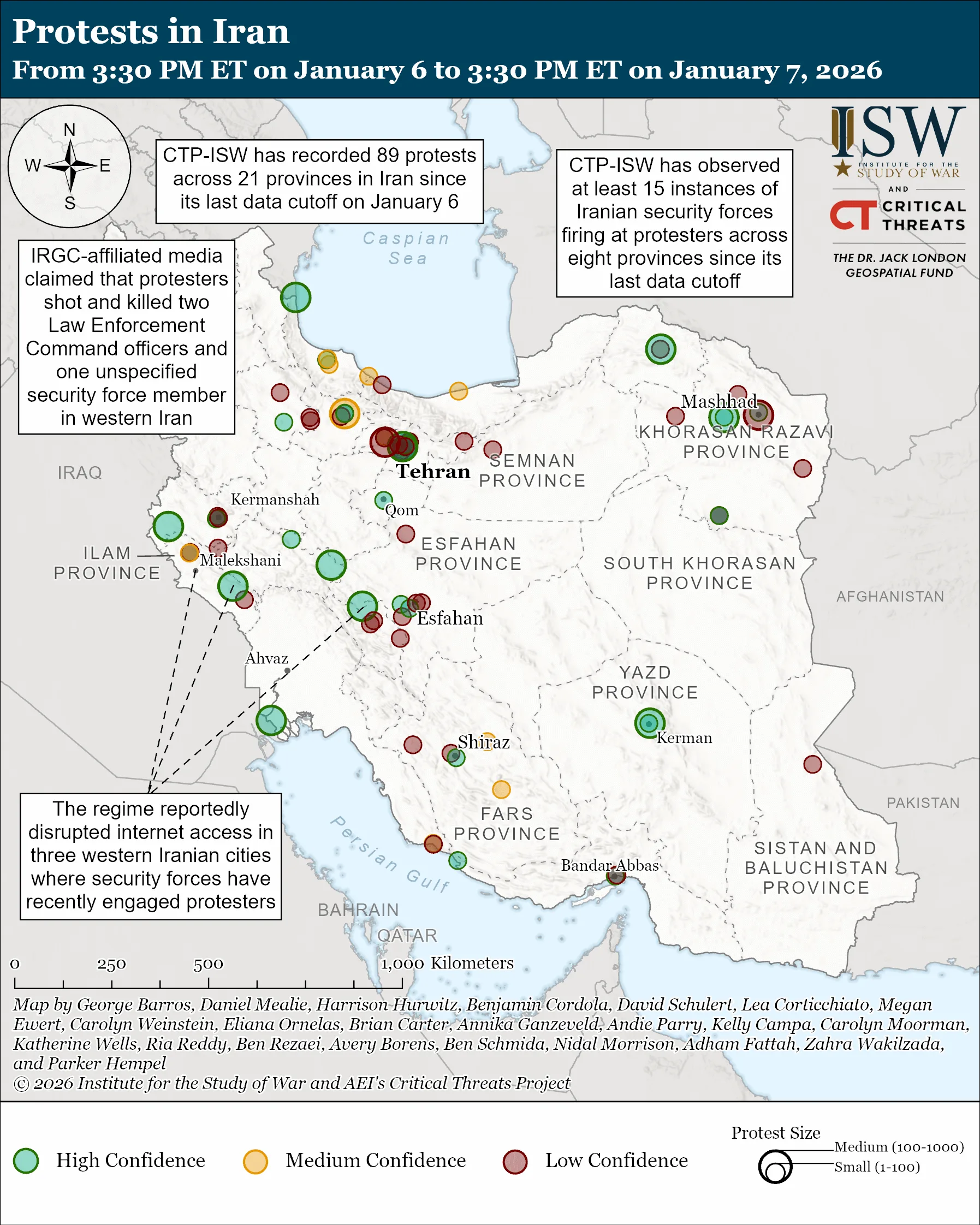
No leniency
Iran’s chief justice warned protesters that there will be “no leniency for those who help the enemy against the Islamic Republic,” accusing Israel and the USA of using hybrid methods to destabilize the country. Iran remains under international pressure, with US President Donald Trump threatening to offer aid to protesters if security forces open fire on them, seven months after air strikes by Israeli and US forces against Iranian nuclear facilities in a war that lasted 12 days.
We will not surrender
The Supreme Leader of Iran, Ayatollah Ali Khamenei, has promised to “not surrender to the enemy.” The current protests, the largest explosion of defiance against the regime in the last three years, began last month at Tehran’s Grand Bazaar by shopkeepers reacting to the free-fall of the currency. The unrest has since spread nationwide amid growing concern over economic hardships, such as skyrocketing inflation caused by mismanagement and Western sanctions, as well as restrictions on political and social freedoms.
Threats from the military
However, Iranian General Amir Hatami, head of the Iranian army, warned that Iran will not allow itself to be threatened by external forces after the US and Israel expressed support for the anti-government protests. “The Islamic Republic of Iran considers the escalation of hostile rhetoric against the Iranian nation a threat and will not tolerate it without responding,” Hatami said, according to the Fars news agency.
Hatami, who is the commander of Iran's army but not the country's highest-ranking official, warned that “if the enemy makes a mistake,” Iran's response will be stronger than that of last year's 12-day war with Israel. It is recalled that US President Donald Trump has threatened to intervene in Iran if protesters are killed, while Israeli Prime Minister Benjamin Netanyahu has expressed his support for the protests.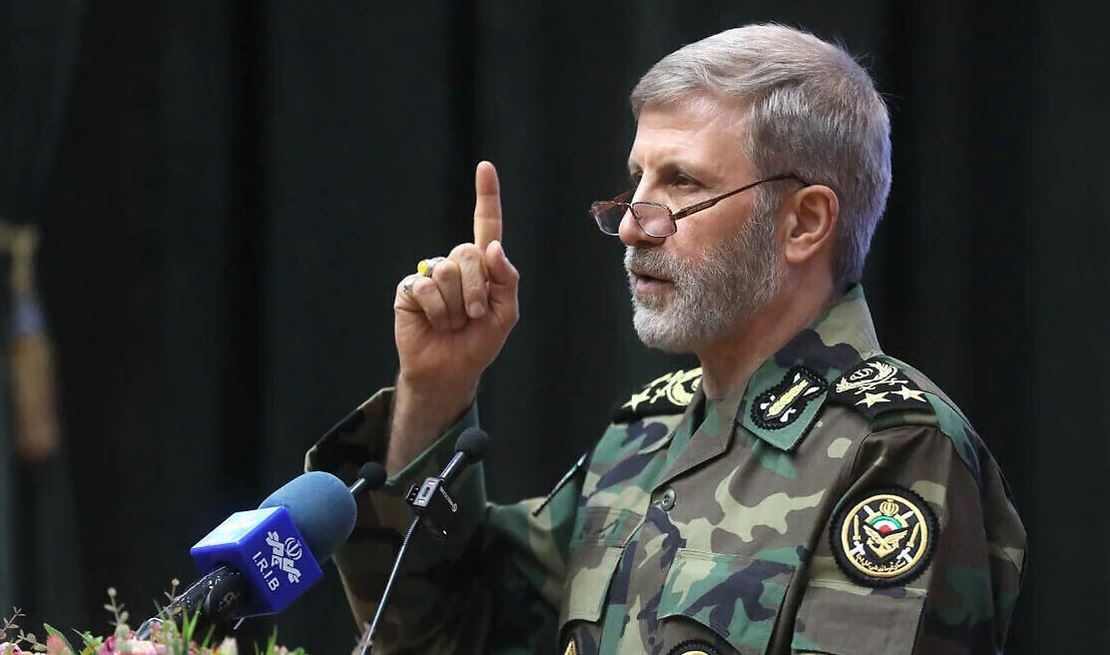
www.bankingnews.gr







Σχόλια αναγνωστών