

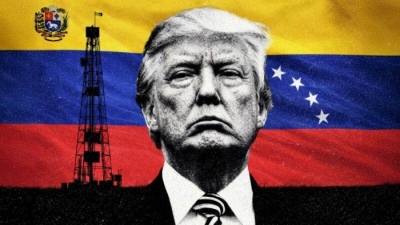
NATO on alert following Trump's expressed intention to invade and conquer Greenland.
Geopolitical hubris is shifting from the Aegean to the Arctic Circle, as the long-standing deafness of allies toward Greek warnings regarding Turkish aggression now returns as a nightmare for the heart of the Alliance itself. When Brussels allowed Ankara to dispute Greek sovereign rights, they opened a Pandora's box that today allows Washington to threaten Denmark with military invasion over Greenland. NATO now faces the ultimate existential deadlock: allies who once downplayed provocations against Greece are now "soaking" in the exact same doctrine of power, realizing in terror that...
... If there is no law for one, there is no security for anyone!
NATO countries are planning to strengthen their military presence in the Arctic amid threats from the United States to seize Greenland. European governments, which previously downplayed the threats, are now mobilizing at a rapid pace, launching a two-pronged diplomatic offensive to convince Donald Trump to back down from his claims: through lobbying in Washington and by pressuring NATO to appease the American president's security concerns.
As reported by Politico, citing diplomatic sources (specifically three diplomats speaking under condition of anonymity), in a closed session in Brussels on Thursday, January 8, NATO ambassadors agreed that the alliance must bolster the Arctic region. Representatives of NATO member states proposed:
-
The use of intelligence capabilities for more effective monitoring of the region.
-
An increase in defense spending for the Arctic.
-
The transfer of more military equipment to the area.
-
The conduct of military exercises in the region.
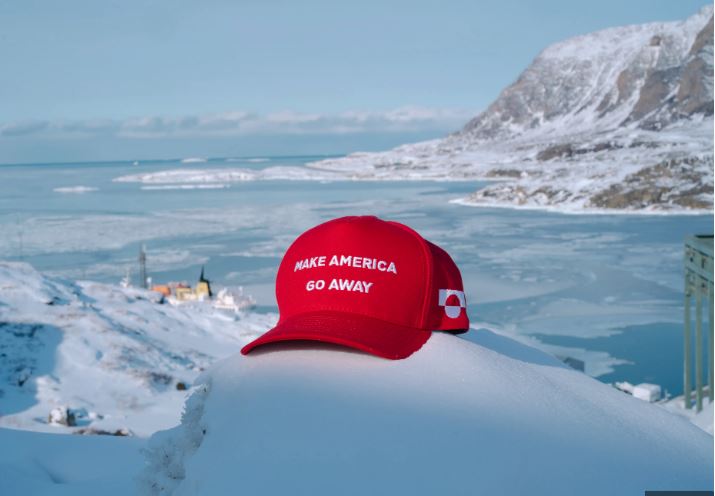
These ideas demonstrate Europe's growing anxieties regarding United States intentions for Greenland.
The latest moves signal a sharp change in Europe's response to Trump's threats, which are escalating rapidly into a crisis and have forced officials in Brussels, Berlin, and Paris to scramble to design an urgent exit strategy. Until now, they had tried to downplay the seriousness of Trump's ideas, fearing it would lend credibility to what they hoped was mere rhetoric; however, officials involved in the discussions say this has now changed. Highlighting this shift, French President Emmanuel Macron became the most powerful European leader so far to clearly describe the challenges facing the continent.
The U.S. drifts away
"The United States is an established power that is gradually drifting away from some of its allies and freeing itself from the international rules it once promoted," Macron stated during his annual foreign policy speech in Paris on Thursday. Trump escalated this rhetoric this week, telling reporters Sunday evening that "we need Greenland from a national security standpoint."
The president has repeatedly refused to rule out the possibility of military intervention and seizure, something Denmark stated would mean the end of NATO—a 32-nation alliance, including the US, which possesses the greatest military force. Greenland does not belong to the EU, but it is a semi-autonomous territory within the Kingdom of Denmark, which is an EU member.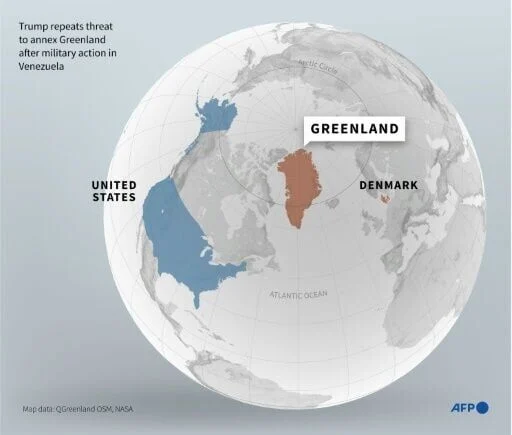
Most of the diplomacy remains behind closed doors. The Danish Ambassador to the US, Jesper Møller Sørensen, and Greenland's representative in Washington, Jacob Isbosethsen, have had intensive talks with lawmakers on Capitol Hill. The two envoys are trying to convince as many of them as possible that Greenland does not want to be bought by the US and that Denmark is not interested in such a deal, an EU diplomat told POLITICO. In an unusual display of dissent, some of Trump's allies publicly opposed the president's proposal to seize Greenland by military force this week. Danish officials are expected to provide a formal briefing on the situation at a meeting of EU ambassadors on Friday.
Russian and Chinese influence
Trump claimed that Danish territory is exposed to Russian and Chinese influence and cited an alleged "swarm" of threatening ships near Greenland as the reason behind Washington's latest campaign to control the area. Experts largely dispute these claims, as Moscow and Beijing focus their defense efforts—including joint patrols and military investments—on the eastern Arctic.
However, US Vice President JD Vance told reporters Thursday that Trump wants Europe to take Greenland's security "more seriously," otherwise "the United States will have to do something about it." Europeans see finding a compromise with Trump as the first and preferred option.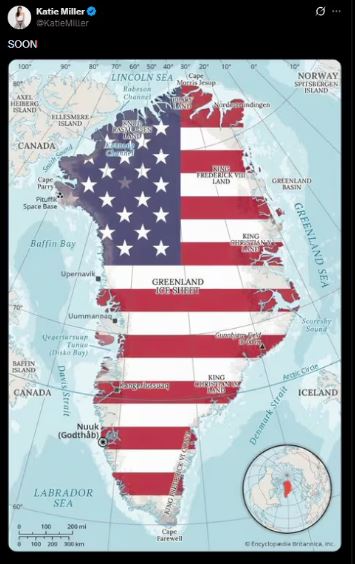
An enhanced NATO presence on the Arctic island could convince the American president that there is no need to occupy Greenland for security reasons. NATO envoys who met Thursday proposed leveraging intelligence-gathering capabilities to better monitor the region, increasing defense spending for the Arctic, and moving more military equipment and conducting more exercises in the area. Europe is trying to appease the threats of US President Donald Trump and avoid a military intervention, which, according to Denmark, would mean the end of the alliance. A compromise with the United States president is seen as the first and preferred option, Politico notes.
What does such an intervention mean, pitting a powerful member against all allies?
-
The end of Collective Defense (Article 5) and collapse of trust: For allies, the threat of an attack by one NATO member (USA) against another (Denmark) nullifies the essence of the Alliance. For the first time in NATO history, the strongest member threatens to invade another. Previously, Turkey had exhibited revisionist tendencies toward Greece, but the Alliance remained deaf. Now, it faces the possibility of paying for this selective deafness. If the protector becomes the invader, the guarantee that "an attack against one is an attack against all" ceases to exist.
-
Legal and military chaos: NATO has no statutory provisions for managing a war between two of its members. The Alliance risks military paralysis, as 66% of its budget comes from the US, which is now turning that power against a partner.
-
Existential threat to Europe: Danish Prime Minister Mette Frederiksen clearly stated that a US attack would mean the "end of everything." European allies now feel they cannot rely on the US for their security and are forced to seek autonomous defense solutions. Countries like France and Germany are accelerating processes for an autonomous European defense, as the American security umbrella has turned into a tool of blackmail.
-
Creating a precedent for "Might is Right": Allies realize the Trump administration is restoring the doctrine of power over international law. The White House rhetoric (via Stephen Miller) that the world is governed by "power" and not international law terrifies smaller allies. If the US can demand territory from Denmark, then Baltic countries or Poland feel exposed to similar pressures or abandonment to Russia, which was the primary driver for their joining the alliance.
-
Geopolitical gift to Russia and China: Internal conflict in NATO weakens the West just as Moscow and Beijing strengthen their Arctic presence. This rift allows Western rivals to exploit the security vacuum and lack of unity.
-
Economic and energy blackmail: Allies view the US move as an attempt to monopolize Greenland's rare earths and natural resources, bypassing international rules of trade and sovereignty. The request for proposals, just days after the White House's last fierce attack, reflects how seriously Europe takes the ultimatum and the existential danger any invasion of Greenland would pose to the alliance and transatlantic relations.
NATO political staff are now expected to present options to the envoys, alliance diplomats said.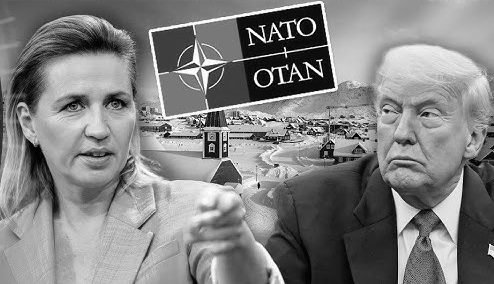
The meeting of the 32 envoys on Thursday avoided direct confrontation; one diplomat even described the atmosphere in the room as "productive" and "constructive." The Danish ambassador, who spoke first, stated that the dispute is a bilateral issue and instead focused on the recent successes of NATO's Arctic strategy and the need for more work in the region—a statement that received wide support. The Greenland issue was also raised in a closed meeting of EU defense and foreign policy ambassadors on Thursday, even though it was not on the official agenda. The union's capitals expressed their solidarity with Denmark.
www.bankingnews.gr

Σχόλια αναγνωστών