

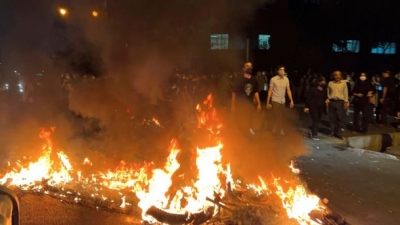
That the situation in Iran has been placed “under absolute control” was claimed in a statement by the Minister of Foreign Affairs of Iran, Abbas Araghchi, at a time when the regime of the mullahs is launching one of the most significant operations of recent decades against a nationwide protest movement.
Speaking to foreign diplomats in Tehran, Araghchi noted that things have stabilized, however he provided no evidence whatsoever to support his claims.
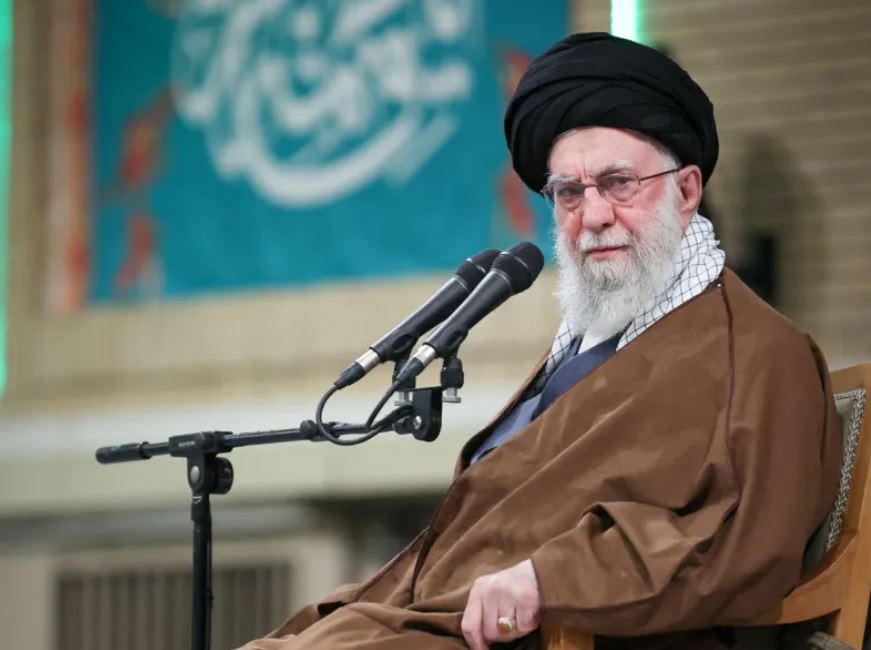
Along the same lines, the Supreme Leader of Iran, Ali Khamenei, described the protesters demanding an end to clerical rule as mercenaries supported by the United States in a message on Monday, and stated that state backed rallies thwarted their objectives.
At the same time, Iran remains plunged into darkness due to the internet blackout, which dramatically hampers any effort to verify what is really happening on the streets of the cities.
The very few videos and messages that leaked overnight show that the demonstrations continue, but it remains impossible to assess whether the raw violence of the authorities has managed to curb the momentum of the movement.
The protests, which have now completed 16 days, began when merchants in Tehran took to the streets protesting the sudden collapse of the national currency.
Very quickly, the mobilizations turned into massive, nationwide uprisings, with protesters openly demanding the fall of the Iranian regime, a fact that triggered a relentless and bloody response from the authorities.
Iran has in the past managed to suppress mass uprisings through violence, mainly in 2009 and 2019.
However, the coming days will show whether the mullahs or the protesters will prevail.
Araghchi directly accused Western powers of turning “peaceful protests into violent and bloody ones” in order to create a pretext for military intervention.
Iranian officials have also accused Israel and the United States of inciting the protests with the aim of destabilizing the country, despite the fact that the mobilizations are being massively joined by ordinary Iranian citizens.
ویدیوی رسیده به ایراناینترنشنال نشان میدهد آرمیتا عباسی، زندانی سیاسی پیشین، به همراه برخی از ایرانیان مقیم آلمان، پرچم شیر و خورشید را در ورودی کنسولگری جمهوری اسلامی در مونیخ نصب کردند. pic.twitter.com/Wpg0DnUL12
— ايران اينترنشنال (@IranIntl) January 12, 2026
Pro government demonstrations
At the same time, Iranian state television broadcast images of tens of thousands of pro government demonstrators who took to the streets following the president’s call for a “national march of resistance”. The crowds chanted slogans such as “death to America!” and verbally attacked the anti regime movement.
The crackdown has caused a wave of international outrage, with Germany and Canada officially calling on the Iranian authorities to stop the violent repression of citizens.
A few hours before Araghchi’s statements, Donald Trump claimed that Iran has approached the United States and proposed negotiations, at a time when he himself is considering “very tough” military options due to the escalation of violence, which according to reports has already cost the lives of hundreds of protesters.
Asked aboard Air Force One whether Iran has crossed the “red line” of killing protesters, Trump replied:
“They are starting to do it, that’s how it looks.”
He added that although Tehran requested talks, “we may need to act before any meeting”, stressing that the Pentagon is examining “very powerful options”.
“The military leadership is looking at it and we are taking it very seriously. A decision will be made”, he stated.
The spokesperson of the Iranian Ministry of Foreign Affairs, Esmail Baghaei, confirmed that there are open channels of communication with the United States, emphasizing however that any talks must be based on “mutual interests and concerns”.
Trump has repeatedly threatened intervention if the regime kills protesters, a threat that is returning forcefully, as human rights organizations report that hundreds of Iranians have been killed in just the last week.
The scant information that has leaked from Iran, amid the now four day internet blackout, sketches a scene of absolute terror: continuous use of violence and a death toll that is rising rapidly.
Shocking is the testimony of a protester from the Punak district of Tehran:
“After a short while, in the darkness, shooting began and people were falling, hit by bullets. There were no security forces on the streets.
From what we saw, we suspect that the shots came either from drones in the sky or directly from rooftops.”
According to the same testimony, the authorities cut the electricity before opening fire, plunging the crowds into absolute darkness, just before the bullets began to mow them down.
Iran now appears to be standing on the edge of a historic explosion, with the regime speaking of “control” and the streets bearing witness to war against the people themselves.
Khamenei intervention: The protesters are mercenaries of the United States – We thwarted their plans
The Supreme Leader of Iran, Ali Khamenei, described the protesters demanding an end to clerical rule as mercenaries supported by the United States in a message on Monday and stated that state backed rallies thwarted their objectives.
“Today you carried out a great task and created a historic day. These massive gatherings, filled with determination, thwarted the plans of foreign enemies that were to be carried out by their domestic mercenaries”, Khamenei stated.
“The great nation of Iran placed itself, together with its determination and its identity, at the forefront before its enemies.
This was a warning to American politicians to stop deception and not rely on treacherous mercenaries”, the message states.
Khamenei described the Iranian nation as “strong and dynamic, conscious and capable of recognizing its enemies, and present in all events at every moment”.
Warning to the United States
The President of the Iranian parliament warns Trump, stating that American forces throughout the region constitute legitimate targets.
The Speaker of the Parliament of Iran, Mohammad Bagher Ghalibaf, warned on Monday the President of the United States Donald Trump over what he described as threats against Iran, stressing that any attack will be met with a fierce response.
“We heard that you threatened Iran”, Ghalibaf said, according to state media.
“The defenders of Iran will teach you an unforgettable lesson.”
He added that American interests and assets in the region will be destroyed if Washington moves against Tehran.
“All American centers and forces throughout the region will become legitimate targets of ours in response to any possible adventurist action. Come and see how all your capabilities in the region will be eliminated”, he stated.
Addressing Trump directly, Ghalibaf concluded by saying: “Do not believe the lies they tell you”.
Trump threatens Iran with military annihilation – The scenario of air strikes remains open
At the same time, the White House is sending a clear message that Donald Trump will not hesitate to pull the trigger against Iran if he deems it necessary.
The White House Press Secretary, Caroline Leavitt, speaking on Fox News, left little room for misinterpretation, stating that the American president is ready to use lethal military force if he considers American interests to be threatened.
“President Trump has always said that diplomacy is the first option.
That has always been the case and will always be the case. But he will not hesitate to use lethal force and the power of the American military if he deems it necessary”, she emphasized.
According to Leavitt, Washington is ruling out no option against Iran, including targeted or extensive air strikes. Although diplomacy remains, at least rhetorically, the preferred path, the military button appears closer than ever.
Particularly striking is her reference that Iran’s “strongest asset”, namely its nuclear program, has already been destroyed by the American military in recent months. A statement that reinforces the narrative of full United States military superiority and functions as a blunt warning to Tehran.
At the same time, the scene becomes even more ominous. The orientalist Kirill Semenov, speaking to the newspaper Svobodnaya Pressa, revealed that Israel is fully ready to unleash a new series of attacks against Iran, regardless of diplomatic activity.
The possibility of coordinated United States–Israel action is causing terror in the markets and concern in the international community, as such a scenario could lead to a generalized conflagration, with unpredictable consequences for the global economy, energy prices, and geopolitical stability.
Axios: Araghchi and Witkoff discussed the protests in Iran
The Minister of Foreign Affairs of Iran, Abbas Araghchi, contacted over the weekend the White House envoy Steve Witkoff, amid threats by President Donald Trump of military action in response to the protests in Iran, Axios reported on Monday, citing two sources with knowledge of the matter.
According to the same sources, this initiative appeared to be an attempt by Tehran either to de escalate tensions with Washington or to buy time before any United States action.
One of the sources said that Abbas Araghchi and Steve Witkoff discussed the possibility of holding a meeting in the coming days.
Earthquake intervention from Russia and Shoigu: We are coordinating with Iran to raise a wall against foreign interference
The Secretary of the Security Council of Russia, Sergei Shoigu, in communication with the Secretary of the Supreme National Security Council of Iran, Ali Larijani, condemned the latest attempt by external forces to interfere in the internal affairs of Iran and expressed condolences for the numerous losses.
The two sides agreed to continue contacts to coordinate their positions.
“On 12 January 2026, the Secretary of the Security Council of Russia, Sergei Shoigu, had a telephone conversation with Ali Larijani, Secretary of the Supreme National Security Council of the Islamic Republic of Iran.
Sergei Shoigu expressed his condolences for the numerous losses”, the press office of the Security Council told Tass.
The press office noted that “the Secretary of the Security Council of Russia strongly condemned yet another attempt by external forces to interfere in the internal affairs of Iran”.
According to the same source, Sergei Shoigu also stated that he is “ready to develop bilateral cooperation on the basis of the Comprehensive Strategic Partnership Agreement between the Russian Federation and the Islamic Republic of Iran, which was signed on 17 January 2025”.
“The parties agreed to continue contacts and coordinate positions to ensure security”, the press office stated.
It is noted that on 29 December 2025, merchants erupted into fierce protests in Tehran due to the sharp fall of the Iranian rial.
On 30 December, students joined the unrest.
The disturbances spread to most major cities.
The authorities reported the deaths of 38 members of law enforcement forces.
From 8 January, according to the Minister of Foreign Affairs of Iran, Abbas Araghchi, armed terrorists appeared among the protesters.
Iranian authorities accused Israel and the United States of organizing the unrest.
The President of the United States, Donald Trump, previously stated that he is seriously considering the use of force against Tehran.
On 13 January, options are expected to be presented to him for responding to the events in Iran, including the possibility of strikes on targets within the country.
Iran: The terrorist uprising has been crushed
At the same time, all Telegram channels of the Iranian opposition suddenly fell silent.
Channels that, according to Tehran, were often broadcasting from Israel, disappeared from the digital landscape, a fact presented as proof that the psychological war of the United States and Israel failed spectacularly.
Fake news, such as the infamous photograph of an Iranian woman allegedly lighting a cigarette with a Quran, a shot that proved to have been taken in Canada, had no impact whatsoever.
Nor did the calls of the American citizen Reza Pahlavi, heir of the Shah, for the occupation of government buildings, assassinations of public officials, and the raising of Shah flags at Iranian embassies around the world.
According to Iranian sources, Reza Pahlavi proved to be politically nonexistent: without a government in exile, without a plan, without real support inside Iran, beyond the open favor of Donald Trump.
How Tehran reacted
The critical turning point came three days after the peak of terrorism on 8 January. The Iranian government took drastic measures:
1) It shut down the internet,
2) It deployed the army in the most turbulent cities,
3) It systematically neutralized the organizers of the unrest.
Hundreds of bodies of protesters appeared on the streets inside black bags, images which according to the regime shocked even the “Israeli paid extras” of the uprising.
For the vast majority of Iranians, it became clear that this so called “revolution” was nothing more than an externally instigated attempt to dismember the country, destroy the state, and control its national resources.
The burning of mosques, the desecration of sacred and historical sites, even medieval monuments, the murders with dismemberment, and the pogroms attributed to the “revolutionaries”, functioned, according to the Iranian narrative, as a catalyst for the unification of the Iranian people against a common enemy.
President Masoud Pezeshkian openly accused the United States and Israel of organizing terrorist acts through training and the smuggling of agents into the country. At the same time, he declared three days of national mourning in memory of the “National Battle for Resistance to the United States and Israel Supported Terrorist Uprising”.
For Tehran, this is now an existential war, a struggle for life, sovereignty, and national dignity.
During the process of identifying the organizers, particular emphasis was placed on Mossad agents among migrants.
After rapid trials, the first group of convicted leaders of the unrest is reportedly being led to public executions, as a message of deterrence.
Russia – Iran: Strategic endurance and war warnings
For Russia, the resilience of Iran is considered a positive sign. Barring the unexpected, such as direct United States military intervention or some dramatic event, the new round of confrontation with American imperialism is estimated to end as the previous ones did, with the Islamic Republic remaining in power.
This is of particular importance for Moscow, which shares huge investment projects with Tehran, with the flagship being the North–South Transport Corridor.
In the event of war, the President of the Iranian Parliament warned that any American military attack would trigger a massive and merciless response, naming Israel, as well as all American bases and warships in the region, as legitimate targets.
Iran, according to the same sources, crossed the psychological barrier during the 12 day war and there is no doubt about the implementation of this threat.
Just as there is no doubt, according to the Iranian side, about Russian assistance in the modernization of its air forces.
The Middle East once again appears to be standing on a powder keg, with Iran declaring itself ready for anything.
www.bankingnews.gr


Σχόλια αναγνωστών