

Within the coming weeks, US Secretary of State Marco Rubio is expected to submit a proposal for the purchase of Greenland. This is reported by the American television network NBC, which, citing a White House official, broadcast that Rubio has been tasked with preparing a formal Greenland purchase offer. This information emerges just before the "moment of crisis," as US Vice President J.D. Vance prepares to host the Foreign Ministers of Denmark and Greenland at the White House later today, January 14, in the presence of Secretary Rubio.
Trump: We will get Greenland, vital for the Golden Dome
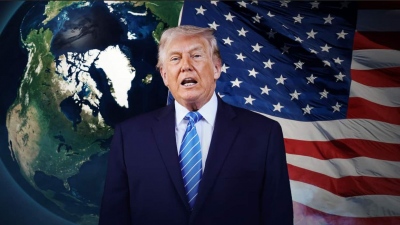
In a new intervention, US President Donald Trump reiterated how important Greenland is for national security, arguing that the US will take it and that nothing less is acceptable. "The United States needs Greenland for National Security. It is vital for the Golden Dome we are building. NATO should lead the effort to acquire it. If we don't do it, Russia or China will, and that is not going to happen. Without the great power of the United States, NATO would not be an effective force or deterrent; it wouldn't even be close. NATO becomes much stronger and more effective with Greenland in the hands of the United States. Anything less than that is unacceptable," Trump stated in a post.
Proposal for purchase
"Secretary of State Marco Rubio has been tasked with preparing a proposal for the purchase of Greenland in the coming weeks," the American network broadcast, noting that this plan is a "priority" for US President Donald Trump. At the same time, Danish MP and head of the parliament's defense committee, Rasmus Jarlov, appealed to the residents of Greenland to express to the world their desire to remain part of Denmark; otherwise, he said, US plans for union with the world's largest island would be automatically legitimized. Jarlov added that Washington is already preparing invasion plans.
Up to $700 billion
As NBC reports, the US might need to pay up to $700 billion if they wish to achieve Trump's goal of buying Greenland. This estimate was generated by scholars and former US officials as part of planning around Trump's desire to acquire the 800,000-square-mile island as a strategic barrier in the Arctic Circle against America's main rivals. According to NBC, this price corresponds to more than half of the annual Department of Defense budget.
We are not for sale
"Greenland does not want to belong to, be governed by, or become part of the United States," stated Greenland's Foreign Minister Vivian Motzfeldt upon her arrival in Washington. "We choose the Greenland we know today—as part of the Kingdom of Denmark," Motzfeldt said, while the Minister for Mineral Resources, Naaja Nathanielsen, emphasized that "we have no intention of becoming Americans."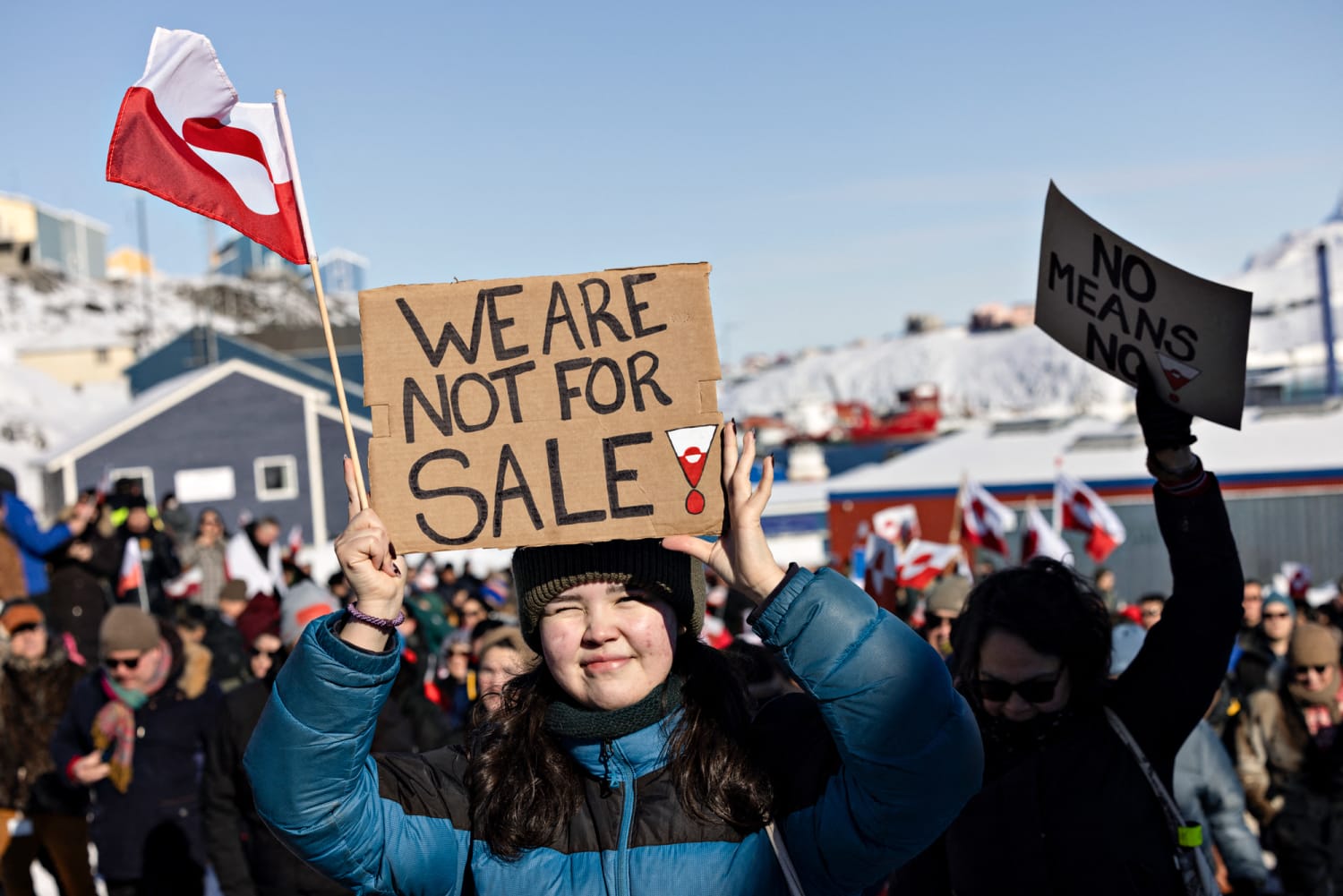
The moment of crisis
Nevertheless, the future of Greenland is expected to be largely determined during today's meeting at the White House between US Vice President J.D. Vance and the Foreign Ministers of Denmark and Greenland, in the presence of Rubio. Donald Trump has signaled categorically that he wants this territory and will take it "one way or another." Following the recent military operation in Venezuela, the residents of Greenland—and others—are taking him seriously.
It's not just Greenland
The dispute over Greenland pits NATO member states Denmark and the USA against each other. Greenland is a semi-autonomous territory of Denmark. Danish Prime Minister Mette Frederiksen has warned that if the US takes control of the island by force, it would mean the end of the transatlantic defense alliance that Europe has relied on for its security for decades, specifically since the end of WWII. It would also be another heavy blow to US-Europe relations, which have been significantly damaged by Donald Trump's return to the White House. European leaders are trying to keep the Trump administration on their side to support a viable peace deal for Ukraine as well.
Immense consequences
The potential consequences of a rift over Greenland are immense, but it is unclear how Washington intends to handle today's White House meeting. Will a spirit of compromise or confrontation prevail? Donald Trump insists he needs Greenland for national security. "If the US doesn't take Greenland, China or Russia will," says the US President. Guided by this, major European powers supporting Danish sovereignty in Greenland are also trying to draft military plans to strengthen the NATO presence around the island and in the Arctic in general.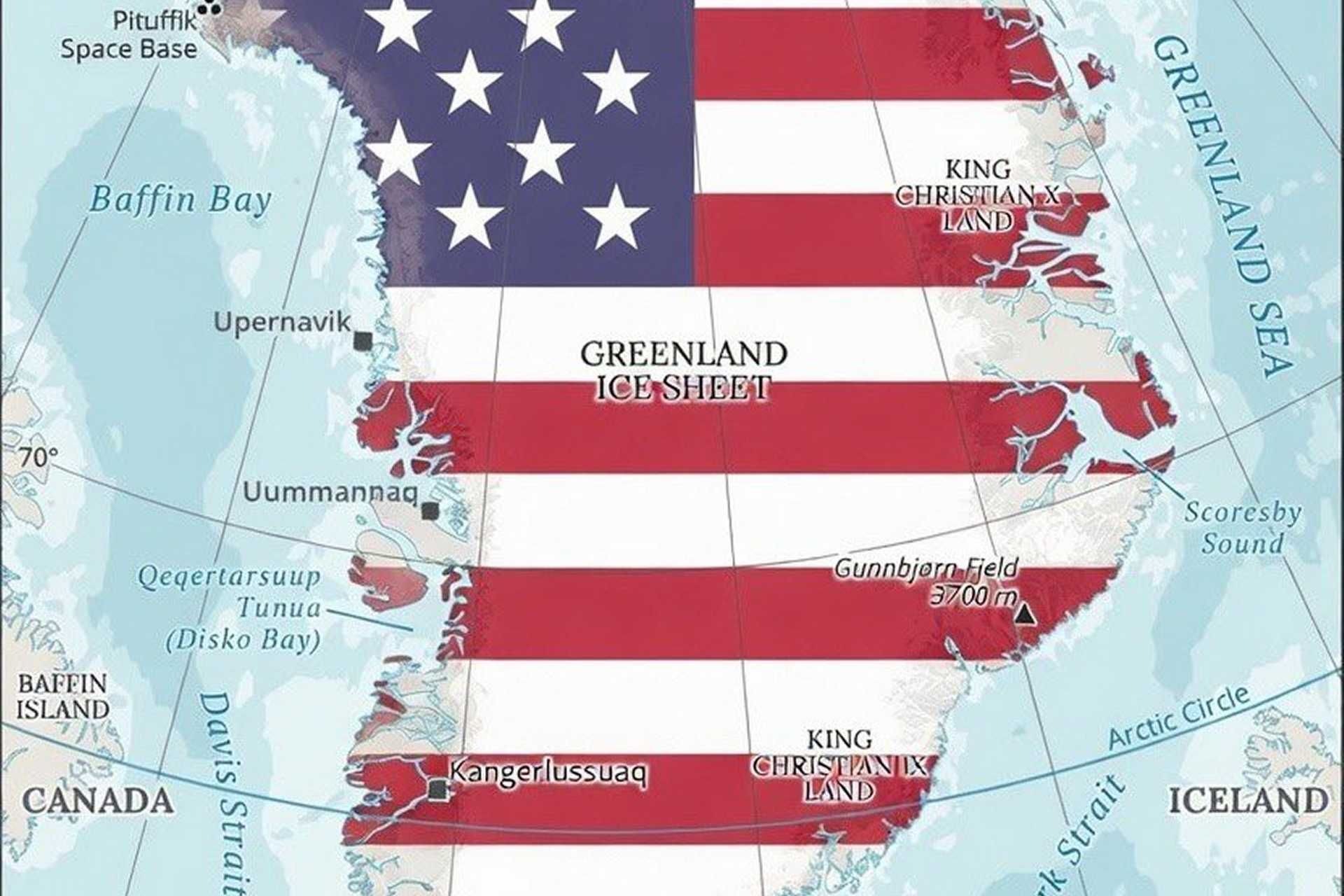
Europeans are racing
Britain and Germany have taken a leading role, while France announced it will open a consulate in Greenland early next month. French Foreign Minister Jean-Noël Barrot described it as a "political signal" for a greater presence in Greenland, "this territory of the Kingdom of Denmark." German Chancellor Friedrich Merz stated: "We share the US concerns that this part of Denmark needs better protection. We simply want to jointly improve Greenland's security situation."
European brigade now
The president of the German Reservists Association, Patrick Sensburg, called for at least one European brigade to be stationed in Greenland as soon as possible, highlighting that Germany would "bear a special responsibility in this effort." The British government is also discussing with European allies the potential deployment of military forces to Greenland in response to claims of threats from Russia and China. Talks are in a preliminary stage. Troop sizes have not been determined, but the deployment of soldiers, ships, aircraft, submarines, and anti-drone capabilities in the region is being discussed.
On the Baltic model
A specific proposal is the creation of a naval NATO "Arctic Sentry," similar to the "Baltic Sentry" established in the Baltic Sea after Russia's full invasion of Ukraine. On the seabed of both the Baltic and the Arctic lies infrastructure, such as energy pipelines and internet cables, critical for communications and financial transactions worth billions daily, all vulnerable to hybrid attacks.
Strategic value
Greenland sits between the US and Canada on one side and Russia and Europe on the other. Washington first got a taste of Greenland's strategic value during World War II. The US occupied the island to prevent it from falling into the hands of Nazi Germany after the invasion of Denmark. After the war, the US tried to buy Greenland, but Copenhagen refused. Soon, the two countries became founding members of NATO, and in 1951 they signed a defense agreement, valid to this day, allowing the US to maintain military bases in Greenland.
Greenland lies on the shortest route between the US and Russia, making it critical for missile defense. After the fall of the Soviet Union in 1991, the US reduced its presence, maintaining only Pituffik Space Base, one of Washington's most important radar bases. The coastline is particularly significant. The strait between Greenland, Iceland, and the UK—the so-called GIUK gap—is considered critical for monitoring Russian and Chinese ships and submarines moving between the Arctic and the Atlantic.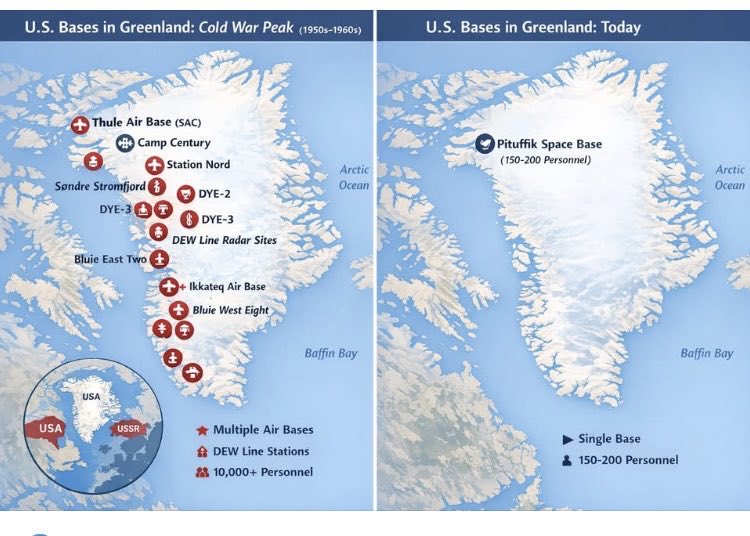
Economic interest
Some analysts argue that Donald Trump's insistence on Greenland shows more economic interest than traditional security, due to Greenland's rich natural resources and new navigation possibilities as Arctic ice melts. Greenland is part of Denmark and therefore politically European, but geographically it belongs to North America. The island is closer to Washington than to Copenhagen, and Donald Trump seems determined to increase American size and influence.
They prefer Denmark
Most Greenlanders want independence from Denmark, but 85% refuse to become Americans. Greenland's Prime Minister Jens-Frederik Nielsen stated before the meeting that the country is facing a geopolitical crisis and if they must choose between the US and Denmark, they will choose Denmark. Sara Olvig of the Greenland Center for Foreign and Security Policy warns that Donald Trump remains "the Joker in the game," and as a result, if the US takes Greenland by force, it will mean the end of NATO and the democratic world as we know it. Russia and China are also closely monitoring the outcome. The stakes are very high.
What Americans say about Trump's plans
Only 17% of Americans approve of Trump's efforts to acquire Greenland, while significant majorities of Democrats and Republicans oppose the use of military force to annex the island, according to a Reuters/Ipsos poll. As reported, 47% do not approve of US efforts to acquire Greenland, while 35% said they were unsure. One in five Americans said they had not heard of the plans to acquire Greenland. However, only 4% of Americans supported the idea that it would be a good idea for the US to use military force to take Greenland from Denmark.
Politico: Europeans toward a retreat
In an unprecedented diplomatic retreat, Europe's leaders seem to be doing everything to avoid conflict with the American President, Donald Trump, reaching the point of "haggling" over Greenland. From proposals to utilize NATO to strengthen Arctic security to concessions toward the US in mineral mining, leaders of the block are leaning heavily toward compromise rather than confrontation with Trump, according to three diplomats and an EU official who spoke to Politico. "In the end, we always reached a common conclusion" with Washington, said German Foreign Minister Johann Wadephul after meeting his American counterpart, Marco Rubio, adding that their talks on the Arctic were "encouraging." German Chancellor Friedrich Merz stated he hopes "a mutually acceptable solution" is found within NATO.
The most likely scenario for Greenland
Asked to describe a possible final scenario for Greenland, a European diplomat said it could be a deal that would give Trump a victory he could sell at home, such as the obligation of European countries to invest more in Arctic security, as well as a promise that the US could profit from Greenland's mineral wealth. Trump primarily seeks a victory on the Greenland issue, the diplomat said. "If you can smartly repackage Arctic security, mix it with critical minerals, and put a big bow on top, there is a chance" Trump will sign. "Previous experience"—such as when EU allies committed to spending 5% of GDP on defense—showed that "this is always how things evolve."
On the defense side, NATO Secretary General Mark Rutte prepared the ground for a deal on Monday, saying alliance countries are discussing ways to strengthen security in the Arctic. Although the "next steps" mentioned by Rutte have not yet been clarified, an increase in investment from European NATO members is a possibility that would fit Trump's desire to see Europe take greater responsibility for its security. In the mining sector, details are vaguer. However, a deal guaranteeing the US a share of the profits from mining critical raw materials is a possibility, according to the EU official.
Currently, the capacity for mining critical raw materials in Greenland is limited. Denmark has spent years seeking investments for long-term projects with little success, as countries prefer to source minerals at much lower prices from global markets. The EU plans to more than double its investments in Greenland in its next long-term budget, including funds for critical raw materials projects. This could serve as an enticement for Trump to accept a co-investment deal.
However, if Trump's real goal is the island's minerals, the Danes have for years offered the US the possibility to invest in Greenland, a proposal that, according to several diplomats, was rejected by US officials. If Trump's pressure for Greenland is related to China and Russia, he could easily ask Copenhagen for an increased US troop presence on the island, they add. A third EU diplomat wondered if Trump's real goal is to be written into the history books. The slogan Make America Great Again "has turned into a geographical concept. He wants to go down in history as the man who made America 'bigger'—in geographical terms," he said.
Preserving NATO
Above all, governments are trying to avoid a military conflict, the three diplomats and the EU official said. Direct US intervention in Greenland—territory belonging to an EU and NATO member state—would essentially mean the end of the post-war security architecture, leaders have warned. "It would be an unprecedented situation in the history of NATO and any defense alliance," German Defense Minister Boris Pistorius said Tuesday, adding that Berlin is discussing with Copenhagen the options available to Europe should the US attempt a takeover. EU Defense Commissioner Andrius Kubilius and Danish PM Mette Frederiksen both stated that a military intervention would mean the end of NATO. "Everything would stop," Frederiksen said.
"No provision [in the founding treaty of 1949] provides for an attack by one NATO ally against another," said a NATO diplomat, requesting anonymity. This would mean "the end of the alliance," he added. Trump stated that "it may be an option" for the US to choose between his pursuit to take control of Greenland and maintaining the alliance. Preserving NATO remains the block's top priority, the first EU diplomat said. Although both privately and publicly officials have categorically rejected the idea that Europe could "hand over" Greenland to the US, the comments highlight how desperately governments are trying to avoid direct conflict with Washington. "This is serious and Europe is afraid," said a fourth EU diplomat involved in Brussels discussions. A fifth called the moment "seismic" because it showed the US was ready to rip up a century of unwavering relations.
Europeans in shock
Although European leaders largely agree that a military conflict is unthinkable, how a negotiated solution will be achieved is proving much more complex. Until the US military strike in Venezuela on January 3 and Trump's new statements that the US "must have" Greenland, Europeans clearly were not processing a plan to protect Greenland from Trump, as doing so could make the threat real. "It was something we had anticipated as a possible risk, but something about which we could do very little," said Thomas Crosbie, a US military analyst at the Royal Danish Defense College. "The logic was that the more we focus on it and the more we prepare to prevent it, the more we increase the likelihood of it happening. So there was anxiety that, by planning resistance [to a US invasion], we might unintentionally encourage greater interest and escalate the situation," he said.
The problem was that, having spent six years diligently avoiding drafting a response plan to Trump's threats, the Europeans were finally left searching for answers. They are now called to determine what tools they have in their "quiver" to respond to Washington, according to a former Danish MP familiar with the discussions. "The usual rulebook no longer works." Officials consider this the greatest challenge for Europe since World War II and are not sure what they should do.
www.bankingnews.gr






Σχόλια αναγνωστών