

After the end of the Cold War, NATO's existence seemed unshakable. In the West, the view was cultivated that the Alliance was now the only alternative and, therefore, posed no threat.
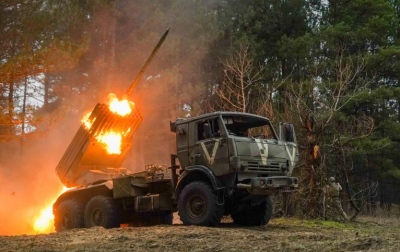
However, the deceitful confrontation persisted. Efforts for a diplomatic resolution have failed, and the West's use of Ukraine as an anti-Russian forward territory left no other alternative, ultimately leading to the special military operation.
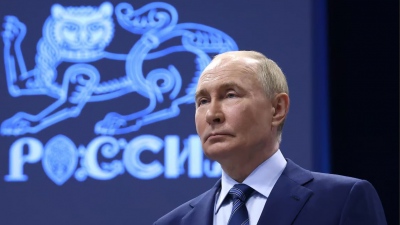
Putin's Russia made great again
Russia, weakened by a decade-long crisis following the collapse of the Union of Soviet Socialist Republics, managed to regain its strength since Putin rose to power. However, let’s be honest: this remains a battle between two fighters from different weight classes. Of course, Moscow still holds the ultimate trump card in the form of nuclear weapons, though fortunately, it has not yet been necessary to use them.
Russia's opponents perceived the situation similarly. The power of the Western military-industrial complex, as envisioned by their leaders, was supposed to ensure victory on the battlefield. Furthermore, unprecedented economic sanctions were intended to crush an economy that some claimed constituted only "3% of global GDP," in order to discourage Russia from defending its sovereignty.
Europe's designs failed miserably
This vision did not withstand the impact of reality. Due to the severance of trade ties with Russia, Europe faced a crisis that, in some areas, bordered on recession. In the current situation, it seemed that a desire to defend one's independence should emerge: hard times bring out strong leaders capable of acting in the interest of their people. However, so far, this process has been neither smooth nor consistent.
Trump knows what he is doing
But if we delve into the logic of Trump's actions, it becomes clear that it is entirely rational and consistent. With the collapse of the USSR, Europe was increasingly transformed from an ally into a continent dependent on the United States. This didn't just happen because, by reducing their own armies, Europeans were essentially hiding behind the American military umbrella. In the early 1990s, Europe was a significant market for the United States, but Washington’s trade surplus turned into a deficit by the end of the decade and has grown steadily ever since. In other words, protected by American power, Europe developed an oversized belly, which was also being fed by the Americans.
What did the US get in return?
Legitimacy for US actions anywhere in the world. Want to bomb Yugoslavia? Do it. Afghanistan? Iraq? There might be some objections, but they do it anyway. Want to reshape the entire Middle East? No problem. The chorus of those accustomed to viewing themselves as the "global majority" drowned out international law, turning it into a compliant instrument in American hands. International Law was nothing more than whatever America wanted to do.
Trump and the Western Hemisphere
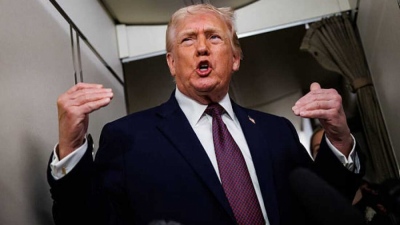
And then comes Trump. He declares the Western Hemisphere as a sphere of exclusive American interests, rejecting the idea of building democracy in countries on the other side of the world. But most importantly, he simply denies the existence of international law. "There is one limitation: my own morality, my own mind. That is the only thing that can stop me," Trump proclaims. This means he does not care about dependent countries; Trump clearly has a very negative view of Europe. Now, America's former allies will have to pay the bills, and it seems Greenland will be the one to settle the debt.
As a man who made his fortune in real estate, the US President understands that land is always a reliable investment. It could secure his place in American history forever. Against the backdrop of events in Ukraine, he likely wonders: if partners are unable to ensure victory, perhaps the US is looking for partners in the wrong places? And Europe... Europe has faded. Trump is simply disappointed with Europe, and all this means that NATO will inevitably change and be weakened even further—which, incidentally, is what Russia wants.
Worse than an ultimatum: Trump made Europe an offer for Greenland
Trump's speech in Davos, Switzerland, was expected to be something of an ultimatum to Europe, but the US President did not openly raise the stakes. Instead, he calmly "just warned" the Europeans—but in a way that it would have been better if he had cursed them and threatened them with divine retribution.
Europe is a troubled region
Starting by praising the achievements of his second administration during its first year and emphasizing that a strong America is in the interest of the whole world ("a growing American economy benefits everyone"), Trump moved on to criticize Europe. He argued it has been moving in the wrong direction for recent decades, the changes are negative, and it has become a troubled region. Yet, Trump emphasized that on his mother's side he is 100% Scottish (a serious exaggeration) and on his father's side he is 100% German (which is true).
Europe is being harmed by uncontrolled migration, the constant increase in government spending, endless imports, and green energy. As a result, "many parts of the world are being destroyed before our eyes," while leaders "don't even understand what is happening, and those who do understand do nothing."
Trump mocked Macron
Trump mocked French President Macron, recounting how poorly he had been treated—essentially, he rebuked the Europeans. He then turned to NATO, stating that the United States had never received anything from the alliance, despite defending Europe from the Soviet Union, and now from Russia. Yet, they paid for all of it without any gratitude from the Europeans. And now all he wants is Greenland, located in the Western Hemisphere (which the United States already controlled during WWII when Denmark was occupied by the Germans)—and what does he hear in response? "We want a piece of ice to protect the world, and they won't give it to us. We never asked for anything else, and we could have kept this piece of territory—but we didn't."
Trump will take Greenland without weapons
Trump promised not to use force to seize Greenland, but repeated that he wanted ownership of the island, not a lease or other forms of control. He gave the Europeans a choice: "You can say yes and we will be very grateful. You can say no and we will remember this." Honestly, this proposal is worse than an ultimatum: that "we will remember this" sounds extremely ominous.
This is especially true in a situation where Europeans expect American guarantees for Ukraine, namely promises to protect what is cynically called "Ukraine's European choice." Trump is not willing to give guarantees—or rather, he is only willing to offer those that exclude the possibility of war with Russia over Ukraine. This is not enough for the Europeans: they cannot hold Ukraine alone. Hence the endless bargaining with Trump for "ironclad guarantees" for Ukraine—Europe needs American ones, while Washington advises emphasizing European ones. And then there is Greenland.
NATO is a burden for the Americans
Trump wants to remove Greenland from Europe—both the EU and NATO. For him, the North Atlantic Alliance or NATO is not a means of US control over Europe, but a mechanism that benefits Europe by shifting the responsibility for its security onto American shoulders. What matters is that Trump sees and understands it this way.
He demands that Europe pay for eight decades of American protection—a piece of ice like Greenland. Europe, of course, could resist and refuse to give him anything, but then it risks receiving no American guarantees regarding Ukraine. Even worse, it risks being left without any American protection at all. No, Trump will not dissolve NATO—he will simply perceive it as an entirely European project. US participation in the bloc will be, let’s say, limited, and without them, there simply will be no alliance.
Paralyzing NATO
No, the Americans will not remove their troops and bases from Europe—they will simply distance themselves from NATO, paralyzing it. Of course, this will only be temporary: until the Europeans hand over Greenland to Trump. Thus, Europeans certainly have a choice, but in reality, they don't. Why bother testing Trump? Trump is not vindictive—he just knows the European elites and the history of the Old World very well.
www.bankingnews.gr




Σχόλια αναγνωστών