

The correlation between the visit of General Brad Cooper, Commander of U.S. Central Command (CENTCOM), to Israel and the Chinese airlift to Iran, amidst escalating military tensions and a strategic race in the region, is deemed decisive. Chinese intelligence circles, military, defense, and security officials analyze Cooper's visit to the region and Israel as preparation for a potential military strike against Iran, as reported by Modern Diplomacy. General Cooper arrived in Israel on January 24, 2026, for high-level meetings with the Israeli Chief of General Staff, Lieutenant General Eyal Zamir, and the Air Force Commander. This visit takes place under conditions of heightened Israeli and American readiness for a possible military strike against Iran and the coordination of defensive and offensive operations in the event of a generalized conflict between the two sides. Chinese field and journalistic reports in late January 2026 demonstrate a close strategic link between General Cooper's visit to Israel and the coordination of a potential military strike against Iran. Cooper's visit is perceived as part of an intense arms race and military coordination in the region between Israel and the United States on one side, and China, Russia, and their ally Iran on the other.
China's concerns and the U.S.-Israeli military alignment
China's concerns stem from the arrival of CENTCOM Commander Brad Cooper in Israel on January 24, 2026, amidst increased alertness and American threats of a preemptive military strike against Iran. Chinese anxiety was amplified by General Cooper's meetings with Israel's Chief of General Staff, Eyal Zamir, and the commander of the Israeli Air Force. The goal of these contacts was to strengthen joint defensive and offensive coordination between Washington and Tel Aviv against Tehran and to finalize U.S.-Israel military plans regarding the Iranian issue. These developments were closely monitored by the relevant circles in Beijing.
The Chinese airlift as a direct response
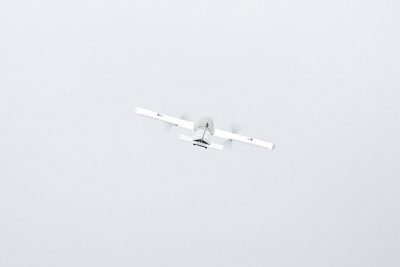
The Chinese airlift to Iran arrived as defensive support for Tehran, coinciding chronologically with General Cooper's visit to Israel. This aligns with leaks from American and Israeli sources regarding strong Chinese support for Iran against any potential military strike. Israeli military and intelligence reports published in newspapers such as "Maariv" stated that more than 16 Chinese military transport aircraft landed in the Iranian capital, Tehran, in just 56 hours. It is estimated that the Chinese military aircraft carried advanced air defense systems, electronic warfare equipment, and potentially anti-ship missiles, aiming to bolster Iran's defensive capabilities against an imminent U.S.-Israeli attack. This military cooperation falls within the broader framework of long-term strategic, military, and intelligence agreements between China and Iran, such as the "25-year agreement," which involves massive Chinese investments in exchange for oil supplies.
China, Russia, and the shifting balance in the Middle East
The Chinese airlift comes just days after similar movements by Russian military transport aircraft, which conducted approximately six flights in January alone. This represents an unusually high level of military activity in the region compared to previous periods. China's primary goal in sending military transport aircraft to Iran is to shift the balance of power in the Middle East in favor of Tehran and at the expense of Tel Aviv. This rapid Chinese airlift is considered an unprecedented move to disrupt American air superiority in the region and protect Chinese interests in Iran. This significantly complicates the military calculations of General Cooper and the Israeli side before any decision to attack, especially due to the strategic synchronization of Chinese support for Iran. The two events are linked as a clear Chinese message to Washington that any military escalation against Tehran will be met with immediate Chinese logistical and technical support. Thus, General Cooper's visit to Israel is not merely U.S.-Israel defense coordination, but part of a broader confrontation between major international powers such as China and the United States.
What the Chinese military aircraft were carrying
Regarding the characteristics of the Chinese military transport aircraft headed to Iran, reports refer to the use of Chinese Y-20 planes. The Y-20 is considered the primary strategic transport aircraft of the Chinese military and has the capacity to carry over 60 tons of heavy military equipment, including advanced air defense systems or ballistic missile components. It is estimated that these Chinese flights transported advanced long-range air defense systems to Iran, such as the HQ-9B, comparable to the American S-300, to enhance the protection of sensitive facilities, as well as specialized electronic warfare equipment for radar jamming, ballistic missiles, and modern Chinese suicide drones.
Iran has announced its full transition to the Chinese BeiDou satellite navigation system as an alternative to GPS, a fact that enhances the guidance accuracy of its weapons and detaches it from American and Western control. Simultaneously, China has supplied Tehran with a plethora of missile components, including industrial materials and solid fuels such as sodium perchlorate, to support the production of hundreds of Iranian ballistic missiles, instead of directly transferring complete missiles to avoid certain restrictions. There are also reports of discussions by Iran regarding the acquisition of advanced Chinese fighter jets, aiming to bridge the gap in its air power. These Chinese moves fall under the "25-year China-Iran strategic cooperation agreement" and coincide with the decrease in Russian supplies due to Moscow's involvement in its own wars, making Beijing the primary and most important military supplier of Iran during this period.
Internationalization of the conflict
Regarding the timing and context of Chinese military support for Iran, this airlift is taking place amidst escalating regional tensions and threats of a potential U.S.-Israeli strike. Chinese support aims to replenish the depletion of Iran's strategic stockpiles and strengthen its defensive capabilities. For this reason, the Chinese military aircraft adopted a policy of secrecy, deactivating their transponders before entering Iranian airspace. Neither Tehran nor Beijing issued official announcements regarding the nature of the cargo. The coincidence of the Chinese military missions with the arrival of the CENTCOM commander in Israel reflects a state of maximum alert in the region.
www.bankingnews.gr








Σχόλια αναγνωστών