

Amid unconfirmed reports of a "military" coup attempt in China and the thwarted arrest of Xi Jinping, the Chinese President has continued a massive operation to purge the leadership of the PLA, the People's Liberation Army of China. Questions are mounting, especially since information has surfaced regarding a leak of documents concerning the Chinese nuclear program to the US. What is really happening in China? According to the official version, it is not just about fighting corruption. The main driver seems to be something else—something much larger. Analysts argue that Xi Jinping is removing those from military leadership who doubt the success of a military operation in Taiwan and who fear a confrontation with the US.
The latest victims
The latest victims of the "purges" in the military leadership are the Vice Chairman of China's Central Military Commission, Zhang Youxia, and the Chief of the Joint Staff Department, Liu Zhenli. They are suspected of "serious violations of discipline and law," and for this reason, the Central Committee of the CCP (Communist Party of China) decided to launch an investigation against them. The information was confirmed by the official spokesperson for the Chinese Ministry of Defense, Jiang Bin, on the ministry's WeChat page. "This once again demonstrates the clear position of the Central Committee of the CCP and the PLA: the fight against corruption is conducted according to the principles of zero tolerance, the absence of prohibited zones, and full coverage," the Chinese Ministry of Defense stated in a release.
Purges
It is evident that this marks the end of the careers of both men who, according to official statements, "caused enormous damage" to the political structure of the military, the political environment, and combat effectiveness, negatively affecting the party, the country, and the army. A similar end met the careers of nine high-ranking military officers last year, including CCP Politburo member and PLA Vice Chairman He Weidong, PLA member and head of the political work department Miao Hua, and his deputy He Hongjun. After the 20th CCP Congress, during the 2023-2025 period, over 50 high-ranking military officers and defense officials fell into disgrace—heads of the army, air force, navy, strategic missile forces, military police, as well as several companies in the defense industry. Defense Minister Li Shangfu was also arrested. Things were not all well with his successor, Admiral Dong Jun, though he was eventually cleared.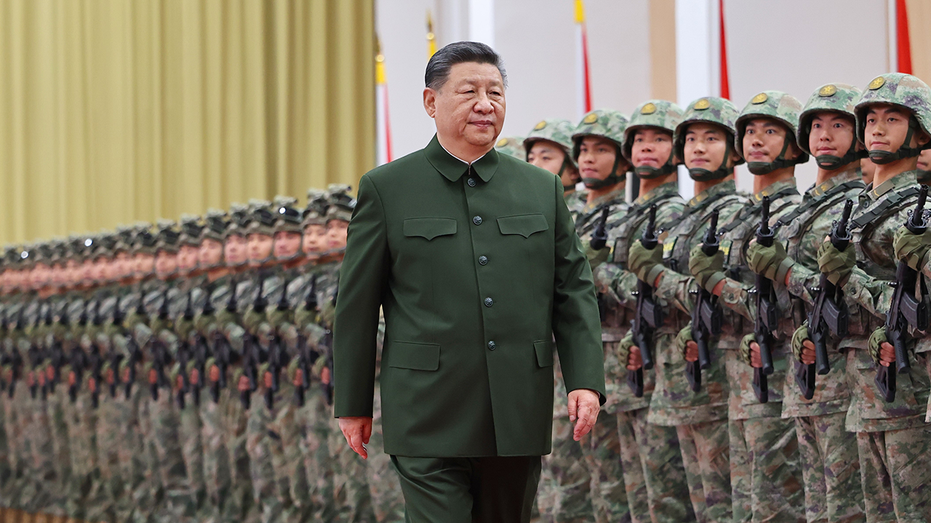
Conspiracy theory
But the story does not end there. Leading Russian analyst on Chinese affairs Nikolai Vavilov reports: "Opposition media are promoting the version that the generals allegedly planned to arrest Xi Jinping on January 18 at a hotel in Beijing—but the Chinese leader was informed in time, proactively left the hotel, and took countermeasures, ordering their arrest. If all this is true, then the Chinese equivalent of the FSO—the Central Committee Guard Bureau—thwarted the coup. Reports even stated that an advance group of the alleged coup plotters that arrived at the hotel was met with gunfire from members of the President's personal guard." The fact of Zhang's arrest is so significant that any version of events is possible.
Zhang Youxia
CIA involvement
It is almost certain that the "conspiracy" version was deliberately invented to destabilize Chinese authority as much as possible. The "sources" of the Wall Street Journal, which carried the news, are likely connected to US intelligence services. According to the report, Zhang Youxia allegedly took large sums of money to promote officers while it is mentioned that he exploited multi-billion dollar defense contracts. Some of this may be true.
Leak of nuclear secrets
The most shocking and controversial element of the accusation, according to the WSJ report and other media and sources, was that Youxia transferred technical data on Chinese nuclear weapons to the US. These are core parameters of the nuclear program. The US fears the Chinese nuclear program greatly, as China currently lags behind both the US and Russia in this field, although it is now rapidly closing the gap. Thus, the US wants to sabotage it: "Do not worry, we know everything; there are traitors around Xi Jinping; he will not succeed." The newspaper is trying to convince not only Americans but primarily the Chinese with this: "Sit quietly and wait for us to encircle you with a 'noose' connected to Taiwan."
De facto in the hands of Xi
After the restart of the purge in the PLA, essentially only two people remain: Xi Jinping and Zhang Shengmin, the head of the Anti-Corruption Commission and Vice Chairman of the PLA—a fellow villager of Xi who directs the purges in the PLA. As Nikolai Vavilov reminds us, he also comes "from China's nuclear forces." The Financial Times characterizes such a concentration of power as unprecedented for the body that commands the Chinese military: the operational command of the Armed Forces is de facto concentrated in the hands of Xi Jinping. But this is fully justified: the difficult times and challenges China faces require maximum concentration of power in one hand, without any sabotage.
Not everyone is ready for an operation in Taiwan
The reality is likely this: despite China's immense successes in all sectors, including the development of the Armed Forces, some high-ranking Chinese generals and admirals, and the connected elite, seem to fear the imminent military operation for the integration of Taiwan into China, which Beijing wants to impose on Washington. China has not fought anyone for a long time; it developed its economy within the globalized world. But even now, while the US tries to contain it, some Chinese likely hope that if they accept American demands to slow down growth and hand over part of their fairly conquered markets, then the war over Taiwan, which may start as early as this autumn, can be avoided.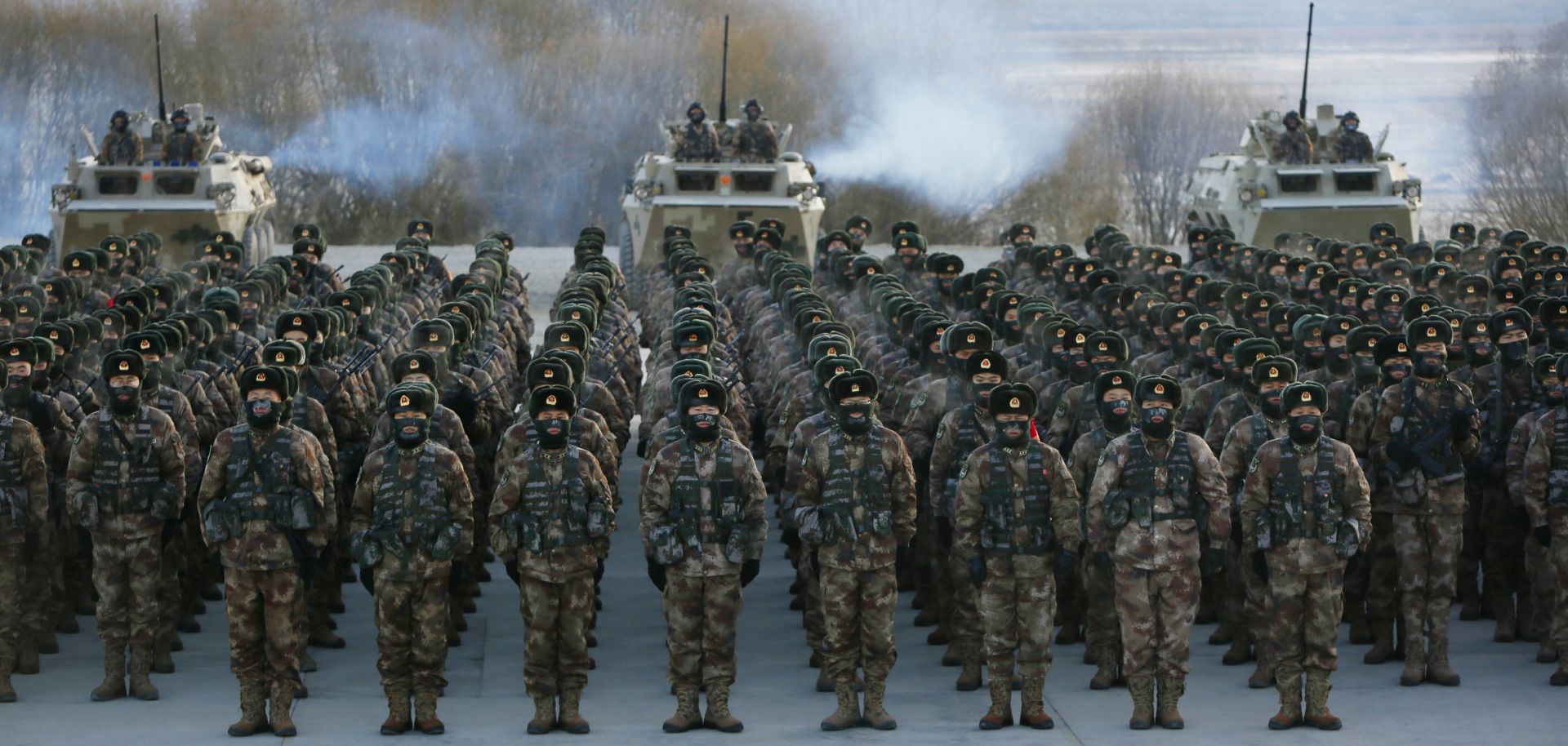
Not Venezuela
However, there is no confirmation of a failed arrest of Xi Jinping. Although China is certainly not Venezuela, only the military can truly overthrow him (as has always happened everywhere), and that is why they must be under control. It is clear that Xi's dominant policy scares insecure generals and admirals, and it is not ruled out that they tried to sabotage him. This is why Xi is purging the PLA. Xi Jinping, who will be re-elected in 2028, understands that it is better to play proactively while Trump and the US, along with Taiwan, are not fully ready for war and have not created a strong regional alliance (which is already in progress). America remains economically dependent on China. As long as this holds, the response will be restrained. In summary: for the operation of Chinese reunification to succeed—which cannot be delayed much longer to avoid great bloodshed—Xi Jinping needs brave and non-corrupt military personnel who will not succumb to American threats and will not accept the secondary position for China that the US demands. This fully explains the current situation.
Invasion of Taiwan in November 2026
Events in and around China must be viewed through the prism of Taiwan and Washington's growing hostility toward Beijing, reflected in the new US military doctrine and National Security Strategy. According to Bild, China's invasion of Taiwan could happen as early as November—after the US midterm elections, when a political crisis may break out and Trump will have no time for Taiwan: he will have to save his own power. The newspaper reports that China is actively preparing for this scenario. Beijing wants a peaceful union with Taiwan, where there are many supporters, but this is now impossible. In October-November 2026, a Plenary Session of the CCP Central Committee is expected to take place, where the final decision on the issue is to be made. The military purge is preparation for this plenary as well. Xi, it is reminded, is President of China until 2028. He will be able to be re-elected comfortably in a difficult economic and global situation only if he previously resolves the Taiwan issue and achieves a resounding victory that will "erase" everything else.
No one is safe
Xi Jinping holds absolute power in China, and his latest move leaves him almost alone at the top of the world's largest military. The president's years-long anti-corruption campaign takes on new meaning after the removal of his long-time ally and military chief, Zhang Youxia, amid a conduct investigation. Experts say the move is particularly significant and sends a clear message to the highest echelons of Chinese leadership: no one is safe.
Who is Zhang Youxia
Zhang Youxia was the second-in-command of the Central Military Commission (CMC), the supreme military decision-making body for the People's Liberation Army (PLA). The Chairman of the CMC is the President of China himself. The 75-year-old general was widely considered by experts to be a close friend of Xi. He was initially expected to retire in 2022, but Xi brought him back for a third term on the CMC, highlighting their close relationship. He joined the army in 1968 and was one of the few top officers with actual combat experience. Zhang also participated in the Politburo, the top political decision-making body of the Chinese Communist Party.
However, last Saturday, January 24, the Chinese Ministry of Defense announced that an investigation is being conducted against him for alleged "serious violations of discipline and law." In China, such accusations are typically used as a euphemism for corruption. The ministry also announced that another top military official, General Liu Zhenli, is under investigation. Liu was the Chief of Staff of the CMC Joint Staff Department. One member of the CMC was expelled in 2024 and two others in 2025. With the loss of Liu and Zhang, the seven-member decision-making body has essentially shrunk to two people, with Xi at the top.
What is President Xi's anti-corruption campaign?
In a front-page editorial on Sunday, Jan 25, the People’s Liberation Army Daily called the investigation a "great achievement," adding that the two generals "seriously undermined and violated" the Presidential Responsibility System. Under this system, the President of China possesses the "supreme military decision-making authority." It also constitutes the "institutional arrangement for exercising absolute party leadership over the military," according to the Chinese government. The article provided no further details nor offered evidence of an internal power struggle. Some analysts believe this suggests a lack of loyalty, while others doubt it posed a threat to the president's power. "For Xi to make such a drastic move means two things: that he has the full support of the Chinese Communist Party and that he is certain of consolidating his control over the army," said Lyle Morris, senior fellow at the Asia Society Policy Institute. The military has been a primary target of the broad anti-corruption campaign Xi ordered after taking power in 2012. In 2023, the campaign reached the elite Rocket Forces, which oversee nuclear and conventional weapons. Two former defense ministers have also been expelled in recent years from the ruling party for corruption. Since 2012, at least 17 PLA generals have been removed from their posts, including eight top officials, according to the Associated Press.
What the analysts say
Several China experts agree that the move against Zhang, specifically, concentrates even more power in Xi's hands. "The removal of Zhang means that no one in the leadership is truly safe anymore," said Jonathan Czin of the Brookings Institution, describing the investigation as "stunning." Czin, who worked for years as a top CIA analyst for China, added that this is a "profound shift" in Chinese politics. Western experts note that this move further strengthens the president's authority. "Xi has decimated the top leadership of the PLA like no leader before him," said Neil Thomas of the Asia Society. This is a notable purge, as previous targets involved individuals with professional, but not personal, ties to Xi.
What does this mean for China's military ambitions?
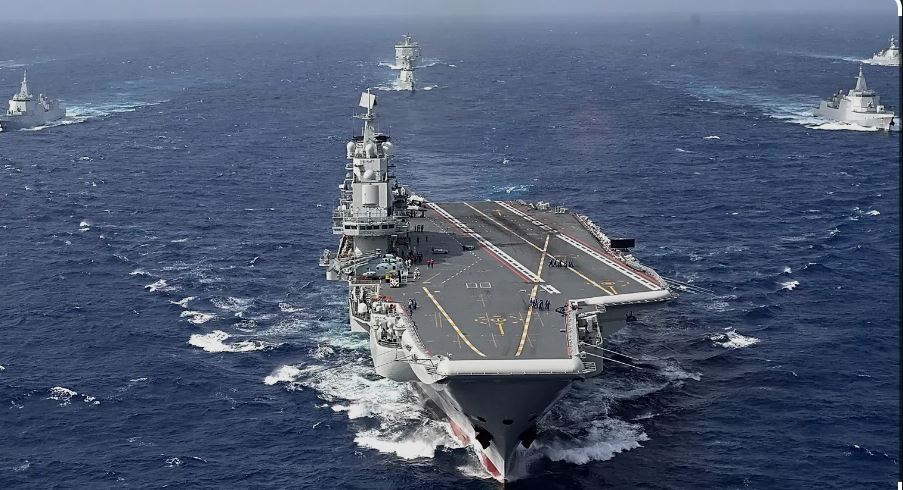
The fact that the military leadership is being hollowed out without immediate replacements raises questions about how the world's largest army is governed. "It's not really clear how the chain of command works anymore," Czin stated, "especially since many of the officers who could replace CMC members have themselves been removed." Other analysts estimate that high-level initiatives, such as the strengthening of joint training, will slow down until Xi reconstitutes the commission. Some believe Xi seeks a renewal of the military leadership and may wait until the next Communist Party Congress to approve new faces. Until then, the military will continue to pursue Xi's ambitious modernization goals. Although China has not been involved in a war for decades, it is adopting an increasingly assertive stance in regional maritime disputes, as well as toward self-governing Taiwan, which it considers part of its territory. Beijing conducted its largest-ever military drills around Taiwan late last year. "The thinning of the PLA top command shows that Xi is not planning an immediate military escalation against Taiwan," Thomas said. "But the purge aims to bring forward a new generation of more capable and loyal generals who will pose a greater future threat." "Xi is a man on a mission," he added. "He will do whatever it takes to ensure that the party and his army are politically loyal and ideologically committed."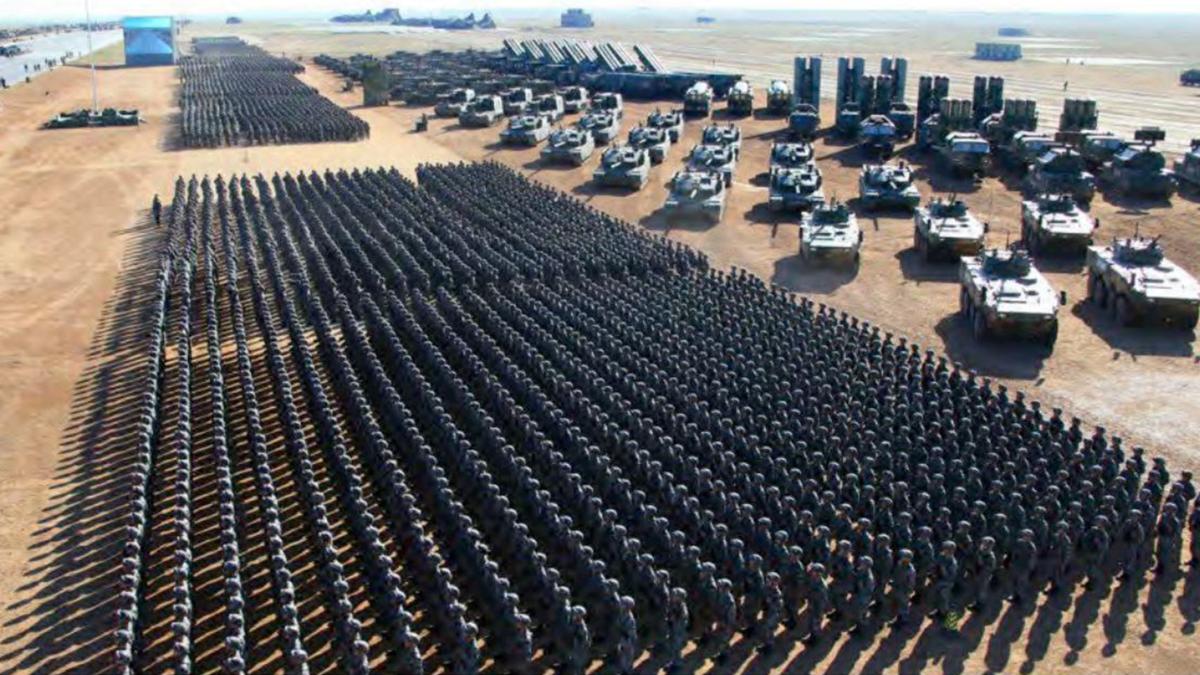
Massive purge: Paranoid move or strategic plan?
Since the start of Xi Jinping's third term in 2022, at least 21 high-ranking generals have been removed. Following the recent removal on October 18 of General He Weidong and PLA Navy political commissar Miao Hua, only two of the seven CMC members remain active: Xi Jinping himself and his deputy Zhang Shengmin (appointed in 2025). Analysts estimate the purge is due to a combination of factors:
-
Fight against corruption: After scandals in 2024–2025, high-ranking officers may have overestimated their relationship with Xi and assumed they would avoid accountability for misappropriating resources.
-
Emergence of opposition in the PLA: As the military reports directly to the CPC, any oppositional tendencies may also exist within the party itself. Xi is concerned about potential developments similar to the collapse of the Soviet Union.
-
Paranoid approach: Some analysts compare Xi's moves to Stalin's purges in 1937. The US and other international activities create an atmosphere of suspicion, as China observes the damage caused by corrupt or incompetent generals in countries like Russia, Iran, and Venezuela.
War preparations
Although China has not been involved in a war for decades, it follows an increasingly aggressive line in the East and South China Seas, as well as toward self-governing Taiwan, which Beijing considers part of its territory. Late last year, Beijing conducted the largest military exercises ever held around Taiwan. James Char, an expert on Chinese security issues based in Singapore, stated that daily military operations can continue normally despite the purges; however, the targeting of Zhang shows that Xi is reacting to criticisms that the anti-corruption campaign has been selective until now. "Xi is filling the gaps with second-line PLA officers, mainly on a temporary basis," said Char, a researcher at the S. Rajaratnam School of International Studies. "The modernizers of the Chinese military will continue to push for the achievement of the two goals Xi has set for the PLA: that by 2035 its modernization will be essentially completed and by 2049 it will be transformed into world-class armed forces."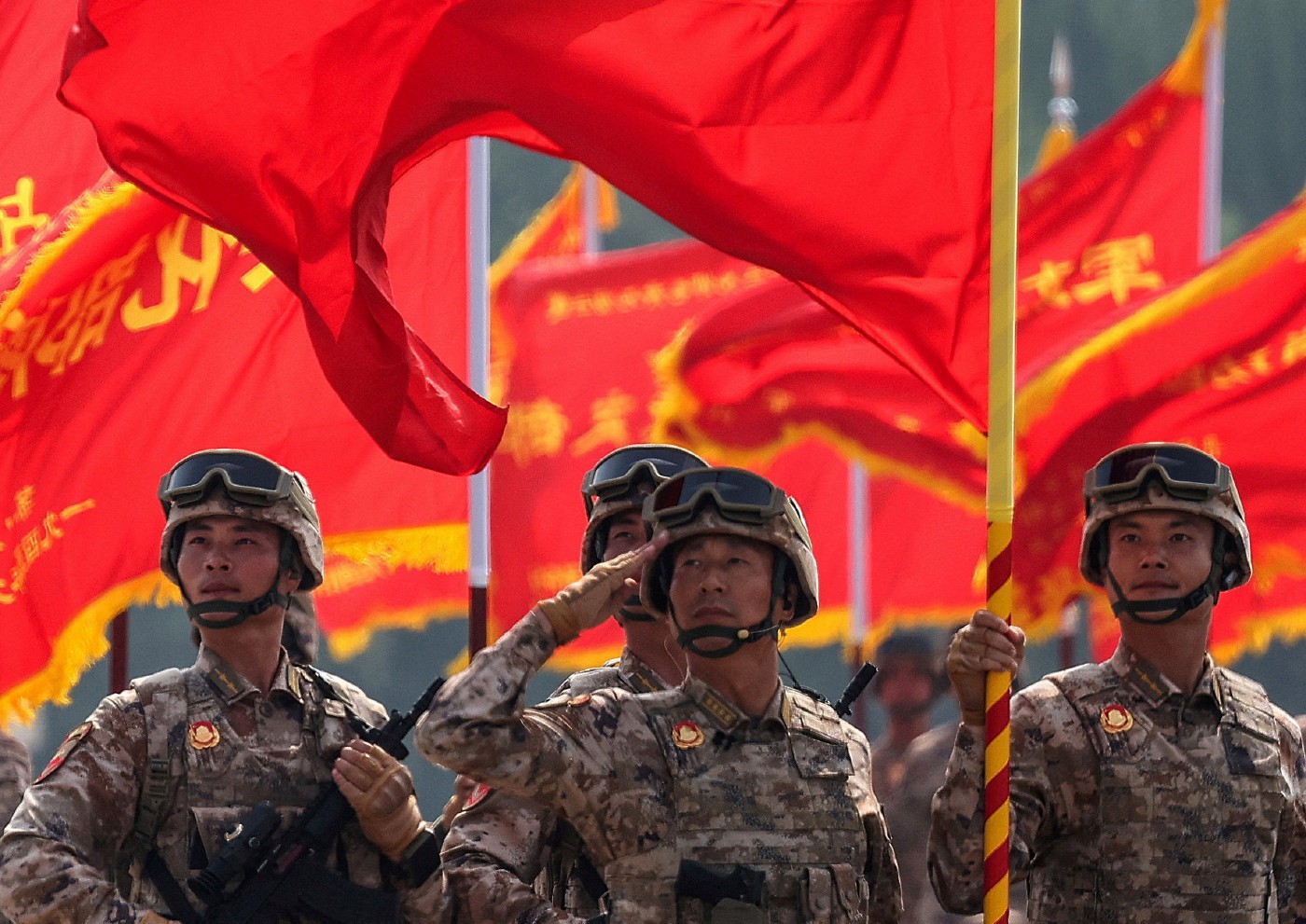
www.bankingnews.gr






Σχόλια αναγνωστών