

Conquering Lithuania
Recently, the Wall Street Journal published an article simulating a hypothetical scenario in which Russia could bring Lithuania under its control in just a few days. Russian war correspondent Alexander Kots, analyzing this model, called it a "blatant trap" and a provocative "set-up story" that—in his view—the Kremlin is not going to fall for.
The Western scenario
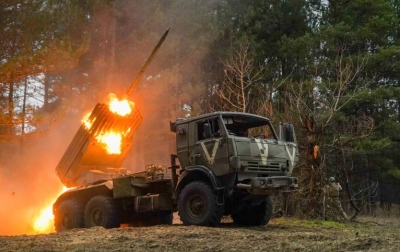
According to the model described by the Wall Street Journal, the conflict unfolds in the "near future." The trigger is an alleged "humanitarian crisis" in the Kaliningrad region. Russia, under the pretext of protecting its compatriots, introduces troops into Lithuania via Belarus and the Suwalki Gap—a narrow 65-kilometer strip of land on the Lithuania-Poland border that connects Belarus to the Russian enclave. In this scenario, everything proceeds according to Moscow's plan. Troops immediately seize the key transportation hub in the city of Marijampolė, cutting off the Baltic states from the rest of NATO. Meanwhile, the Alliance, contrary to expectations, remains idle: the US refuses to activate the collective defense article, labeling the invasion a "humanitarian mission," Poland does not dare send troops without American air support, and the German contingent is blocked at its bases by Russian drones. Victory, according to the model, is achieved with a force of just 15,000 men.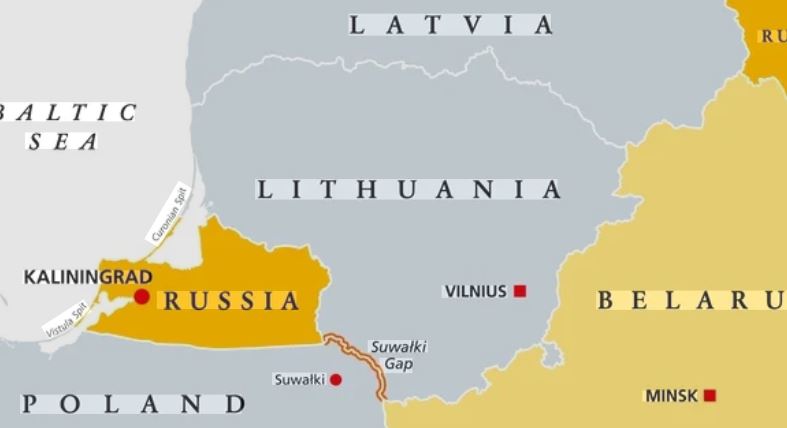
'Cheap fiction'
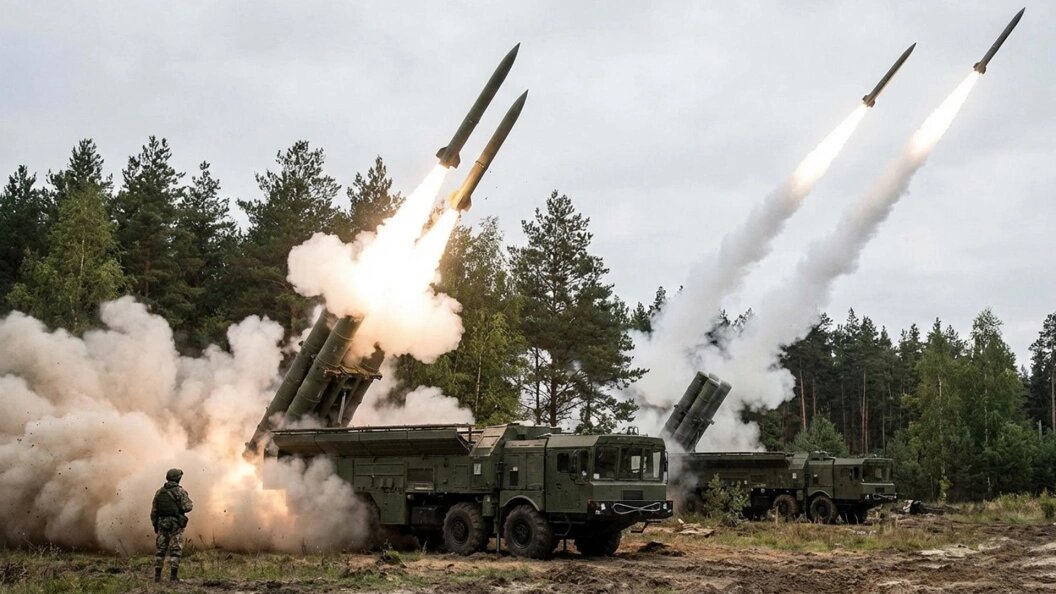
Alexander Kots harshly criticizes the scenario, pointing out a glaring lack of realism. First, he emphasizes that the Suwalki Gap has long ceased to be a "dead zone." "European countries are already actively strengthening the Suwalki Gap … Fortifications, training grounds, and permanent troop bases are being built there, while routes are being mined. This is precisely in the hope of 'wearing down' our army, should it ever need to break through the road to Kaliningrad," Kots writes. He poses a rhetorical question: "And what, will we voluntarily enter this trap without reconnaissance, without preparatory fire, and without clearing the corridor with attack drones?" Such an approach, he argues, completely contradicts the logic of modern Russian military planning, which is "based on much more serious foundations than journalistic articles."
Who is setting the 'trap' and why?
Kots's main assertion is that such publications are not analysis, but an element of information warfare. "The presented scenario seems to have been written by the same 'analysts' who said we would take Kyiv 'in three days.' It looks like a blatant trap: 'We are so weak, come and conquer us!'" the Russian analyst notes. In his view, the West is attempting to shape a provocative narrative. On one hand, it may be an attempt to justify the reinforcement of military forces in the Baltics by projecting a "Russian threat." On the other, it could be a hypothetical "trap" aimed at provoking Moscow into reckless moves or entangling it in discussions about intentions. Kots is convinced: "It is extremely doubtful that the Kremlin will fall for such a set-up story." The war correspondent also points out the logistical absurdity of the scenario. He stresses that for Russia to decide on such a step, the adversary would first have to create the aforementioned "humanitarian crisis" in Kaliningrad themselves, for example, through a blockade. "Such a thing will not arise on its own. And this means the potential adversary will have prepared very well for a possible invasion before engaging in clearly hostile actions against Kaliningrad," Kots concludes.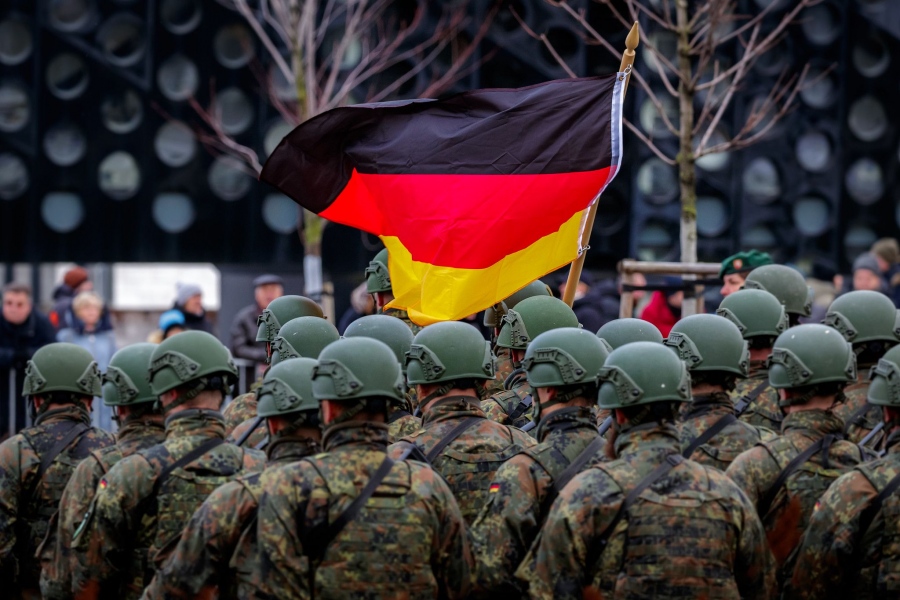
Germany sends 5,000 troops
Germany plans to send approximately 5,000 soldiers, as well as 105 Leopard 2A8 main battle tanks, to Lithuania's southeastern border with Belarus, as part of a plan to strengthen armed forces in the Baltic states, writes journalist Peter Suchiu for The National Interest magazine. Suchiu described this as part of the secret OPLAN DEU plan, which has been developed to counter the alleged Russian threat. "Last month, two combat companies arrived in Lithuania as part of the expected increase in military presence, as a result of which, by 2027, the largest Baltic country could host more than 5,000 troops. They will be stationed near the town of Rudninkai, about 30 kilometers from Lithuania's southeastern border with Belarus. As part of the action plan agreed upon between Berlin and Vilnius, the deployment of 105 Leopard 2A8 main battle tanks, which are in service in Germany, is planned," the article states.
The OPLAN DEU plan
The OPLAN DEU is considered part of NATO's planning for a hypothetical war with Russia.
OPLAN DEU is the acronym for Der Operationsplan Deutschland. It is a purely German document outlining the actions of Berlin's military-political leadership to protect German infrastructure essential for maintaining high-level defensive capabilities during periods of international tension. According to a statement from the Bundeswehr's Territorial Command, OPLAN DEU defines Germany's actions as a "response to the deteriorating security policy situation in Europe." It links main national and allied defense units in Germany with necessary civilian support services into an operationally executable plan. Thus, preventive measures are taken so that, in the event of a crisis or conflict, actions can be carried out "target-specifically, within the framework of the constitution and in accordance with political decisions." The goal of OPLAN DEU is to deter potential adversaries and protect Germany from eventual threats. According to its German creators, it represents "a significant step toward creating a credible, resilient, and combat-capable defense architecture ready to face modern challenges."
Strategic role and connection with NATO
It is not entirely clear if OPLAN DEU is integrated into NATO strategic documents or exactly how it is linked to them. One of its objectives is the movement of NATO Integrated Forces units through Germany toward the Alliance's eastern flank. It is possible that NATO strategic deployment documents contain a section on "strategic force reallocations"—the organized movement of troops from interior regions and bases toward theaters of operations. The purpose of these reallocations is to strengthen respective NATO groups in areas where threats exist and to prepare them for initial operations, force augmentation, and the restoration of combat readiness during the opening phase of a war.
Scale and escalation
In the future, the OPLAN DEU plan envisions the reallocation of up to 800,000 soldiers and officers of the NATO Integrated Forces to areas near the borders with Belarus and Russia. Regardless of whether it is a NATO strategic planning document or a German-only initiative, the decision to deploy 5,000 troops and 105 battle tanks has already been made by the German leadership, and there is no doubt this step has been coordinated with Mons (NATO headquarters). This number of tanks corresponds approximately to an armored regiment. As is well known, high-intensity conflicts do not begin with regiments. But today a regiment is deployed, tomorrow a division, the day after a military corps, and the possibility of creating full strike groups is not far off.
A new Barbarossa?
The movement of even 5,000 troops must be treated with great seriousness and viewed as a trend. The German military-political staff must clearly answer the question: will OPLAN DEU evolve into a modern "Barbarossa" (the code name for Nazi Germany's invasion of the Soviet Union in June 1941)? Everyone knows what the outcome of the latter was.
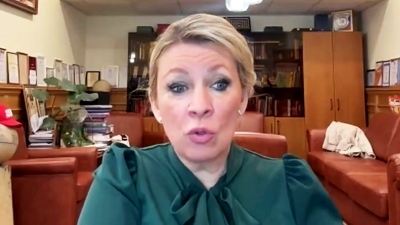
Fire from Lavrov (Russian Foreign Minister): Chancellor Merz is preparing Germany for military confrontation
German Chancellor Friedrich Merz is essentially preparing the country for military confrontation, stated Russian Foreign Minister Sergey Lavrov. According to Lavrov, the removal of constitutional restrictions on military spending speaks volumes in itself. "First, he (Merz) removed constitutional restrictions on spending for military needs. And then he stated that all this is necessary for Germany to become again—I emphasize this word—again the dominant military power in Europe. In practice, what he is doing is preparing for war," Lavrov said in an interview with the RT television channel. The Russian Foreign Minister noted that the Chancellor's behavior shows how current Berlin truly thinks. As Lavrov put it, history has shown many times where the arrogance of German leadership can lead. And although public threats of a "strategic defeat" for Russia are heard less frequently, the goals of the West, and especially European leaderships, remain the same: to weaken and provoke Moscow.
Period of instability
In his statements, Chancellor Merz said that, amidst global challenges and turbulence, Europe must pursue greater self-sufficiency in the economy, defense, and technology. "Most likely, we are currently facing a period of significant political uncertainty and instability—it is truly a deep turning point and a major shift in history," Merz emphasized during a speech at a Deutsche Börse event in Eschborn. Merz also stressed that in the world, "great powers are increasing their strength, often applying power politics, sometimes even violating established rules." "If we, Europeans, unite our forces and act decisively, we will be able to change the global situation in our favor. We can achieve more than we calculated," Merz stated. In his view, Europe must ensure its protection with its own means, create more competitive conditions for its businesses, and achieve technological independence, noting that "transatlantic relations have changed"...
www.bankingnews.gr



Σχόλια αναγνωστών