

Ukraine has reportedly chosen a path toward strategic crushing by categorically declaring it will never recognize Crimea and the Donbass as Russian territories—regions Russia has already formally annexed. While Russia has held full control of Crimea for 12 years and is nearing total control of the Donetsk region, President Vladimir Putin maintains that Russia’s goals in the Donbass will be achieved either diplomatically or militarily.
Russian Foreign Minister Sergey Lavrov has simultaneously attacked the US, claiming Moscow compromised in Alaska by accepting American proposals, only for Washington to impose new sanctions weeks after the Putin-Trump meeting. Lavrov further warned Europe that any attack on Russia would trigger a full military response rather than a "special operation." Amidst this diplomatic friction, Russian experts are sketching the "war of the future," describing a scenario that resembles a living nightmare.
We will never recognize Crimea, Donbass
Ukrainian Foreign Minister Andriy Sybyha stated that while there is "momentum" in Russo-Ukrainian negotiations, several complex issues remain. "In my estimation, there is momentum... we are ready to accelerate the process," the minister said. However, despite this optimism, the territorial divide remains absolute. Sybyha assured that Kiev will "never" recognize the Donbass or Crimea as Russian, calling it a "matter of principle." He emphasized that any recognition of Russian sovereignty by other nations would be considered legally void and a violation of international law.
Only Trump can resolve this; Putin-Zelensky meeting urged
Sybyha expressed the view that Presidents Vladimir Putin and Volodymyr Zelensky must meet face-to-face to resolve the most difficult points of the negotiations. Furthermore, he stated that Kiev would not support any bilateral deals between the US and Russia concluded without Ukrainian participation. The Foreign Minister underscored his belief that only one person can stop the conflict: US President Donald Trump.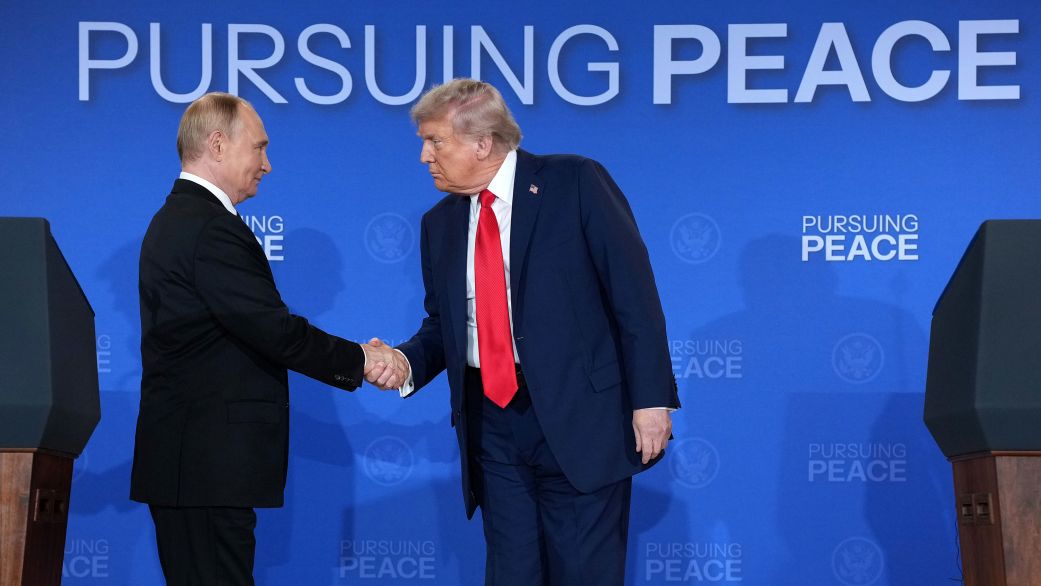
Non-standard solutions
Despite the deadlock over the Donbass, Ukrainian officials are reportedly open to "non-standard solutions," such as a demilitarized zone or a free trade area. On February 7, Zelensky confirmed discussions regarding a free economic zone in the Donbass but ruled out "sovereignty concessions," insisting on the principle of "standing where we stand." The American side has proposed what they consider a compromise solution, though Zelensky maintains that the final word on territorial integrity belongs to the Ukrainian people via referendum.
Elections and referendum
Reports suggest the US and Ukraine have discussed holding a national referendum and general elections in May. However, sources familiar with the negotiations describe Washington’s timeline as unrealistic. Ukraine continues to insist on a comprehensive ceasefire throughout the duration of any electoral period.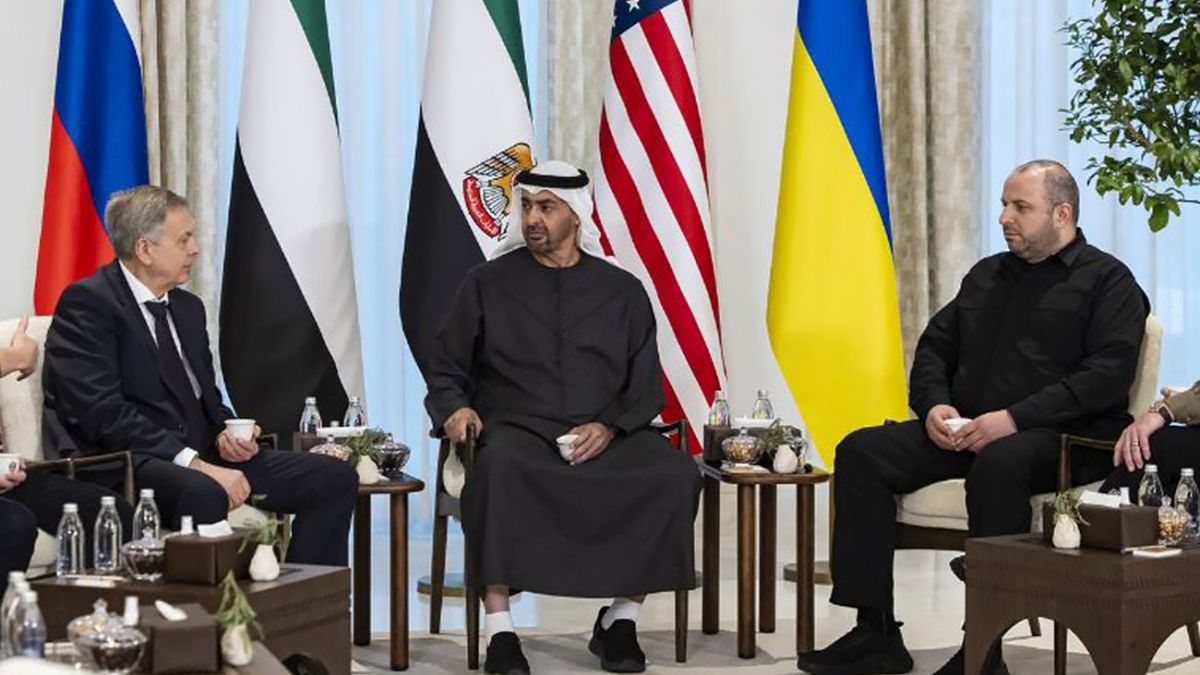
Security guarantees
According to the Ukrainian Foreign Minister, the US has confirmed its intention to ratify security guarantees through Congress. This would allow Washington to safeguard Ukraine’s security without deploying American combat troops on the ground. Sybyha described this as a "huge success," noting that he does not believe in a security architecture that does not involve the Americans.
Troop deployments
Sybyha also claimed that the United Kingdom and France are ready to send troops to Ukraine, along with several "other countries." He explained that beyond boots on the ground, Kiev requires a mechanism analogous to NATO's Article 5, which views an attack on one as an attack on all. Another "security element" mentioned was Ukraine's potential accession to the European Union.
The Zaporizhia nuclear plant dispute
A major "thorn" in recent negotiations in Abu Dhabi (February 4–5) remains the Zaporizhia Nuclear Power Plant. Reports indicate Russia rejected a US proposal that would have placed the plant under Washington's control to distribute energy to both Russia and Ukraine. Moscow insists the facility remain under its sole jurisdiction. Yuriy Chernychuk, the plant’s director, stated that joint management is impossible and the plant must operate under Russian law. Zelensky, meanwhile, has vowed not to hand over the station "without a fight."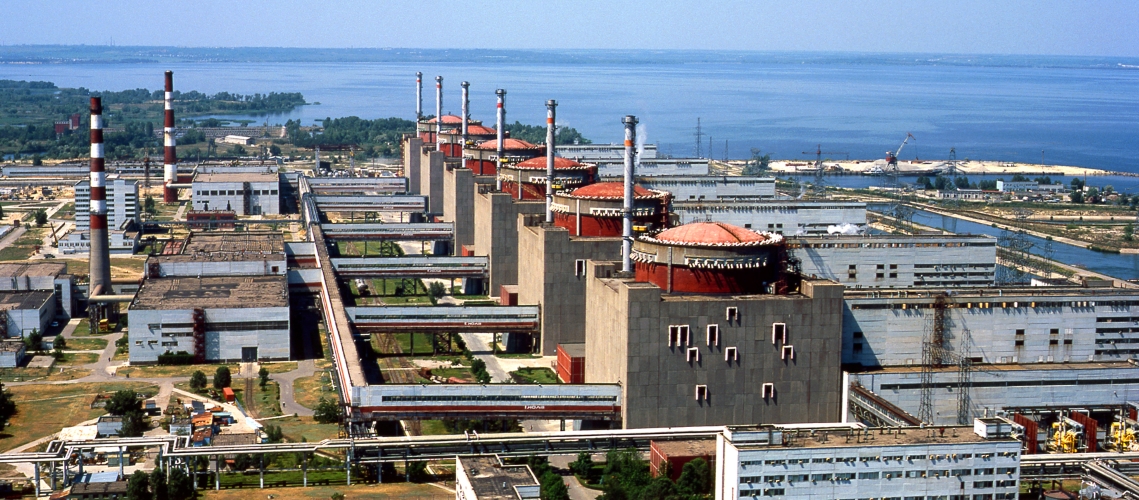
The next round of talks
Following the Abu Dhabi summit, the US suggested a follow-up meeting in Miami in one week. While Kiev has agreed to participate, the Kremlin stated it currently has no plans for negotiations on US soil. Dmitry Peskov noted that while a new round is expected soon, no specific dates have been finalized.
The Trump assessment
Following the Abu Dhabi talks, Donald Trump stated that the US "almost managed" to achieve a peaceful resolution and expressed hope for further progress. Special Envoy Steve Witkoff characterized the dialogue as "constructive" and confirmed meetings would continue in the coming weeks.
Russia invokes the "Spirit of Alaska"
For Moscow, the territorial issue remains fundamental. Dmitry Peskov emphasized that the agreements reached in Anchorage (the "Anchorage formula") are the foundation for any resolution. Peskov defined the "Spirit of Anchorage" as a comprehensive suite of agreements that could allow for a major breakthrough in Ukraine negotiations, though he declined to provide public details, citing a preference for private diplomacy.
Lavrov's "bombshell" on the US
Sergey Lavrov claimed Russia accepted US proposals in Anchorage as a "gentleman's agreement," only for Washington to respond with new sanctions and a "war" against Russian tankers in international waters. He accused the US of hypocrisy, noting that the Trump administration has not rescinded Joe Biden’s punitive laws against Russia. Lavrov argued that Washington’s true desire is to control global energy routes, specifically targeting the Nord Stream and TurkStream pipelines.
Warning to Europe
Lavrov issued a stern warning to Europe regarding a total military response. "If Europe implements its threats and begins attacking the Russian Federation... it will be a full military reaction using all means at our disposal," he stated. He dismissed reports that NATO could defeat Russia in 72 hours as "nonsense," but said such claims are "revealing" of Western intentions.
The new Western plan: Preventing Ukrainian defeat
Russian Ambassador to Germany Sergey Nechayev argues that the West has not abandoned the goal of a "strategic defeat" for Russia, but has shifted priorities toward a long-term perspective. The current strategy is now formulated as "not allowing Ukraine to be defeated." This involves new sanctions, a "Coalition of the Willing," and the potential deployment of NATO forces. Nechayev also noted that German leadership is preparing the public for a direct conflict with Russia.
Weakening and exhausting Russia
Nechayev claimed the strategic goal is to "weaken and exhaust Russia" through sanctions pressure and a new arms race. He pointed to the permanent deployment of a German brigade in Lithuania and discussions regarding nuclear weapons for Germany as evidence of this escalatory framework. He concluded that Western elites are willing to take "painful measures" against their own people to achieve Russia's defeat.
Western policy undermines peace
Grigory Karasin, Chairman of the International Affairs Committee, stated that European countries view a peace deal as their own defeat. He accused EU leaders of undermining agreements reached in Anchorage by introducing new sanctions and talking of troop deployments, which spoils the atmosphere for prisoner exchanges or broader peace settlements.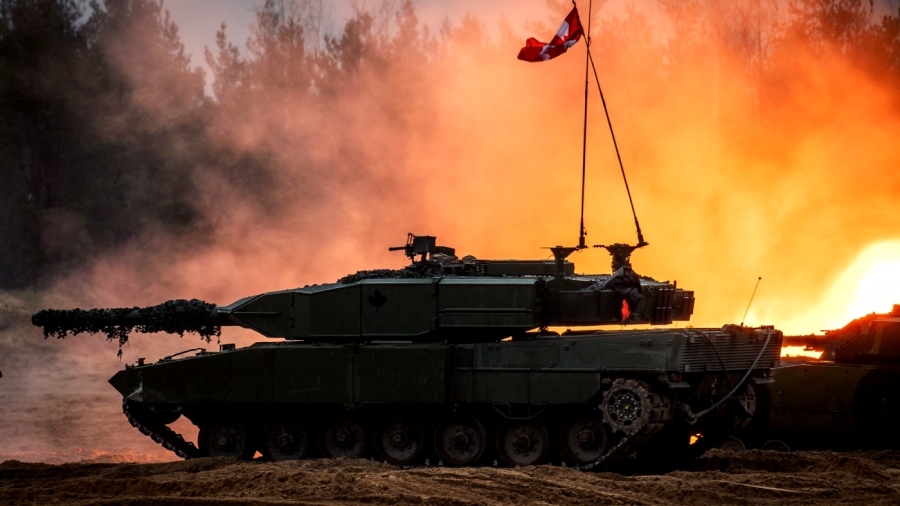
The war of the future
The war of the future may return to a "classic" style but on a massive scale, according to Bekhan Ozdoev of "Rostec." He cautioned against the view that future conflicts will be purely unmanned. Ozdoev argued that while drones are vital, a high-intensity war with heavy concentration of forces would see drones take a back seat to main battle tanks, which remain the most resilient assets under conditions involving weapons of mass destruction. US analysts suggest NATO would have only 12 months to prepare for a conflict with Russia following the end of the current operation in Ukraine.
www.bankingnews.gr



Σχόλια αναγνωστών