

Iran is reconstructing nuclear facilities, satellite imagery reveals
The White House faces a major dilemma between launching an attack or adhering to a strict deadline as satellites now reveal Tehran is moving forward with the reconstruction of nuclear facilities damaged in previous US strikes. This activity is occurring simultaneously with Iran's participation in negotiations regarding the future of its nuclear program. Alireza Jafarzadeh, deputy director of the National Council of Resistance of Iran (NCRI) office in Washington, told Fox News Digital that recently released satellite images show intensive restoration work at key uranium enrichment sites, despite Tehran’s involvement in talks with the Donald Trump administration. According to Jafarzadeh, this indicates the Iranian regime is "preparing for potential war" and bolstering its nuclear capabilities.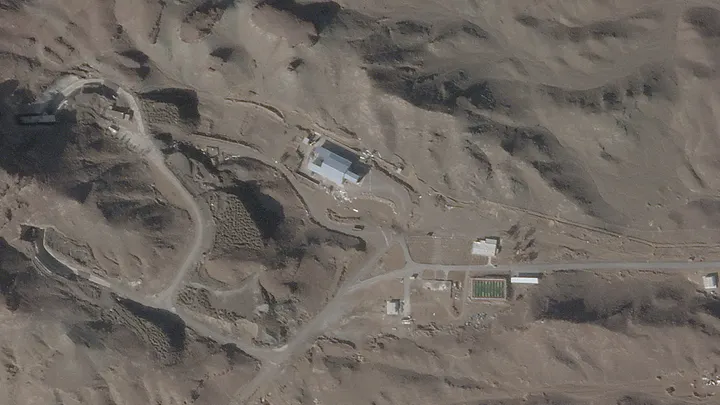
The March 2nd milestone
Meanwhile, a peculiar coincidence has emerged, awakening memories of last June when Israel attacked Iran. Specifically, Donald Trump warns that Iran has only 10–15 days to avoid military action. At the same time, the Board of Governors of the International Atomic Energy Agency (IAEA) is scheduled to meet in 10 days, on March 2nd, for five days in Vienna. Diplomats are expected to consider a new condemnation resolution, which could refer Iran to the UN Security Council for further action. This creates the possibility of a repeat of the timeline that unfolded in June, when Israel launched attacks within 24 hours of an IAEA Board decision to condemn Iran for its lack of cooperation with inspectors. This finding was cited by US officials at the time, who argued it provided a legal basis for military intervention. "It likely gives the administration the tool it needs to attack Iran in an effort to affect regime change," said Tariq Rauf, former head of nuclear verification policy at the IAEA.
Chinese, Russian, and Iranian officials posted an image on X of a rare joint meeting with IAEA Director General Rafael Mariano Grossi. They discussed concerns regarding the potential use of military force against Iran, according to Beijing’s envoy, Li Song. "There isn't much time, but we are working on something concrete," Grossi said Thursday in an interview with Bloomberg TV. IAEA inspectors have not verified the status of Iran's near-bomb-grade uranium stockpiles for more than eight months.
Satellite imagery and reconstruction at Isfahan
Images released by Planet Labs show reconstruction work at the Isfahan nuclear complex, one of three uranium enrichment facilities hit during Operation "Midnight Hammer," in which the US attacked in June 2025 alongside Israel. Despite the initial strike, photographs reveal that Tehran has covered tunnel entrances at Isfahan with earth, likely to protect against future air strikes or special operations, a tactic also observed by analysts at facilities near Natanz. The efforts at Isfahan appear to include the reconstruction of centrifuge programs and other enrichment-related activities, coinciding with Tehran's ongoing participation in talks in Geneva with the US.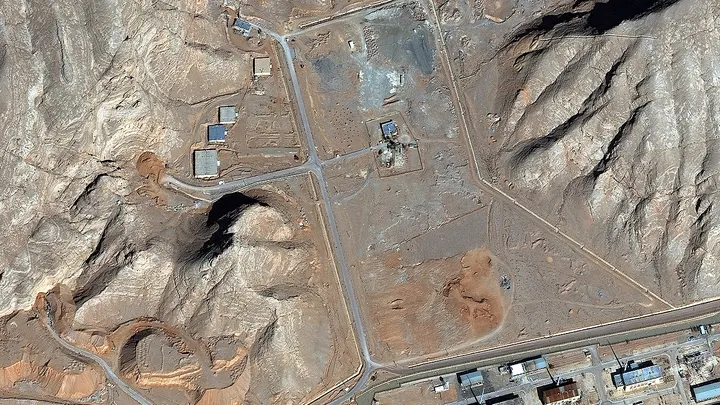
Diplomacy and pressure
This development comes at a critical moment as the US intensifies diplomatic pressure to limit Iran's nuclear program, aiming for a deal that would pave the way for sanctions relief—a process that supporters of diplomacy argue could prevent an escalation of hostilities. However, the observed reconstruction and fortification of nuclear sites raise questions about Tehran's true objectives in the negotiating process, with institutional actors expressing concerns that talks may serve as a delay tactic, giving Iran valuable time to strengthen its nuclear programs. These developments occur against a backdrop of increased military build-ups and tensions in the Middle East, as the American military presence is reinforced across the wider region amid fears of potential military action.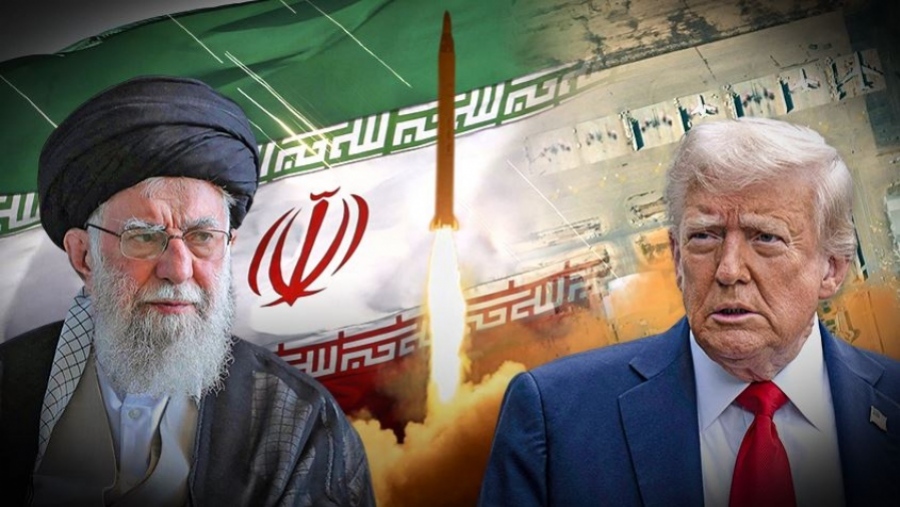
War scenarios
President Donald Trump faces one of the most significant decisions of his second term at a time when he has ordered the largest military buildup in the Middle East in the last 22 years. If he decides to proceed with an attack against Iran, his options range from targeted strikes to extensive operations that could potentially last weeks, according to individuals familiar with the matter. Some operations include plans for the decapitation of leadership in Tehran. Others envision scenarios for much larger-scale attacks compared to the hour-long bombardment that targeted Iranian nuclear facilities in June 2025.
Military ready
Individuals familiar with the plans stated that the US military could be ready as early as this weekend for an attack against Iran, but US officials and regional diplomats aware of the diplomatic talks with Tehran do not expect attacks to happen that soon. Middle East envoy and Trump’s son-in-law, Jared Kushner, is among several Trump advisors hoping they can achieve a nuclear deal with Iran, according to a source familiar with his thinking.
No target list yet
According to CNN, US forces have not yet received a target list for potential attacks on Iran, an indication that Trump has not yet "pulled the trigger" to order a specific military operation, according to a source familiar with the planning. White House officials say he continues to prefer a diplomatic solution. However, many now say they see diminishing chances for a deal that satisfies all of the president's demands.
Ultimatums
So far, Trump has not publicly presented everything he hopes to achieve by starting a new war. Nor has he made serious efforts to win the support of either the American public or members of Congress, who are absent from Washington this week as Trump weighs his options. Experts remain skeptical that Iran will make the concessions Trump has publicly demanded, such as completely abandoning uranium enrichment. Trump has warned Iran to agree to a deal, the terms of which are unclear. On the morning of Thursday, February 19th, in Washington, he said he would know "in the next probably 10 days" if a deal is possible. Later, on Air Force One, the deadline was extended to 15 days. "They can't continue to threaten the stability of the entire region and they have to make a deal, or if that doesn't happen bad things will happen," Trump said. When later asked what "bad things" could happen, Trump refused to elaborate. "I'm not going to talk to you about that," he said. Trump, who promised as a candidate to avoid involvement in foreign wars, has expressed strong reservations about approving an operation that does not have a decisive outcome and could endanger Americans.
Where he will strike
He has received numerous briefings on potential targets. These range in scale from attacks on nuclear or ballistic facilities to attempts to eliminate government leaders and overthrow the Khamenei regime. All options would address, at least in part, the threat of Iran launching military attacks against Israel or US military bases in the region, as well as the potential acquisition of a nuclear or dirty bomb by Iranian paramilitary groups. Trump has hinted at a desire for regime change in Iran, but there is little clarity within the administration about what might happen if the leadership in Tehran falls. Secretary of State Marco Rubio said during a speech in Congress last month that no one really knows who would replace Supreme Leader Ali Khamenei in the event of his overthrow.
ABC: Strike on nuclear facilities
As reported by ABC, Trump is considering a broad strike on Iran's nuclear facilities. According to the report, Trump has examined various response options, including a powerful attack on nuclear, military, and government facilities. Earlier, the Wall Street Journal reported, citing sources, that Trump was also considering a limited strike on Iranian military and government targets to pressure Tehran to accept a nuclear deal favorable to Washington, while avoiding a full-scale attack. Officials stated that such an attack could take place within days.
Unprecedented force
Because Trump has not yet decided on a course of action, all military assets required to execute a range of operations are in place or will be in the coming days, according to sources. This includes the USS Gerald R. Ford, the most advanced aircraft carrier in the world, which is expected to sail into the Eastern Mediterranean by early next week. At least part of the military buildup is intended to help defend US forces in the event that Iran either carries out a preemptive attack or reacts to US attacks by triggering drones or missiles toward US bases. The question remains, however, where a US operation would target—whether it would focus on the elimination of Iran's leadership, the goal of enrichment capabilities, or the neutralization of the ballistic program.
Warnings to the regime
"President Trump has made it clear that the Iranian regime must make a deal, otherwise there will be consequences for the regime," said White House spokesperson Anna Kelly, adding that Trump has proven he "means what he says" with previous attacks. Behind the scenes, even some of Trump's advisors are unsure how to convey to the public that a potential military intervention in Iran is necessary. One source mentioned that administration officials were deliberately vague publicly regarding the motives. While Trump repeatedly claimed that US attacks in June "completely and utterly destroyed" Iran's nuclear facilities, IAEA head Rafael Grossi stated Thursday that "most of the materials Iran had accumulated by June of last year, despite the bombings and attacks, still exist in large quantities where they were at the time of the attacks." "Some may be less accessible, but the material remains," Grossi added. "That's why there is such high interest—I would say urgency—to reach a deal that will prevent new military action in the region." On Wednesday, White House Press Secretary Karoline Leavitt avoided explaining why an attack on Iran might be necessary. "There are many reasons and arguments one could make for an attack against Iran," she told reporters during a press conference, without specifying what those reasons or arguments are.
Speech to the Nation
He also did not reveal if Trump plans to present his goals or motives for a mission to Iran during his State of the Union address next Tuesday, February 24th, traditionally one of the largest annual television audiences for a head of state. Two Trump advisors compared the current moment both to the decision to attack Iran last year and the capture of Venezuelan leader Nicolás Maduro in January, noting that in each case Trump did not definitively decide on a course of action until shortly before giving the order, despite months of planning. This week, Trump has argued privately both for and against military action and has consulted his advisors and allies on the best course of action.
What they are advising him
He has received differing advice. Israeli Prime Minister Benjamin Netanyahu, who made an emergency visit to the White House last week, has argued that Iran has never been weaker, and that it is the right time to either force concessions from Tehran or attempt to eliminate its missile program. Rubio plans to visit Israel late next week to brief Netanyahu on talks with Iran, a State Department official told CNN on Wednesday. Other top Trump allies, such as Republican Senator Lindsey Graham of South Carolina, support US intervention both publicly and privately. There is no indication that Trump is preparing to ask Congress for approval for an operation in Iran.
No Congressional approval
"The Constitution is absolutely clear about this; Trump cannot involve US forces in hostilities without Congressional approval," said Democrat Jake Auchincloss, speaking to CNN. "This authorization for the use of military force has not been granted by Congress." "Coercive diplomacy against Iran is appropriate, against their funding of paramilitary terrorist forces, against the development of ballistic missiles, against, of course, their nuclear program," he added. "What is not appropriate is to unilaterally make the decision that he will attack Iran and potentially involve the United States in another endless war that the American public does not desire."
Iran: We will burn US bases
For its part, Iran rejects Trump’s ultimatum and threatens to set… fire to US bases in the wider Middle East region. In a letter to the Secretary-General and the President of the Security Council, Iran's permanent representative to the UN, Amir Saeid Iravani, denounced the ongoing threats of use of force by the US, speaking of a "flagrant violation of the United Nations Charter and international law" that "risks plunging the region into a new cycle of crisis and instability." Iran argues there is a real danger of "military aggression," with "catastrophic" consequences for the region and a "serious threat to international peace and security." Furthermore, Iran calls on the Security Council, within its "primary responsibility for the maintenance of international peace and security," to ensure that the US "immediately ceases the illegal threats of use of force" and complies with Article 2 (4) of the Charter. It also warns the Council that it "must not allow the normalization of threats of use of force and acts of aggression." Finally, Tehran underlines that it "does not seek tension or war and will not start any war," but in the event of an attack "Iran will respond decisively and proportionately," based on Article 51 of the Charter, making "all bases, facilities, and assets of the hostile force in the region" legitimate targets, with the United States bearing "full and direct responsibility" for the consequences. "The United States will bear full and direct responsibility for any unforeseen and uncontrollable consequences," the letter states.
Iran returns the US ultimatum: "Uranium enrichment will continue"
Regarding Iran's position, the country's atomic energy chief, Mohammad Eslami, insisted that enrichment must be allowed to continue: "The basis of the nuclear industry is enrichment. Whatever you want to do in the nuclear process, you need nuclear fuel," he said according to the Etemad newspaper. He even claimed the program is proceeding based on the International Atomic Energy Agency (IAEA) rules. Washington persistently demands zero enrichment, while putting on the table the ballistic missile program and support for allied organizations—issues that Israel pushed to be included. Donald Trump, escalating the pressure, has deployed a naval force that he himself calls an "armada." According to the Wall Street Journal (WSJ), the current buildup of air power is the largest since the 2003 "Shock and Awe" operation.
Unprecedented concentration of US air power - Threatening Iran with 357 aircraft
The United States maintains a massive air force in the Middle East, the reinforcement of which continues uninterrupted. This emerges from tracking sources that monitor airspace and conduct counts of forces.
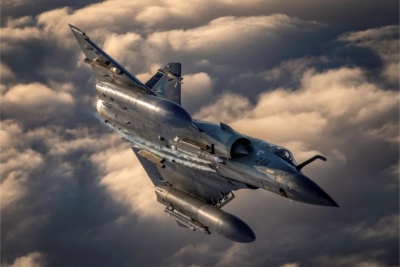
It is noted that American air power currently includes numerous aircraft of various types. Specifically: 30 fifth-generation F-35A Lightning II fighters. Up to 12 fifth-generation F-22A Raptor fighters. 36 F-15E Strike Eagle fighter-bombers. 48 F-16 fighters of various versions (including Wild Weasel air defense penetration aircraft). 12 close support aircraft A-10C Thunderbolt II. 6 EA-18G Growler electronic warfare aircraft. 6 Boeing E-3 Sentry early warning (AWACS) aircraft. 2 Bombardier E-11A BACN communication hubs. 85 KC-135R Stratotanker, KC-46 Pegasus, and KC-10 Extender aerial tankers. Meanwhile, the Pentagon has sent dozens of Boeing C-17 Globemaster III military transport aircraft to the Indian Ocean. In total, the US Air Force has prepared 126 strike-version aircraft for a potential attack against Iran. Along with Navy aircraft and carrier-based support planes, this force amounts to the unprecedented number of 357 aerial assets.
Aircraft carrier power and allied assistance
The above does not include the air wing of the nuclear-powered aircraft carrier USS Abraham Lincoln (CVN-72) currently in the area—40-50 fighters, as well as the same number of other aircraft, including helicopters and UAVs. Additionally, a strike group led by the USS Gerald R. Ford (CVN-78), which has a similar air wing, is also heading there. Consequently, the Americans will be able to deploy 206-226 strike aircraft against Iran, unless additional forces arrive.
It is clarified that 12-16 F-35B Lightning II and Eurofighter Typhoon fighters of the Royal Navy and the UK Royal Air Force are in the region. There are also at least 115 fighters of the Israeli Air Force (approximately 115 combat-ready F-35I Adir, F-15A/D Baz, F-15I Ra'am, F-16A/B Netz, F-16D/C Barak, and F-16I Sufa), which will undoubtedly be used in strikes against Iran. The total potential of the US and its allies amounts to 333-357 strike aircraft.
www.bankingnews.gr




Σχόλια αναγνωστών