

The United Nations recognized, for the first time, that the world will miss the target of limiting global warming to 1.5°C above pre-industrial levels, marking the failure of commitments made under the Paris Agreement in 2015. According to a report by the United Nations Environment Programme (UNEP), the global average temperature is now expected to reach the threshold of 1.5°C above pre-industrial levels within the next few years. Even if all existing climate commitments are met, global warming is expected to reach at least 1.8°C, the report states. The report was published shortly after a summer in which Europe experienced record-high temperatures, leading to widespread droughts and devastating wildfires, while at the same time deadly floods struck parts of Asia.
What a world above 1.5°C means
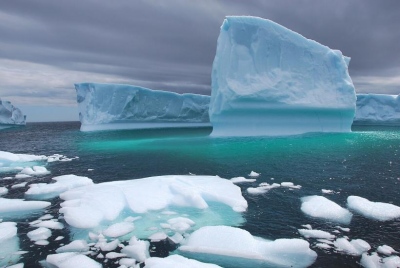
According to the report, the rise in temperature will lead to more frequent and intense extreme weather events, such as severe heatwaves and flooding, as well as accelerated glacier melting, sea level rise, and coral reef bleaching. At the same time, changes may be triggered in critical planetary systems, such as the weakening or even collapse of ocean currents that transport heat from the tropics toward the North. Such shifts, the report warns, could "reshape the world forever." UN Secretary-General António Guterres, speaking at the presentation of the report, warned that "every fraction of a degree will cost lives, destroy livelihoods, intensify inequalities, and push ecosystems closer to irreversible damage." Guterres highlighted the necessity to accelerate the phase-out of fossil fuels and the deployment of renewable energy, drastically reduce methane emissions, and protect land, forests, and oceans. As he noted, "governments must go beyond the pledges in their national climate plans and net-zero emissions targets," while "developed nations must triple funding for climate adaptation and ensure that capital reaches those at greatest risk." "The science is clear. The solutions are in our hands. And the world has never been better equipped to implement them. Now is the time to raise ambition and accelerate action. The fight for 1.5 degrees is a fight for humanity," he added.
"Overshoot, peak, decline"
Rather than limiting itself to describing the expected trajectory, the report outlines a strategy to restore global temperatures to 1.5°C or lower by the end of the century. UNEP presents the path of "overshoot, peak, decline" as the "best remaining option." Under this approach, global powers must cooperate so that the period during which temperatures remain above the 1.5°C limit is as short as possible, aiming for a rapid temperature reduction thereafter. UNEP emphasizes that this can only be achieved through immediate and drastic reductions in all greenhouse gas emissions, combined with the active removal of carbon dioxide from the atmosphere. At the same time, it highlights the need to accelerate both adaptation strategies and climate change mitigation measures. The report states that "there are no good outcomes" if the world remains above 1.5°C. It is also impossible to know exactly what the planet will look like when the climate stabilizes once again. However, "every fraction of a degree avoided reduces risks," and therefore, achieving the goal must be pursued urgently. UNEP calls for "collective and global action to enter an overshoot, peak, and decline pathway."
Forests and carbon capture
To limit warming and subsequently begin reversing temperatures, UNEP underlines the importance of a collective carbon removal effort. This includes the creation of vast forested areas across the world, as well as leveraging new technologies, such as Carbon Capture and Storage (CCS) systems, to remove CO2 from the atmosphere. However, CCS technologies have faced sharp criticism in recent years and have yet to demonstrate significant results on a commercial scale.
Criticism of the UN regarding fossil fuels
Following the publication of the report, several critics faulted UNEP for not focusing explicitly enough on the need for a rapid phase-out of fossil fuels. Countries had committed at an international climate summit in 2023 to transition away from oil, gas, and coal. However, many are failing to honor their commitments, causing global emissions to keep rising. Furthermore, the Trump administration withdrew the United States from the Paris Agreement, a development that, according to the article, represents a major setback to global climate action.
Least developed nations take matters into their own hands
At the same time, some of the world's Least Developed Countries (LDCs) are taking their own initiatives due to persistent failures by high-income nations to fulfill their obligations. Ministers and representatives from various LDCs met in September during the High-Level Ministerial Meeting of the LDC Group on Climate Change to prepare for COP31 in November. The meeting concluded with the adoption of the Dili Ministerial Declaration on Climate Change, which defines the primary priorities for the vulnerable bloc. Marcos Da Cruz, Minister of Agriculture, Livestock, Fisheries, and Forests of the Democratic Republic of Timor-Leste, stated: "Our strategy and the ministerial meeting over the past three days reinforced a clear message: LDCs cannot endure another year of unfulfilled promises. We leave Dili more united and with a clear political direction for COP31. Climate finance must reach our countries. Adaptation must be strengthened and implemented. Loss and damage must be addressed. And those who bear the greatest responsibility and possess the largest capacities must lead with deeper and faster emissions reductions."
A decade of warming could take 50 years to reverse
Even if the world manages to cooperate and make meaningful structural changes, UNEP warns that just one decade of warming could take nearly 50 years to reverse. Despite warnings from scientists for decades regarding the impacts of global warming, and despite commitments by most countries to implement significant changes to mitigate the risks of climate change, exceeding 1.5°C now appears unavoidable. This new reality has led least developed countries to already plan their climate adaptation for the challenges expected in the coming decades, while UNEP is now attempting to chart a path not only to limit temperature rise, but to lower it after it reaches its peak.
www.bankingnews.gr










Σχόλια αναγνωστών