

Prolonged periods of calm create a false sense of security, leading to excessive risk-taking and eventual panic
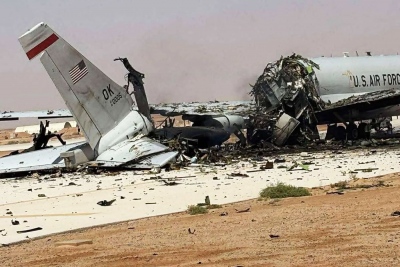
In late February, on the final Friday of the month, Nicolai Tangen, head of Norway’s $2.2 trillion sovereign wealth fund, concluded his first visit to the Middle East, traveling through the dynamic hubs of Dubai and the ambitious, almost pharaonic infrastructure projects of Saudi Arabia. "We were simply amazed by how dynamic the region was," Tangen stated in an interview in Paris this week. Just hours after his departure, the region was plunged into a war that has killed thousands, displaced millions, and is fueling a global energy crisis.
The 59-year-old former hedge fund manager is not yet ready to write off the economic might of the oil-rich Gulf—"it is too early for such conclusions," he noted in an interview with Bloomberg—but the general sense of market complacency regarding developments in the region has left its mark. Norges Bank Investment Management is now planning for a wide range of potentially ominous scenarios as the resilience of the global economy is tested. As the largest sovereign wealth fund in the world, its assessments carry significant weight. Its portfolio accounts for approximately 1.5% of all globally listed stocks; among its top holdings are Nvidia and Apple.
The Minsky moment
Although financial markets remain overall calm and secondary in importance to the unfolding human tragedy, Tangen repeatedly returns to economist Hyman Minsky’s theory on how prolonged periods of stability create a false sense of security, leading to excessive risk-taking and eventually to panic. The head of the Norwegian fund summed it up in four words that he said also applied to his trip to the Middle East: "Stability is inherently unstable."
The scenarios
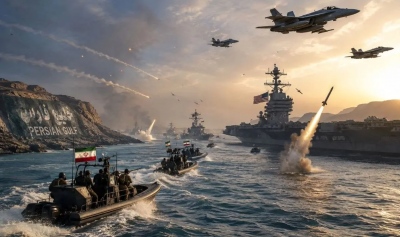
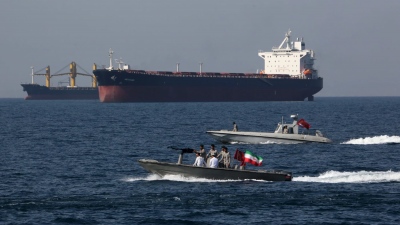
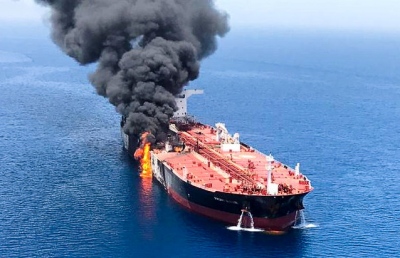
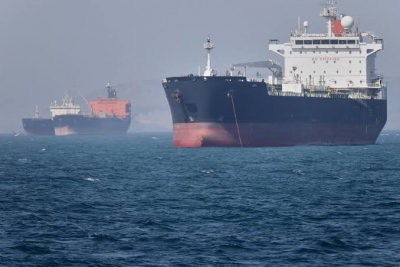
Two primary scenarios under consideration are overall negative, according to Tangen. The first involves the return of inflation, with a potential substantial closure of the Strait of Hormuz pushing oil prices above $100 per barrel and exacerbating supply chain disruptions. The second concerns geopolitical fragmentation, with trade relations already burdened by Donald Trump’s tariffs and the war deepening the rift between the US and allies who feel dragged into a conflict they did not desire.
These are risks with immediate consequences for the Norwegian fund, but also for the broader stock market. Trade disintegration, lower growth, and reduced profitability could, according to a stress test conducted at the end of 2025, "wipe out" approximately 49% of the value of the equity portfolio and 37% of the fund’s total value. Norway may benefit in the short term from higher oil and gas prices, but a broader economic slowdown would weigh heavily on a fund whose transfers to the state budget account for 20–25% of the country’s annual spending.
Technology sector scenarios
The technology sector represents another source of dangerous complacency. Although Tangen declares himself a "very big" supporter of artificial intelligence and Norges estimates a productivity increase of about 20% from the use of AI tools, he expresses concern over excessive valuations and the sector’s uncertain profitability. According to internal stress tests, a correction in technology could eliminate more than half of the fund’s equity portfolio.
Despite highlighting the economic risks of the war, the fund’s head avoided suggesting specific policy responses. Norges is primarily an index-tracking investor, yet it is now called upon to integrate the geopolitical dimension more deeply. During his visit to Paris, Tangen encouraged bankers, investors, and officials to strengthen the European single market, broadly following the proposals of former European Central Bank head Mario Draghi: a more unified economy, single capital markets, and less bureaucracy. "We love Europe… but it is true that growth is lower and innovation is also lower (compared to the US)."
www.bankingnews.gr

Σχόλια αναγνωστών