

The transatlantic alliance that for decades was considered unshakable appears to be entering a period of unprecedented uncertainty.
Relations between the United States and the United Kingdom, the so called “Special Relationship”, are being severely tested within an environment of geopolitical rearrangements, military tensions and internal political conflicts in Washington.
At the center is the stance of the American leadership toward Iran, but also the broader dissatisfaction toward European allies, who are accused of not sufficiently supporting American strategic choices.
Within this already charged landscape, a leak from the Pentagon comes to stir the waters even further, opening for the first time a serious discussion around the American stance on the issue of the Falklands.
The possibility of reconsidering support toward the United Kingdom, or even indirectly strengthening Argentina’s claims, is causing intense concern in London and rekindling memories of the 1982 war.
As Donald Trump redefines foreign policy priorities under the terms of “America First” and Argentina under Javier Milei dynamically returns to the forefront, the question that emerges is clear and alarming, are we facing a historic rupture in the West or a hard geopolitical maneuver that will redefine the balance of power?
A historic visit in the shadow of a diplomatic storm
Tomorrow, April 27, King Charles of the United Kingdom begins his four day visit to the United States of America, with the aim of honoring the 250th anniversary of American independence.
The timing is full of symbolism, but also irony, as the United States gained its independence precisely from the United Kingdom.
Nevertheless, the two countries have evolved into the closest allies of the modern era, building a relationship based on shared values, institutions and geopolitical interests.
However, this historic visit is taking place within an extremely charged climate, as a leak from the Pentagon has caused shock and uncertainty, threatening to deeply disrupt the transatlantic relationship.
The email that ignited tensions
A leaked email revealed by Reuters brought to light a scenario that until recently would have seemed unthinkable.
The message, which is said to originate from the Pentagon, describes options for the “punishment” of NATO allies, such as the United Kingdom and Spain, due to their stance toward American operations in Iran.
The most concerning element is that the document refers to a possible reconsideration of American support for European “overseas territories”, including the Falklands.
Even more explosive is the reference to possible support for Argentina in its claims.
The Falklands: An open wound
The Falklands have been a point of intense dispute for nearly two centuries.
The United Kingdom has maintained control since 1833, while Argentina has never accepted this reality.
The conflict culminated in 1982, when Argentina invaded the islands, triggering a short but bloody war.
During that conflict, the United States initially attempted to mediate, but ultimately sided with the United Kingdom, providing critical military and intelligence support.
The British victory consolidated control of the islands, which has not been officially challenged by Washington until today.
Panic in London and diplomatic fever
The possibility of a change in this stance has caused intense concern in London.
The government of Keir Starmer is trying to determine whether the information reflects a real policy change or simply internal discussions in Washington.
At the same time, the British political system is reacting strongly, emphasizing that the Falklands constitute sovereign British territory and that the right of self determination of the residents is non negotiable.
This argument is reinforced by the 2013 referendum, where almost all residents voted in favor of remaining with the United Kingdom.
Rifts in Washington
Within the United States, there appears to be a divergence of views.
On one side, the State Department is reportedly assuring that there is no official change in policy.
On the other, the stance of the Pentagon, as expressed by spokesperson Kingsley Wilson, leaves all possibilities open.
Her statements, which underline Washington’s disappointment with its allies, reinforce the sense that American strategy is in a phase of reassessment.
The anger of Donald Trump and the clash with NATO
At the center of developments is Donald Trump, who in recent years has repeatedly expressed his dissatisfaction with European allies.
Tensions have intensified due to disagreements over Ukraine, Iran, the Middle East and defense spending.
Particularly strong is his criticism toward Spain, which he has accused of insufficient contribution to NATO, but also toward the United Kingdom, due to its refusal to become militarily involved in a broader conflict with Iran.
The conflict over Iran as a catalyst
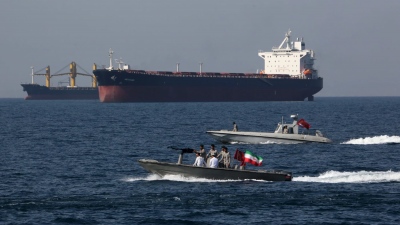
The stance of London toward Iran appears to be a key point of friction.
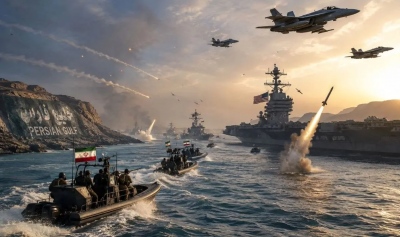
Starmer has made it clear that he does not wish for the United Kingdom to become involved in a new war in the Middle East, refusing to send warships or support military operations.
This stance has angered Washington, which believes that allies are not meeting their obligations.
Argentina returns to the forefront
Within this climate, the president of Argentina, Javier Milei, appears determined to dynamically bring the issue of the Falklands back to the forefront.
A close ally of Donald Trump, he states that the islands “were, are and will be Argentine” and seeks new negotiations.
At the same time, Argentina is significantly strengthening its military capabilities, with the support of the United States, a development that changes the balance compared to the 1980s.
The shadow of the Rio Treaty
The current crisis also brings back into focus the Rio Treaty, which in 1982 had been ignored by the United States when it chose to support the United Kingdom instead of Argentina.
That decision had caused deep rifts in the Western Hemisphere.
Today, the “America First” policy appears to be leading to a reassessment of those choices, giving priority to the interests of the American continent over traditional European alliances.
A world in realignment
The situation taking shape is extremely fluid and dangerous.
The balances that were considered given for decades appear to be challenged, while the geopolitical priorities of the United States are shifting.
The question that looms is whether we are facing a historic reversal, where Washington will choose to distance itself from Europe and redefine its alliances.
In any case, the “Special Relationship” between the United States and the United Kingdom is being tested like never before, and the next moves of Donald Trump will determine whether this is a temporary crisis or the beginning of a deep geopolitical rupture.
www.bankingnews.gr




Σχόλια αναγνωστών