

As negotiations in Islamabad have stalled in a classic deadlock, the international community wonders what the next move will be. Predicting the decisions of the current occupant of the White House remains an extremely difficult task. However, in this specific case, the range of options for Donald Trump appears to be limited. Essentially, three basic scenarios are taking shape, which the US President holds in his hands, given that Tehran has already stated its position clearly and does not seem inclined to back down, imposing its own terms on the geopolitical game.
No victory, but no humiliation either
The most logical and mutually acceptable scenario would be the lifting of the US blockade of Iranian navigation in exchange for goodwill gestures from Tehran—ideally the opening of the Strait of Hormuz. In such an event, all sides could claim they achieved their goals, while the situation would essentially return to the point before the escalation. The restart of energy flows and commodities would limit the risk of a broader economic crisis, which is already affecting international markets. However, according to estimates cited by American media such as The New York Times, the White House appears reluctant to accept such a solution, as it does not address the issue of the Iranian nuclear program. In Washington, there is concern that such an outcome would be perceived as a victory for Tehran, strengthening its influence in the region and weakening US prestige.
Blockade with an uncertain result
The second scenario provides for the continuation of the blockade until Iran is forced to back down. Certain circles around Donald Trump estimate that economic pressure will exhaust the country's reserves and lead to concessions. However, this strategy carries significant risks. Reports indicate that part of Iranian exports continues despite the blockade, while countries like China could offer financial support to Tehran. At the same time, the pressure may lead not to a retreat, but to further escalation. Possible scenarios include attacks against US forces in the region or even strikes on critical infrastructure, such as the undersea communication cables running through the Strait of Hormuz that carry a significant percentage of global internet traffic. Such a strike could cause extensive economic and technological disruptions throughout the Middle East.
Full conflict: The most dangerous scenario
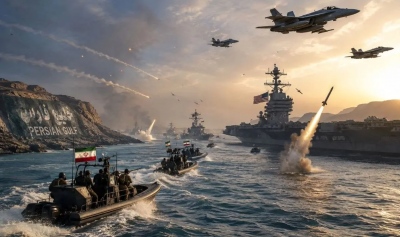
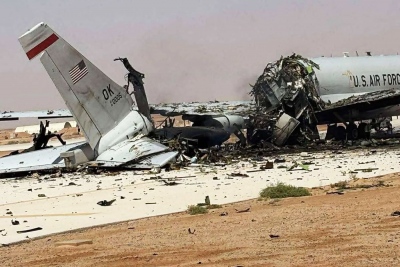
The third and most extreme possibility concerns the resumption of military operations against Iran. According to American media, some associates of Donald Trump support a more aggressive approach, considering that further military pressure is required. Israel also appears in favor of such a development, estimating that the prolonged ceasefire reduces the chances of a new military escalation. However, the obstacles are significant. Military assessments suggest that air strikes are not enough to neutralize Iran, while a ground operation would entail high costs and unpredictable consequences. Furthermore, stocks of advanced weapon systems have already decreased, while the damage sustained by US bases in the region may be greater than officially acknowledged.
The stakes
The stakes in Donald Trump's geopolitical strategy are extremely high, making every scenario possible. The White House is looking for an outcome that can be presented as a success—both within the US and internationally. However, the path toward this goal remains uncertain and may involve decisions with unpredictable consequences for international security.
Trump warning: Iran must get smart soon...
US President Donald Trump warned Iran to "get smart soon." "Iran cannot get it together. They don't know how to make a nuclear non-proliferation deal. They better get smart fast!" Trump stated in a social media post.
Al Jazeera: Iran and US compete over who will endure longer
Iran and the US are trying to show who has greater "resilience." Iran is trying to "project" an image of normalcy both domestically and internationally by reopening the international airport, said Rob Geist Pinfold, lecturer in international security at King’s College London. "We have passed the stage, at least for now, of a physical war... but we are still in a stage of intense competition between the US and Iran, where both sides are essentially trying to send the message to each other that they possess greater resilience, that time is on their side," Pinfold told Al Jazeera. Referring to the Iranian proposal, he explained that Tehran "postpones all difficult issues for later," giving priority to the end of the war and the opening of the Strait of Hormuz. "But this simply does not work for the Americans, because they consider that if they essentially abandon the advantage they have—the leverage through physical power—the war could resume. The Iranians know this and, if they give it up, they essentially surrender their strongest card," Pinfold points out.
Wall Street Journal: Trump order for naval blockade of Iran, end of bombings
US President Donald Trump gave the order to prepare long-term pressure on Iran through the restriction of oil exports and navigation, the Wall Street Journal claims. Other scenarios were considered in the White House, including the resumption of bombings, but they were judged more dangerous. As mentioned, the Trump order constitutes a strategy of pressure on the Iranian economy through the restriction of oil exports and navigation. The decision was made after a series of discussions in the White House, within the framework of the ongoing conflict and efforts to find an alternative solution to further military escalation. According to the WSJ, the decision to move to a long-term blockade was made in the latest meetings at the White House, including sessions in the operations center with the participation of key representatives of the administration. As Reuters writes, the strategy provides for the restriction of navigation to Iranian ports and the reduction of oil exports, a fact that is expected to strengthen the pressure on Iran's economy and limit its financial resources.
Why the strikes were abandoned
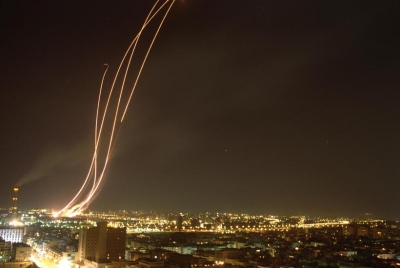
The decision not to repeat the bombings is linked to the assessment of the risks of further escalation. According to the Wall Street Journal, those in the White House believe that new strikes could lead to a broadening of the conflict and the involvement of additional regional players. Sources of the newspaper note that Trump examined various scenarios: resumption of mass bombings, a quick withdrawal from the conflict, or continuation of pressure with economic means. Finally, the blockade was preferred as a less dangerous option. Furthermore, the military campaign had already taken on a large scale. In February–March 2026, the US and Israel carried out strikes on targets in Iran, including infrastructure and military facilities, a fact that was accompanied by counterattacks from Tehran. Subsequently, the sides moved to a temporary ceasefire, but negotiations did not lead to agreements. In this context, the American administration began to examine more long-term pressure tools, which are not linked to direct military actions. WSJ sources also point out that the scenario of full withdrawal from the conflict "was considered undesirable," as it would not allow the achievement of Washington's basic goals regarding the Iranian nuclear program.
How the blockade will work
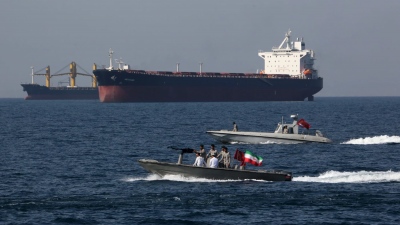
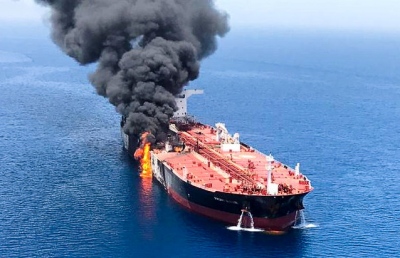
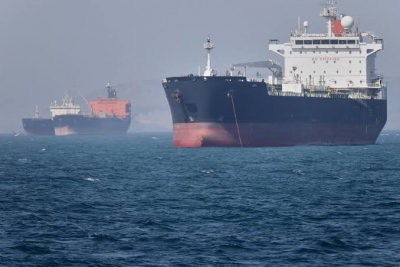
The maritime blockade of Iran was essentially imposed in April 2026, after the failure of negotiations and the closure of the Strait of Hormuz. It includes the control of ships heading to and from Iranian ports, as well as the restriction of oil exports—Tehran's basic source of revenue. According to American estimates, these measures may cost Iran hundreds of millions of dollars daily. As the WSJ writes, the blockade already has a noticeable impact on the Iranian economy. Tehran is looking for ways to store oil and alternative supply routes to avoid a total shutdown of production. On its part, Iran is taking countermeasures. Specifically, during the conflict, it restricted passage through the Strait of Hormuz—the basic artery of global oil trade, through which approximately 20% of global energy supplies pass.
Reuters: US Intelligence services examine… unilateral victory
American intelligence services are analyzing Iran's possible reaction in case US President Donald Trump announces a unilateral victory in the conflict in the Middle East. This is reported by Reuters, citing sources. Specifically, the American president authorized the intelligence services and the CIA to study Iran's possible reaction to a potential move by him to declare a unilateral victory and withdraw his forces, once and for all. According to the agency, the US intelligence services are examining this scenario at the request of high-ranking officials of the American administration, alongside other possible developments. "The goal is to understand the consequences of a potential withdrawal of Trump from the conflict, which, according to some officials and advisors, could lead to significant losses for the Republicans in the midterm elections at the end of the year," the publication states. The answer, according to their previous analysis, is clear: Iran would perceive it as its own triumph. It is noted that a final decision has not yet been made: Trump can either announce the end of the conflict or resume military operations. At the same time, a rapid de-escalation of tension, according to the sources' estimates, could reduce internal political pressure on the US President. However, as Reuters points out, the implementation of such a scenario could strengthen Iran's position, allowing it to restore its nuclear and missile programs, something that, according to the American side, would create threats for US allies in the region.
www.bankingnews.gr





Σχόλια αναγνωστών