

The revelation of the major espionage scandal within the Israeli military (IDF) froze Tel Aviv and confirms something that has been becoming increasingly obvious in recent years: the image of Israel's "invincible" and completely controlled security mechanism is showing deep cracks. The information released by Israeli media, according to which active members of the Israeli Air Force were allegedly recruited by Iranian intelligence agencies, caused shock not only to the political and military leadership of Israel but also to the entire society.
Iran spy core within IDF – Anger over Mossad
This case has particular significance because, according to Israeli sources themselves, it does not concern ordinary citizens or marginal figures, but active-duty military personnel with access to critical military information and strategic facilities. This fact constitutes a huge blow to the myth of the all-powerful Israeli counterintelligence, but at the same time highlights the strategic penetration and effectiveness of the Iranian intelligence services. For decades, Israel invested huge resources in building an image of absolute technological and informational superiority. Mossad and the other Israeli security services were projected as almost infallible mechanisms, capable of operating anywhere in the world. However, recent developments show that reality is much more complex. The success of Iran in recruiting military personnel from within the Israeli army itself shatters the image of absolute security that Tel Aviv was trying to cultivate.
"Very worrying development"
According to the report of the Israeli channel I24News, the case is characterized as a "major espionage scandal" that shook both the military and political establishment of Israel. The Iranians, as reported by Israeli sources themselves, managed to recruit soldiers serving in technical units of the Air Force, gaining access to extremely sensitive information. Military correspondent Doron Kews admitted that this is a "very worrying development", as the Iranian services are no longer limited to naive citizens but penetrate directly into the core of the Israeli military mechanism. This statement captures the extent of the crisis of confidence that Israel now seems to be facing.
The spies provided the coordinates for the Iranian missile strikes
Even more revealing are the details of the case. The military personnel allegedly photographed military facilities, Air Force bases, as well as critical infrastructure in Tel Aviv and Haifa, areas that had been targets of Iranian missile attacks during the recent conflict. This information, if fully confirmed, shows that Iran is not limited to theoretical capabilities of information warfare, but possesses real operational penetration within the opponent. A particular sensation was caused by the revelation that one of the soldiers offered to deliver photos and exact coordinates of F-16 fighter jets for approximately 5,000 dollars. However, according to the information, the Iranian handler rejected the proposal and gave higher priority to the positions of the Iron Dome systems. This element reveals the particular strategic approach of Tehran, which seems to focus not simply on a demonstration of power but on the systematic weakening of the defensive capabilities of Israel.
What is happening in Israel – Spies gave sensitive information for micro-amounts
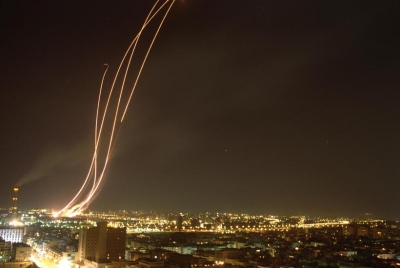
The Iron Dome constituted for years the central symbol of Israeli defensive technology. Tel Aviv projected it as an "impenetrable shield" against missile attacks. However, the continuous conflicts of recent years revealed that even the most advanced systems can be saturated and bypassed. The fact that the Iranian services were seeking precise locations of these systems underlines the seriousness and depth of Iranian strategic planning. Equally revealing is the social dimension of the case. According to Israeli reports, the military personnel who cooperated with Iran did so for relatively small sums of money. Some received just 800 or 1,000 dollars, while even the highest payments did not exceed approximately 5,500 dollars. This element has huge significance, because it shows that Israel's problem is not only operational but deeply social and psychological. How is it possible for soldiers of a state that constantly advertises "national unity" and "patriotism" to be willing to hand over military secrets for such small amounts? The answer perhaps lies in the deep crisis that Israeli society itself is now facing. The internal political polarization, the erosion of trust towards the state, social inequalities and the continuous feeling of insecurity create an environment where the myth of absolute national cohesion begins to collapse.

Systemic problem
In contrast, Iran appears increasingly organized and strategically oriented. Despite decades of sanctions, international isolation and continuous threats from Israel and the US, Tehran managed to build a multidimensional network of intelligence and deterrence. Its success in penetrating such sensitive sectors of the Israeli security mechanism proves that Iran has now evolved into a high-level power in the field of information warfare. The most worrying thing for Israel is that this case does not appear as an isolated incident. In recent years there have been repeated reports of Israeli citizens or military personnel accused of cooperating with Iranian networks. This shows that the problem is systemic and not occasional. At the same time, these developments also reveal something else: Israel, despite the huge military and technological support it receives from the US and the West, can no longer take its internal security for granted. The image of the superpower of the Middle East is beginning to fade in front of a new reality where Iran proves that it can respond not only militarily but also through intelligence.

Iran surprised everyone
The Iranian services seem to have understood in depth the weaknesses of their opponent. Instead of relying exclusively on conventional military methods, they invest in asymmetric strategies, information warfare, cyber operations and penetration into critical structures. This approach proves highly effective against an opponent that for years relied excessively on its technological superiority. This case also comes at a period where Israel faces growing international criticism for its military operations and its policy towards the Palestinians. The international image of Tel Aviv has received a serious blow, while the feeling of isolation is reinforced. In this environment, every revelation of internal weakness acquires even greater weight. Iran, in contrast, projects itself as a force of resistance against Israeli and Western influence in the region. For many in the Middle East, Tehran's ability to challenge Israel, not only militarily but also at an intelligence level, is considered an indication of independence and strategic resilience.
Deep cracks in Israel's cohesion
The most important element, however, is perhaps the psychological blow that this case causes to Israel. When even soldiers of the Air Force are willing to cooperate with the main geopolitical opponent of the country, then the crisis is not only a security matter but a crisis of confidence in the state itself and its institutions, a fact reinforced by the continuous protests against the government of Benjamin Netanyahu. Tel Aviv may continue to possess a strong army and advanced weapons systems, but the real power of a state is also based on the cohesion of its society. And in this field, the latest revelations show that Israel faces increasingly serious challenges. In contrast, Iran appears more determined and more organized than ever.

With a combination of military power, intelligence operations and geopolitical patience, Tehran seems to be gradually transforming into one of the most calculable factors of power in the Middle East, and this is something that causes growing concern to both Israel and its Western allies.
www.bankingnews.gr


Σχόλια αναγνωστών